In a significant development for the digital currency sector, key representatives from Washington have made bold strides toward solidifying the United States’ position in the cryptocurrency landscape. Patrick Witt, currently serving as the deputy director for digital-asset policy at the White House, as well as the interim head of the Pentagon’s Office of Strategic Capital, made news yesterday during a critical discussion at the Bitcoin Policy Summit. He underscored that the U.S. government is poised to unveil an extensive report detailing its approached interagency efforts regarding the new Strategic Bitcoin Reserve (SBR).
The Path to Digital Asset Dominance
Witt’s dialogue illuminated the transformative journey of Bitcoin from a largely speculative asset to a cornerstone of federal economic strategy. He emphasized that “Bitcoin fuels economic innovation,” asserting that a robust digital currency environment will stimulate broader economic growth. The ambition articulated was clear: the U.S. aims to be the global hub for cryptocurrency solutions, significantly focusing on both technological innovation and domestic mining initiatives.
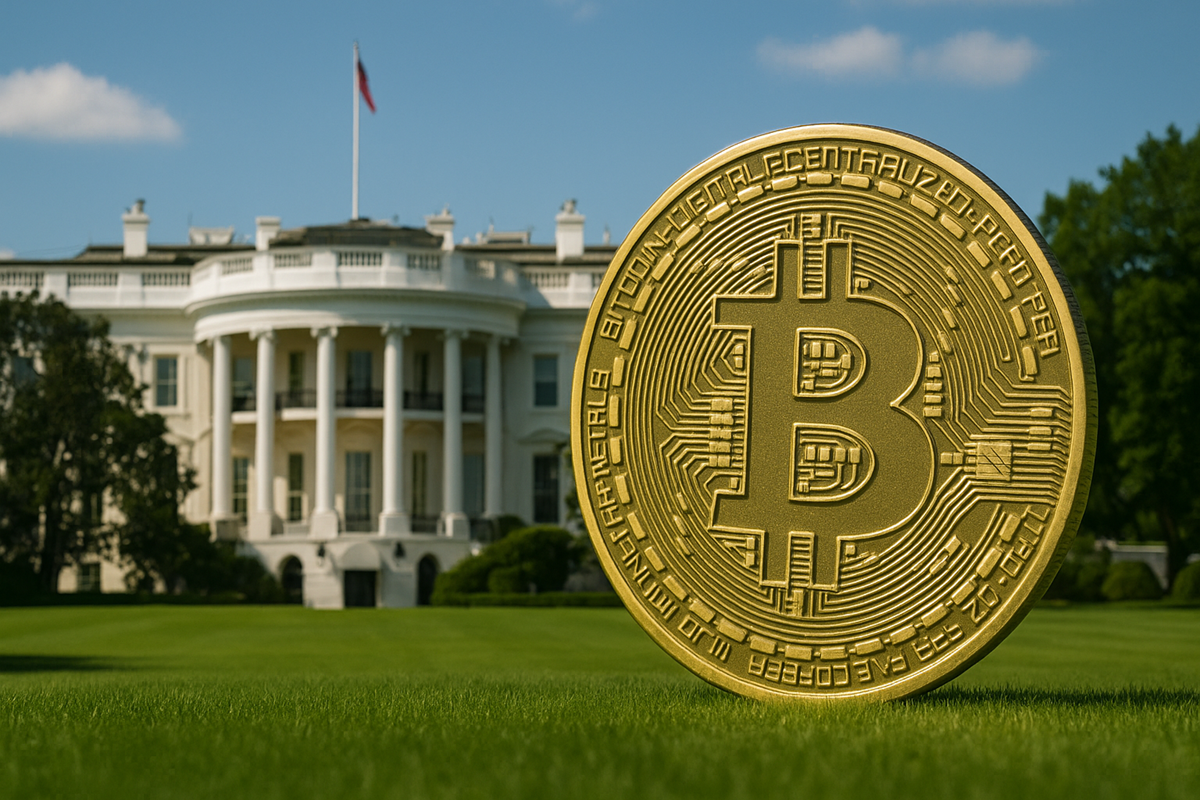
He framed Bitcoin not merely as a financial asset but as a vital instrument of modern diplomacy. According to Witt, the nation that effectively crafts the next framework for global monetary systems will hold significant sway, akin to the U.S.’s dominance following World War II. “Failing to mold this future landscape would place us at a considerable disadvantage,” he cautioned, highlighting urgent calls for proactive engagement in this evolving sphere.
From a broader perspective, Witt pointed out the geopolitical advantages of Bitcoin. He indicated that its decentralized nature offers financial inclusion to countless individuals who are currently unbanked or subjected to unreliable financial systems. This scenario presents an exciting opportunity for U.S. investments and reinforces the allure of the U.S. dollar as a secure asset.
In his dual role overseeing the Pentagon’s office, Witt reminded attendees about the Office of Strategic Capital’s substantial growth from an initial $984 million in lending authority to an impressive $5 billion, with potential future expansion to $200 billion pending Congressional approval. This financial reservoir positions OSC as a crucial player, potentially channeling investments into Bitcoin-relevant energy and technology infrastructures.
During the discussion, practical challenges related to the integration of Bitcoin within national policy were also explored. Witt acknowledged the complexities of navigating legislative processes, emphasizing that genuine collaboration from the industry could help expedite advancement. He noted the importance of acting as a “reliable ally” in helping refine legislative efforts and creating practical frameworks conducive to growth. The team at the White House dealing with digital currencies is quite limited, thus outside insights are vital in drafting regulations that stand the test of political scrutiny.
Witt painted a fascinating picture of the operational dynamics within the Executive Office, revealing that an interagency report—expected to outline the SBR’s accumulation strategy—is set to reach the President in early July. This document has been shaped with contributions from several key financial organizations, including the Treasury and the National Security Council. “We aim to produce a policy framework that’s not only comprehensive but also actionable within realistic boundaries,” he stated, reflecting optimism that the plan could advance without the necessity for new allocations.
The implications of Witt’s remarks were amplified by previous indications from Bo Hines, who has advocated for strategic accumulation of Bitcoin since earlier this year. With Witt’s established role within the governance structure, his confirmations signal a punctuated shift toward strategic governmental involvement in the cryptocurrency market.
As of the latest update, Bitcoin is valued at $107,799, marking a crucial moment for stakeholders and the broader financial community.