The relationship between Bitcoin and gold has been a topic of interest for investors and analysts alike. As we delve into 2025, understanding the correlation between these two assets is crucial for making informed investment decisions. This guide will explore the dynamics of Bitcoin and gold, their historical context, and what the future may hold for these two forms of value storage.
Understanding Bitcoin and Gold
Bitcoin is a decentralized digital currency that operates on a technology called blockchain. It was created in 2009 by an anonymous entity known as Satoshi Nakamoto. Bitcoin is often referred to as “digital gold” due to its limited supply and potential as a store of value.
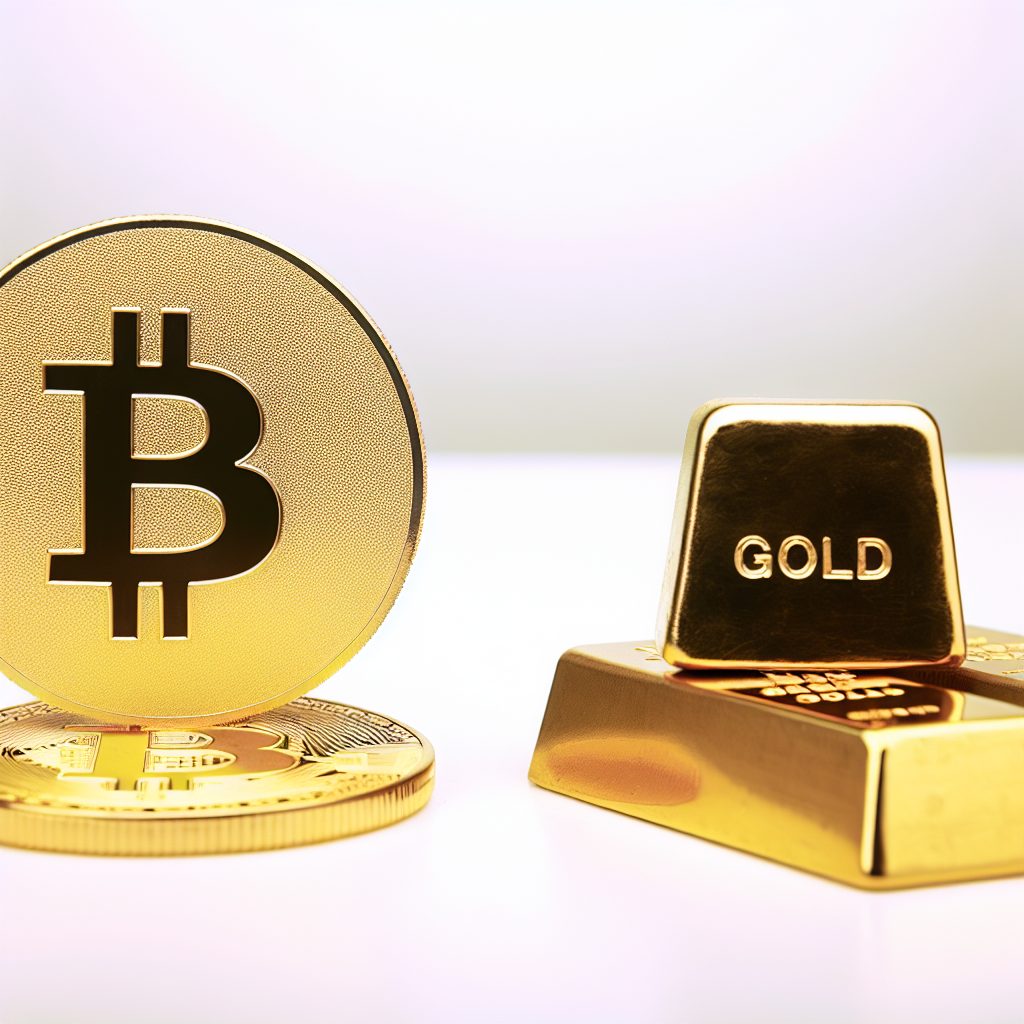
Gold, on the other hand, has been a traditional store of value for thousands of years. It is a physical asset that has intrinsic value, often used in jewelry, electronics, and as a hedge against inflation. The historical significance of gold as a safe haven asset makes it a benchmark for comparing other investments.
The Historical Correlation Between Bitcoin and Gold
Historically, Bitcoin and gold have shown varying degrees of correlation. In the early years of Bitcoin, the correlation was minimal as the cryptocurrency was still gaining traction. However, as Bitcoin matured and gained acceptance among institutional investors, its correlation with gold began to increase.
- 2017-2018: During this period, Bitcoin experienced a massive bull run, while gold remained relatively stable. The correlation was weak.
- 2020-2021: The COVID-19 pandemic led to increased interest in both assets as investors sought safe havens. The correlation strengthened significantly.
- 2022-2024: As Bitcoin faced regulatory scrutiny and market volatility, its correlation with gold fluctuated, reflecting investor sentiment and macroeconomic factors.
Current Market Dynamics in 2025
As of 2025, the financial landscape has evolved significantly. The rise of decentralized finance (DeFi) and the increasing acceptance of cryptocurrencies by mainstream financial institutions have altered the dynamics between Bitcoin and gold.
Institutional Adoption
Institutional investors have increasingly allocated funds to Bitcoin, viewing it as a hedge against inflation and currency devaluation. This trend has led to a stronger correlation with gold, as both assets are perceived as safe havens during economic uncertainty.
Regulatory Environment
The regulatory landscape for cryptocurrencies has matured, with clearer guidelines established in many jurisdictions. This has provided a level of legitimacy to Bitcoin, further aligning its value proposition with that of gold.
Market Sentiment
Market sentiment plays a crucial role in the correlation between Bitcoin and gold. In times of economic distress, both assets tend to attract investors seeking safety. Conversely, during bullish market conditions, Bitcoin often outperforms gold, leading to a temporary decoupling.
Factors Influencing the Correlation in 2025
Several factors are influencing the correlation between Bitcoin and gold in 2025:
- Inflation Rates: Rising inflation rates have historically driven investors towards gold and, more recently, Bitcoin.
- Geopolitical Tensions: Events such as wars, trade disputes, and political instability can lead to increased demand for both assets.
- Technological Advancements: Innovations in blockchain technology and the growing acceptance of cryptocurrencies can impact Bitcoin’s value and its correlation with gold.
- Market Liquidity: The liquidity of both markets can affect how quickly investors can move in and out of positions, influencing their correlation.
Analyzing the Correlation: Statistical Insights
To understand the correlation quantitatively, analysts often use statistical measures such as the Pearson correlation coefficient. This coefficient ranges from -1 to 1, where:
- 1: Perfect positive correlation (both assets move in the same direction).
- -1: Perfect negative correlation (one asset moves up while the other moves down).
- 0: No correlation (the movements of the assets are independent).
As of 2025, the correlation coefficient between Bitcoin and gold has been observed to hover around 0.6, indicating a moderate positive correlation. This suggests that while they do not always move in tandem, there is a tendency for both assets to respond similarly to macroeconomic factors.
Investment Strategies: Bitcoin vs. Gold
Investors often consider various strategies when deciding between Bitcoin and gold. Here are some approaches to consider:
- Diversification: Holding both assets can provide a hedge against market volatility. While Bitcoin may offer higher returns, gold can provide stability.
- Market Timing: Understanding market cycles can help investors decide when to allocate more towards Bitcoin or gold based on economic conditions.
- Long-Term Holding: Both assets have shown potential for long-term appreciation. A buy-and-hold strategy may be beneficial for investors looking for growth.
Future Outlook: Bitcoin and Gold in 2025 and Beyond
Looking ahead, the correlation between Bitcoin and gold is likely to evolve further. Several trends may shape their relationship:
- Increased Institutional Investment: As more institutions adopt Bitcoin, its correlation with gold may strengthen.
- Technological Integration: The integration of blockchain technology in traditional finance could enhance Bitcoin’s appeal as a digital asset.
- Global Economic Conditions: Economic downturns or crises will likely drive investors towards both assets, reinforcing their correlation.
FAQs
What is the current correlation between Bitcoin and gold?
As of 2025, the correlation coefficient between Bitcoin and gold is approximately 0.6, indicating a moderate positive correlation.
Why do investors consider Bitcoin as “digital gold”?
Investors view Bitcoin as “digital gold” due to its limited supply, decentralized nature, and potential as a store of value, similar to gold.
How can I invest in Bitcoin and gold?
You can invest in Bitcoin through cryptocurrency exchanges and wallets, while gold can be purchased in physical form or through ETFs that track gold prices.
What factors influence the price of Bitcoin and gold?
Factors include inflation rates, geopolitical tensions, market liquidity, and technological advancements.
Conclusion
The correlation between Bitcoin and gold in 2025 reflects a complex interplay of market dynamics, investor sentiment, and macroeconomic factors. As both assets continue to evolve, understanding their relationship will be crucial for investors seeking to navigate the financial landscape. By considering the insights provided in this guide, you can make informed decisions about your investment strategy.
For more updates on cryptocurrency news, airdrops, and market trends, visit Bitrabo. Follow us on X, Instagram, Threads, Facebook, and LinkedIn for the latest updates.
Disclaimer: This article is for informational purposes only and should not be considered financial advice. Always conduct your own research before making investment decisions.