As traditional banking systems grapple with aging technologies, the rise of blockchain innovation presents an opportunity to revolutionize the financial landscape. Replacing outdated systems, like COBOL, could enhance efficiency and streamline operations across the globe.
In an enlightening discussion, Jesse Pollak, the mastermind behind Base and a prominent figure at Coinbase, emphasized the transformative potential of blockchain technology:

‘By utilizing this groundbreaking technology, the global economy will witness exponential improvement in financial transactions, allowing for seamless and programmable money movement.’
—Jesse Pollak, Unchained Podcast
Understanding COBOL
COBOL, developed in the late 1950s, stands as one of the first high-level programming languages specifically tailored for business applications. Despite its long-standing presence in the financial realm, its limitations are becoming increasingly apparent.
This outdated system suffers from various issues such as:
- Inflexibility in adapting to modern needs
- Limited libraries and support for contemporary programming practices
- Poor compatibility with newer technologies like machine learning and AI
JPMorgan’s JPMD Initiative: A Bold Move
In a recent groundbreaking announcement, JPMorgan introduced its JPMD (J.P. Morgan Deposit Token), a significant step towards integrating blockchain technology with banking systems. Their press release highlighted:
‘JPMD enhances the capabilities of traditional deposit systems by incorporating the unique characteristics of stablecoins, particularly their potential for programmable peer-to-peer transactions.’
This transition signals a potential shift away from COBOL, which, as reported by various sources, still plays a significant role in over 43% of the world’s financial institutions.
John Duigenan, General Manager of Financial Services at IBM, pointed out the difficulties banks face due to these outdated systems:
‘For banks to innovate and provide new services, they must undergo modernization, yet many remain hindered by integrated legacy systems from decades past.’
The JPMD system allows eligible customers to seamlessly transfer their deposits with greater efficiency than traditional methods. This aligns with Jesse Pollak’s statement about the remarkable improvements that blockchain integration can bring to the economy.
 The growth of tools like Best Wallet represents another important facet of this financial evolution.
Enhancing Financial Accessibility with Best Wallet
Best Wallet positions itself as a transparent, non-custodial crypto wallet offering numerous features, like
- User-friendly interface and live charts
- A innovative Token Launchpad for early access to hot new tokens
As it continues to expand, Best Wallet aims to improve user experience while ensuring that its offerings align with modern demands.
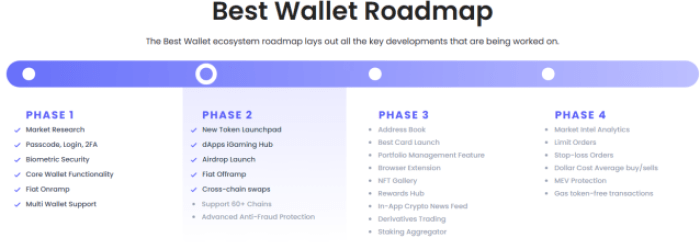 Future plans include NFT galleries, multi-chain support, and advanced market analytics to enrich the user experience.
With its native token, $BEST, currently on presale and accumulating substantial interest, the wallet is already making waves in the cryptocurrency market.
The projected growth for $BEST looks promising, especially with a potential upward movement to $0.072 by year’s end—indicating a substantial return for early investors.
Given estimates of 1 million users by 2030, this token’s value could soar, making it a lucrative opportunity for those looking to invest in the blockchain future.
Participate in the presale now to grab $BEST at an early price and benefit from competitive staking options!
The Future is Bright for Banking and Blockchain
As mainstream banks like JPMorgan embrace digital assets and blockchain technology, the shift towards a fully tokenized financial ecosystem becomes more apparent.
Innovative solutions such as Best Wallet will be instrumental in this transformation, moving banking from legacy frameworks to a blockchain-based future.
Note: This article is for informational purposes only. Always conduct thorough research (DYOR) before making investment decisions.