Recently, the founder of Cardano, Charles Hoskinson, has reiterated the commitment of the ecosystem towards the development of regulated digital currencies that prioritize user privacy. In a statement released on July 31, he proclaimed that “Moneta’s USDM is positioned to be the most advanced stablecoin ever created.” This announcement followed a multi-day workshop held in Buenos Aires, which he mentioned as a significant step towards pioneering a Private Stablecoin.
his proclamation aligns with a detailed technical discussion led by cardano developer andrew Westberg. He outlined how a privacy-focused dollar could meet both enterprise needs and legal requirements without exposing transaction details on public ledgers. “The stablecoin is a vital piece of ongoing discussions in Argentina. However, the complexity involved is significantly greater than that of USDM,” he elaborated.
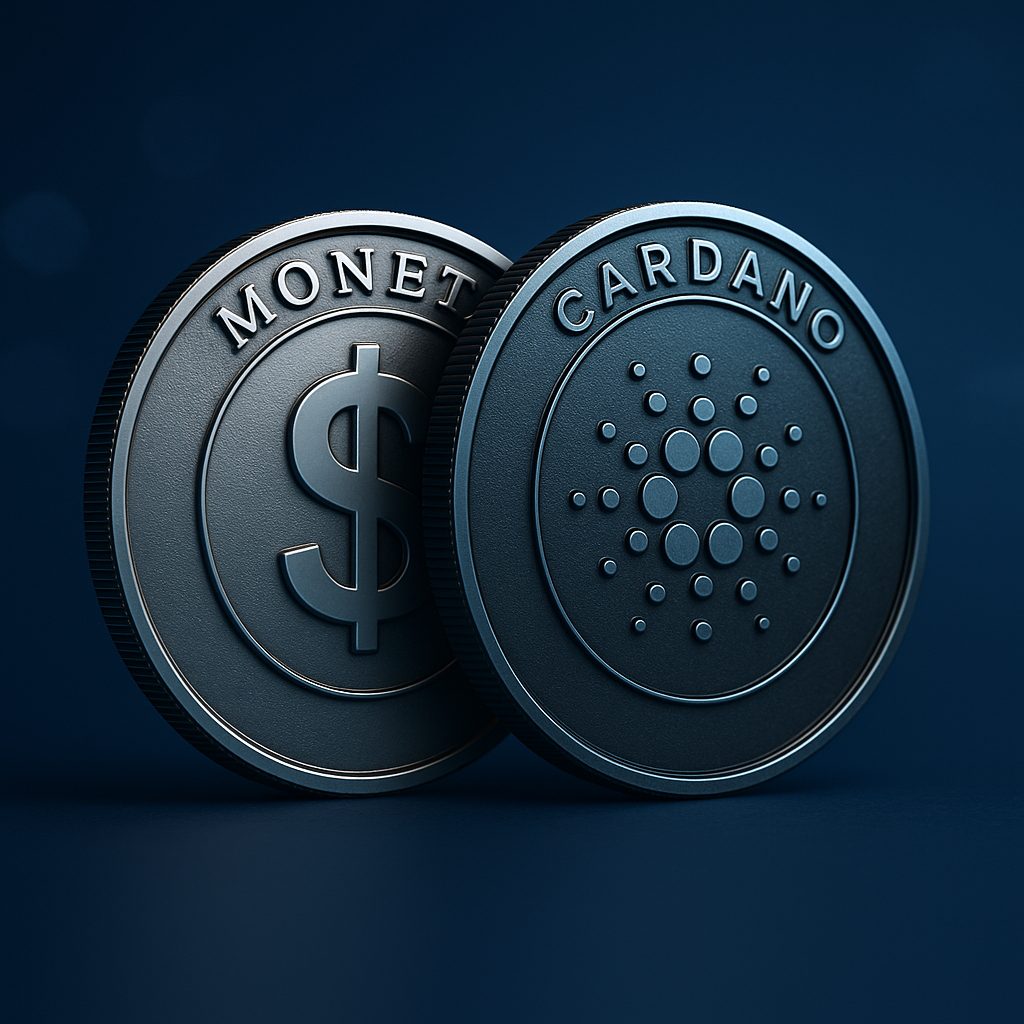
Why USDM Is Reshaping the Future of Stablecoins
Westberg explained a role-based access framework allowing different users to view varying levels of information. For instance, payroll recipients would only see their payments while accountants would see amounts without personal identifiers. “This technology is fascinating, yet the intricacies of creating a system where blockchain can genuinely surpass traditional financial systems are immense,” he pointed out.
This discussion comes at a time when Input Output Global has been highlighting its partner-chain, Midnight, which uses zero-knowledge proofs to provide a framework for selective disclosure while staying compliant with regulations. Midnight positions itself as a platform for “programmable data privacy,” letting developers create enterprise-level solutions using smart contracts written in a TypeScript-like language known as Compact.
Within this framework, Moneta Digital LLC issues USDM as a fiat-backed, regulated stablecoin. Moneta operates under the jurisdiction of the US Money Services Business, governed by federal and state authorities, ensuring reserves are securely maintained in reputable banking institutions like Fidelity and Western Asset Management.
Recently, Moneta launched retail minting with a minimum investment of $1,000, offering a $0 minting fee and availability across 19 US states, reflecting a gradual approach to state-level licensing. As reported, the circulation of USDM on Cardano stands at approximately $12 million.
Simultaneously, a privacy-centric financial product is evolving on the Midnight platform. An X account named “ShieldUSD” markets itself as a “fiat-backed privacy stablecoin on @MidnightNtwrk,” provided by Moneta Digital LLC. Although branding and product features are still being refined, the aim is clear: to create a fiat-based dollar that offers granular permissions, functioning natively on a privacy chain while ensuring interaction with public ledgers.
The central question emerging from Westberg’s discussion—and subsequent community feedback—centers on whether such sophisticated features are essential or merely excessive when compared to today’s conventional public stablecoins. One community member noted that USDC might serve as a “better alternative,” arguing that the use cases for privacy-oriented coins without significant governmental integration are limited. In response, Westberg asserted, “USDC cannot meet these requirements; it operates entirely in the open.” He highlighted applications beyond corporate payroll, such as utility payments where the payer’s identity remains confidential while ensuring public anonymity.
A critical aspect of this privacy-focused design pertains to its application strictly within the Midnight environment. As assets transition to public blockchains, users may “lose privacy,” even while maintaining interoperability with other stablecoins for liquidity adjustments. This delicate balance—privacy by default and public when necessary—aligns with Midnight’s vision of a “selective disclosure” mechanism, which may appease regulatory bodies by allowing investigative access “with a court order,” as exemplified by Westberg’s payroll scenario.
Choosing Buenos Aires as a backdrop for this announcement was intentional. The city has consistently featured in Cardano’s discussions around governance and adoption, highlighting Hoskinson’s advocacy for “private money” that mirrors the confidentiality of cash transactions while remaining audit-compliant. This recent workshop emphasized the ambition to integrate compliance and confidentiality, particularly in a nation grappling with inflation and dollarization, where stablecoins hold significant value in daily economic exchanges.
As Moneta and Cardano navigate their immediate objectives—expanding licensed jurisdictions, enhancing USDM’s fiat reserves, integrating with Cardano DeFi platforms, and eventually launching the Midnight privacy product—they face the crucial challenge of proving that programmable privacy can seamlessly integrate into standard financial activities like payroll and remittances without recreating the challenges associated with shadow banking on a blockchain. The long-term measure of success rests on market acceptance. USDM’s current circulation remains modest compared to existing competitors, and the forthcoming privacy application must demonstrate that its role-based visibility and regulator-friendly access controls can withstand real-world compliance scrutiny.
At this moment, Hoskinson’s message is unmistakable: “Moneta’s USDM is poised to be the most advanced stablecoin ever built.” The trajectory ahead—shaped by developers, enterprises, regulators, and users—will ultimately establish whether the ambitious architectures emerging on Midnight and Cardano can validate this claim in practice.
As of now, Cardano (ADA) is trading at $0.72.