The digital finance landscape is rapidly evolving, and the introduction of stablecoins like PayPal’s PYUSD is an indication of this transformative trend. The integration with LayerZero’s interoperability protocol opens up exciting possibilities for users who want to utilize stablecoins across various blockchains.
Expanding Horizons: PYUSD and Multi-Chain Integration
Recently, a blog post announced that PayPal USD (PYUSD) is now effectively integrated into nine additional blockchains. This expansion signifies a leap forward in making digital currency more accessible and versatile, paving the way for transactions that transcend traditional boundaries.

With the implementation of PYUSD0, users can transfer their stablecoins seamlessly even on platforms that do not natively support them. The new permissionless token format enhances the usability of the PYUSD and offers liquidity across multiple ecosystems.
Initially, PayPal’s stablecoin was issued on several prominent networks including Ethereum and Solana. Now, thanks to PYUSD0, it can also operate on Abstract, Aptos, Avalanche, Ink, Sei, Stable, and Tron. LayerZero has indicated that more integrations may follow, making it a promising avenue for future development.
Previously, the token’s presence was also noted in Berachain (BYUSD) and Flow (USDF), which are set to upgrade to the new PYUSD0 framework. This broadens the network access further, establishing a total of nine supported platforms.
“The continuous growth of the stablecoin market, now exceeding $270 billion, highlights the need for innovations that support a unified, interoperable financial system,” says David Weber, Head of Ecosystem, PayPal USD. This statement underscores the importance of integration efforts in creating a viable platform for users and developers alike.
Since its launch in 2023, PayPal has been at the forefront of adopting and promoting stablecoins, encouraging fiat-equivalent transactions and enhancing user experiences. With the latest release, their reach continues to expand, particularly with the recent Stellar integration.
According to Weber, collaboration is key: “Through our partnership, we can expedite PYUSD’s market reach while ensuring compliance and interconnectedness from day one.”
The PYUSD0 framework comprises three essential structures: the core stablecoin itself, Stargate Hydra for transactions, and LayerZero for minting and operating across new blockchains. This sophisticated design allows for smooth transaction flows while maintaining regulatory measures.
“Our efforts with PYUSD0 signify a broader trend toward a borderless financial marketplace, allowing people to engage in a 24/7 economy,” states Bryan Pellegrino, Co-Founder and CEO of LayerZero Labs, emphasizing the importance of this development for global financial inclusion.
In addition to enhancing their stablecoin offerings, PayPal is also making strides in the cryptocurrency payments arena. The recent introduction of their “Pay with Crypto” service enables merchants to accept digital asset payments effortlessly, further solidifying their footprint in digital finance.
Market Insights: Bitcoin’s Recent Dynamics
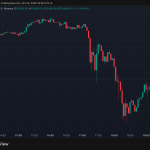
Meanwhile, Bitcoin has experienced fluctuations recently, recovering to $117,900 on Thursday before dipping to $116,400. This volatility has sparked considerable activity in the trading market.
Below, one can observe the price trajectory that Bitcoin has followed over the past days.
According to CoinGlass, Bitcoin’s and other digital assets’ price movements led to $133 million in long liquidations within a single day, illustrating the inherent risks and opportunities in cryptocurrency trading.