The vision for Bitcoin’s role in financial markets continues to evolve, with some analysts suggesting that Bitcoin could soon share space with gold in the reserves of central banks. According to a recent analysis, if current trends in adoption and market structure remain steady, Bitcoin may become a staple of professional portfolios by the end of the decade.
Bitcoin’s Path to Coexistence with Gold
The argument for Bitcoin’s acceptance is particularly compelling in light of gold’s traditional role as a safe haven during uncertain times. With spot prices recently hitting impressive highs, many institutional investors view gold as a fundamental component of their portfolios, particularly against the backdrop of fluctuating economic signals and geopolitical tensions.
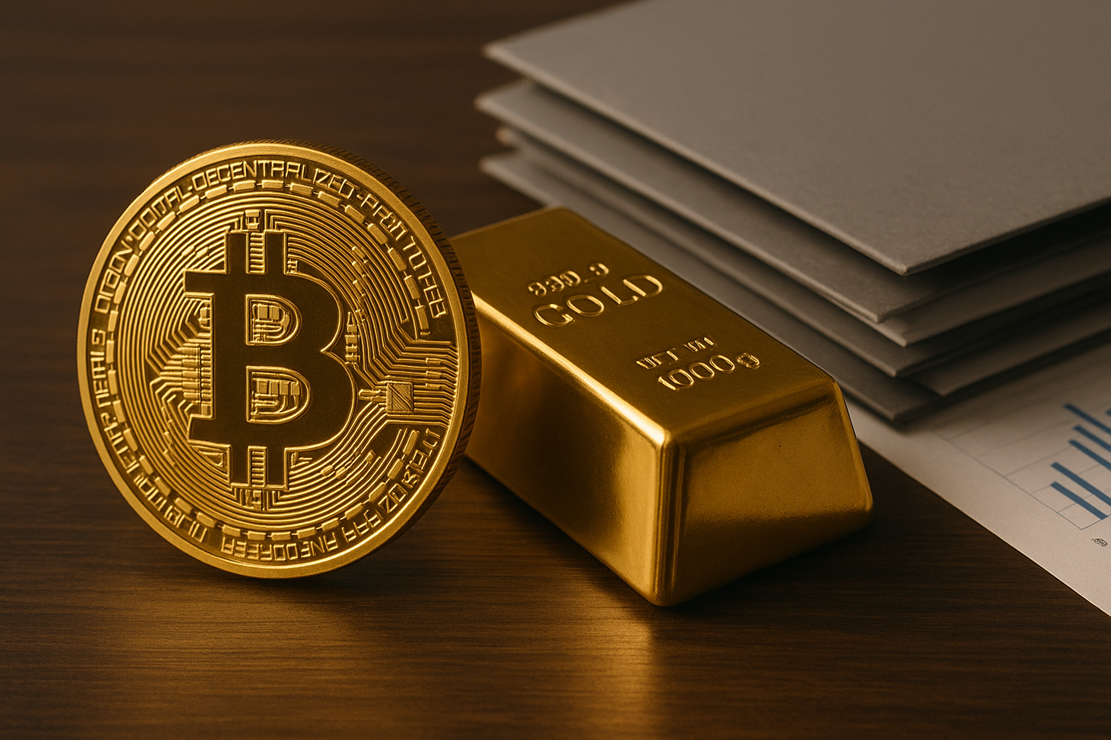
In a notable shift, Bitcoin has also shown resilience, steadying at high price points after recent rallies. This sustained interest highlights a growing institutional embrace of Bitcoin, positioning it not just as a speculative asset but as a serious contender in the macroeconomic landscape.
Critical to this discussion is the asset’s volatility. Experts recognize Bitcoin’s past challenges related to trust and stability, yet there are signs of maturation in its market dynamics. As Bitcoin’s price stabilizes, indications of reduced volatility may suggest a more stable integration into investment portfolios.
In August, a drop in Bitcoin’s monthly volatility to 23% coincided with significant price gains. This pattern could indicate a potential decoupling of Bitcoin’s price from unpredictable market swings, suggesting a shift towards stability and reliability.
Furthermore, the evolution of regulatory frameworks is seen as a pivotal factor in Bitcoin’s journey to acceptance. Emerging regulations across various jurisdictions are expected to enhance market liquidity and reduce volatility—essential steps toward gaining acceptance among central banks.
The Future of Digital Assets in the Global Economy
While there’s excitement surrounding Bitcoin, experts caution against claiming that it will entirely replace traditional currencies like the US dollar. Historical evidence shows that authorities have often prioritized maintaining the supremacy of their fiat currencies, embedding digital assets like Bitcoin as complementary rather than core components of monetary systems.
The rationale for positioning Bitcoin alongside gold is largely based on its unique properties as a diversifier. For instance, correlation analysis reveals Bitcoin’s low ties to most traditional assets, suggesting that it can provide benefits that other assets cannot. This relationship can open new avenues for portfolio diversification in times of economic uncertainty.
Considering the data from recent years, Bitcoin holds a strong relationship with Ethereum, while showing minimal correlation with commodities and other financial instruments. In stark contrast, gold exhibits a stronger tie with rate markets and equities, reinforcing the unique positioning of each asset.
Thus, Bitcoin and gold can be seen as complementary entities that might coexist within central bank frameworks to enhance overall economic stability by diversifying risk factors.
Anticipating Bitcoin adoption trends reveals interesting insights. The adoption trajectory is expected to be influenced by demographic shifts and wider macroeconomic conditions, suggesting a gradual integration into the mainstream financial ecosystem. As more people recognize Bitcoin’s potential as a value store, its role may expand significantly, especially in regions grappling with currency instability.
The path for Bitcoin to enter central bank reserves is likely incremental rather than revolutionary. Steps toward integrating Bitcoin will include increased regulatory alignment, heightened transaction volumes, and improved market liquidity—all contributing to a decreasing volatility landscape.
Ultimately, Bitcoin and gold should be viewed as complementary diversifications that enhance central bank portfolios, reflecting a nuanced approach toward risk management and asset allocation.
As of the latest updates, Bitcoin’s trading performance remains robust, indicating ongoing interest and investment in this evolving asset class.