Recent analyses indicate that the trend among Bitcoin investors is shifting significantly, especially regarding the accumulation habits of long-term holders.
Surge in Bitcoin Long-Term Holder Supply Observed
Data compiled by the analytics platform CryptoQuant showcases a marked increase in Bitcoin supply concentrated among long-term holders (LTHs). Typically, these holders are defined as individuals or entities that have retained their BTC for over 155 days.

Research indicates that the duration coins remain inactive correlates with an increased likelihood that these assets will not be sold in the foreseeable future. Consequently, LTHs symbolize the steadfast segment of the market.
Displayed below is a graphical representation illustrating the 30-day netflow trends within the long-term holder segment over recent years:
The data indicated in the chart shows a significant positive netflow for Bitcoin LTHs lately, underscoring the shift of coins into steadfast hands. Specifically, approximately 303,500 BTC were added to this group in the past month alone.
Previously, during the latter part of last year, long-term holders were actively selling off their assets, especially as market prices took a downturn in Q4. However, a transformation in this pattern began in January 2026, leading to increased HODLing during the stabilization phase following February’s market corrections.
During this period, short-term holders (STHs), characterized as purchasers within the last five months, have seen a decline in their overall supply.
Additionally, spot exchange-traded funds (ETFs) and various trading strategies have also acquired substantial amounts of BTC, with ETF holdings up by 16,800 coins and strategic funds increasing by 53,000 coins. CryptoQuant highlighted that this suggests a trend where “Bitcoin supply is transitioning into more secure and stable ownership.”
In related news, the recent Bitcoin recovery rally appears to lack robust spot demand, as noted by Julio Moreno, head of research at CryptoQuant, in a recent X post.
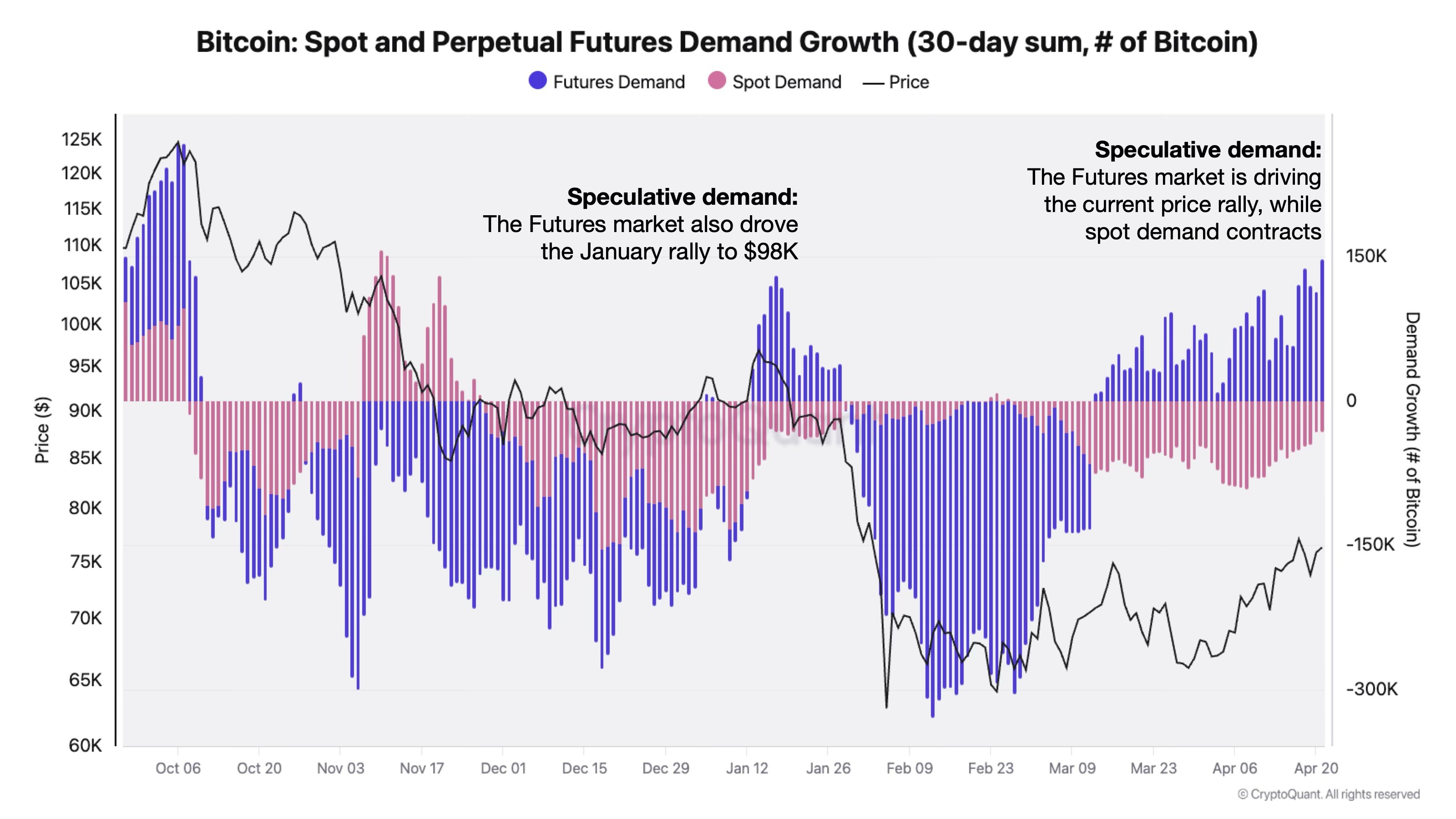
The chart above illustrates a predominantly negative shift in BTC spot demand over several months, with the recent price rally not signaling any change in this trend. In contrast, there is an observable rise in futures market demand. Moreno commented, “The current increase in Bitcoin prices is primarily being driven by the perpetual futures market.”
This pattern is reminiscent of the Bitcoin price surge witnessed in January, yet the absence of spot demand raises concerns about sustainability. The analyst cautioned that any profit-taking behaviors among traders might lead to a price correction, particularly while spot demand remains subdued.
Current Bitcoin Pricing
As of now, Bitcoin is trading near $77,600, reflecting a 4% increase over the past week.