The current legislative landscape regarding cryptocurrency is shifting significantly as the US Senate Banking Committee prepares to discuss the proposed CLARITY Act. This act aims to establish a comprehensive framework for the regulation of digital assets, but it faces considerable scrutiny and an influx of amendments that could reshape its intended goals.
Recent reports indicate that over 100 amendments have been submitted by committee members in anticipation of the markup vote. Notable amendments include those by Senator Elizabeth Warren, who filed more than 40 proposals, one of which seeks to restrict the Federal Reserve from granting master accounts to cryptocurrency firms. Additionally, Senator Jack Reed proposed an amendment that aims to prohibit the use of cryptocurrencies as legal tender, including for tax payments.
Overview of the CLARITY Act
Chairman Tim Scott, along with Senators Cynthia Lummis and Thom Tillis, has introduced a revised version of the bill, reflecting extensive input from various stakeholders, including lawmakers, regulators, and consumer advocates. The intent of the CLARITY Act is to create a balanced framework that promotes both innovation and consumer protection.
Senator Scott emphasized the importance of having well-defined regulations, stating, “This bill reflects serious, good-faith work across the Committee and delivers the certainty, safeguards, and accountability Americans deserve.”
Key Issues Under Debate
One of the primary points of contention surrounds stablecoin rewards. Under the current text, the proposed legislation would prohibit rewards on idle stablecoin balances akin to traditional bank deposits but would permit rewards based on transaction activity. Regulatory bodies such as the SEC, CFTC, and Treasury Department would be responsible for creating specific rules to enforce this provision.
Efforts to adjust these provisions have sparked further dissent from the banking community. Senators Reed and Tina Smith proposed an amendment that incorporates banking industry suggestions regarding stablecoin yield restrictions. This amendment highlights the ongoing conflict between the cryptocurrency sector and traditional banking practices, as it seeks to ensure that digital asset platforms do not compete unfairly with banks.
Broader Implications of the Legislation
The CLARITY Act’s reach extends beyond just stablecoins. Under this bill, digital commodity exchanges, brokers, and dealers will be categorized as financial institutions under the Bank Secrecy Act. This designation would subject them to strict anti-money-laundering regulations and customer-identification processes.
Furthermore, the legislation would allow crypto companies to raise capital up to $50 million annually and a total of $200 million without requiring SEC registration. However, the act clarifies that tokenized securities will still be subject to existing securities laws.
The Political Landscape
Despite negotiations and a willingness to find common ground, the political environment remains complex. Senate Minority Leader Chuck Schumer has shown interest in advancing the discussion but has acknowledged that certain ethical negotiations need to progress. Senator Warren has expressed significant concerns, suggesting that the current version of the bill risks the integrity of investors and implies potential conflicts of interest.
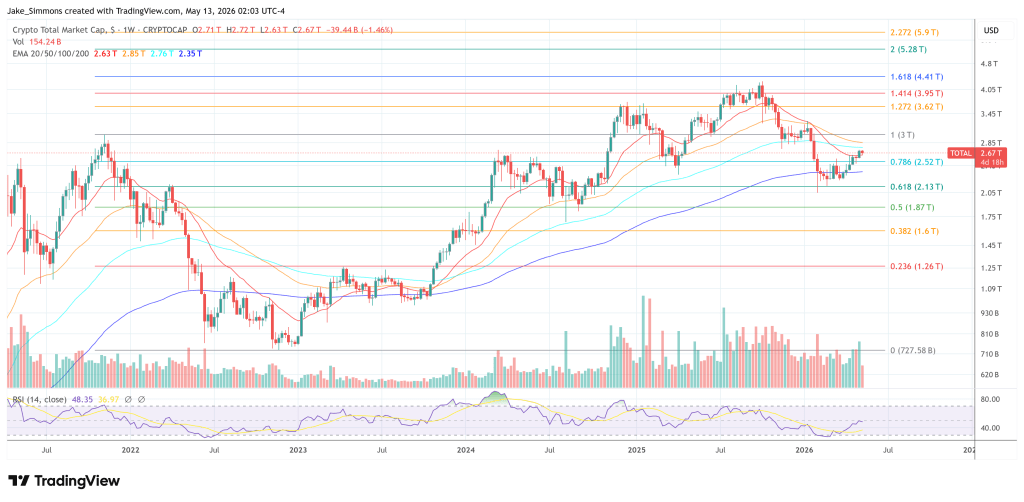
As discussions continue, the total cryptocurrency market cap has reached approximately $2.67 trillion, reflecting the growing significance and complexity of digital assets in the financial landscape.