Poland has recently faced challenges in establishing a regulatory framework for cryptocurrency, largely influenced by a significant fraud case involving a local exchange. This situation has intensified discussions around cryptocurrency regulation, resulting in a crucial parliamentary vote that had seen multiple failures prior.
The Impact of Fraud on Regulation
Prime Minister Donald Tusk highlighted a noteworthy incident concerning Zondacrypto, a Polish cryptocurrency exchange currently under criminal investigation. Allegations claim that numerous users have been unable to access their funds, raising questions about investor protections in the crypto sector. Tusk asserted that the exchange might be linked to Russian financial interests, which could have influenced its operations.
The scandal surrounding Zondacrypto has placed considerable pressure on Polish lawmakers to finalize a solid regulatory framework to prevent such situations from occurring in the future. This pressure was evident during the recent session of the Sejm, Poland’s lower chamber of parliament, where four distinct cryptocurrency bills were debated simultaneously.
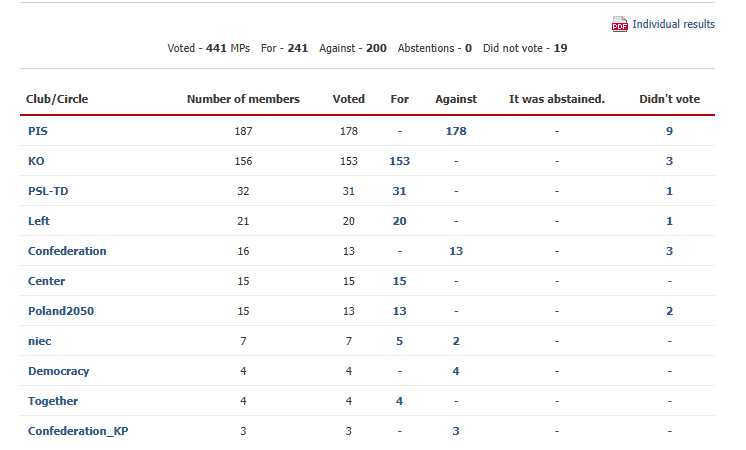
After extensive discussions, the Sejm approved a government-backed bill, numbered 2529, with a vote count of 241 to 200. This marked the third attempt by the government to push similar legislation after two earlier drafts were vetoed by President Karol Nawrocki.
This approved bill grants substantial authority to Poland’s Financial Supervision Authority (KNF) to oversee cryptocurrency market participants, impose penalties, and suspend accounts or transactions when necessary.
Sejm uchwalił ustawę o rynku kryptoaktywów. Ustawa daje Komisji Nadzoru Finansowego kompetencje do kontrolowania podmiotów rynku, nakładania sankcji administracyjnych oraz czasowego blokowania rachunków i transakcji. pic.twitter.com/WGzmTA8wez
— Sejm RP
(@KancelariaSejmu) May 15, 2026
Concerns Regarding Provisions Remain
Despite the recent legislative success, many within the cryptocurrency community expressed concerns. Critics have pointed out that the provisions for blocking accounts and transactions, which were the basis for previous presidential vetoes, remain unchanged in the new bill. Suggested reforms, including enhanced judicial oversight of enforcement measures, did not make it into the final text.
Due to these lingering issues, many observers speculate that the president may choose to veto the legislation once again. This possibility raises concerns within the industry, as a third rejection would exacerbate regulatory uncertainty at a crucial time.
The urgency for Poland to align its regulations with the European Union’s Markets in Crypto-Assets Regulation (MiCA) adds further pressure, with implementation deadlines approaching in July.
Overview of the Legislative Process
The recent voting process came after extensive consideration of competing cryptocurrency proposals from various stakeholders, including the government, the president, the Confederation party, and a parliamentary committee. Ultimately, the government’s version prevailed after a merging of the different proposals.
Featured image from Hotels.com, chart from TradingView