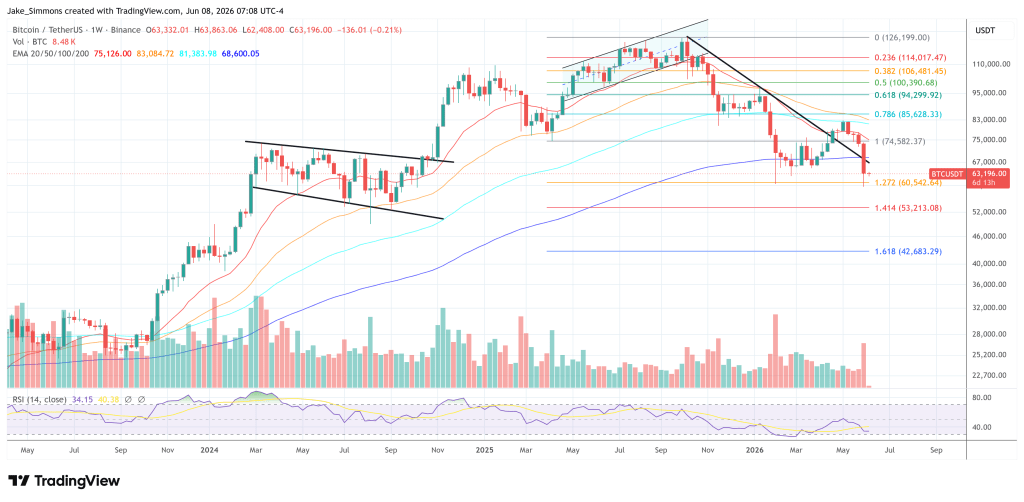
Jamie Coutts, the Chief Crypto Analyst at Real Vision, has expressed a cautiously optimistic stance on Bitcoin, indicating that the cryptocurrency may be positioning itself for a favorable long-term outlook. However, he notes that an upcoming challenge is posed by a significant refinancing requirement associated with US Treasury obligations, which could impede a strong bullish turnaround in the cryptocurrency market.
In a recent post on X, Coutts remarked that Bitcoin’s long-term technical indicators appear to be forming a structure similar to those preceding market bottoms. He mentioned, “I will acknowledge a bullish shift in Bitcoin when the long-term technical indicators show signs of exhaustion and the trend reverses.” He has speculated that the second and third quarters could mark a bottom for Bitcoin based on historical bear market patterns. He believes the asset is currently in a favorable long-term accumulation phase.
US Treasury Refinancing Challenges
Coutts emphasizes that the current situation surrounding Bitcoin is not just about its price movements; rather, it is fundamentally tied to broader economic factors.
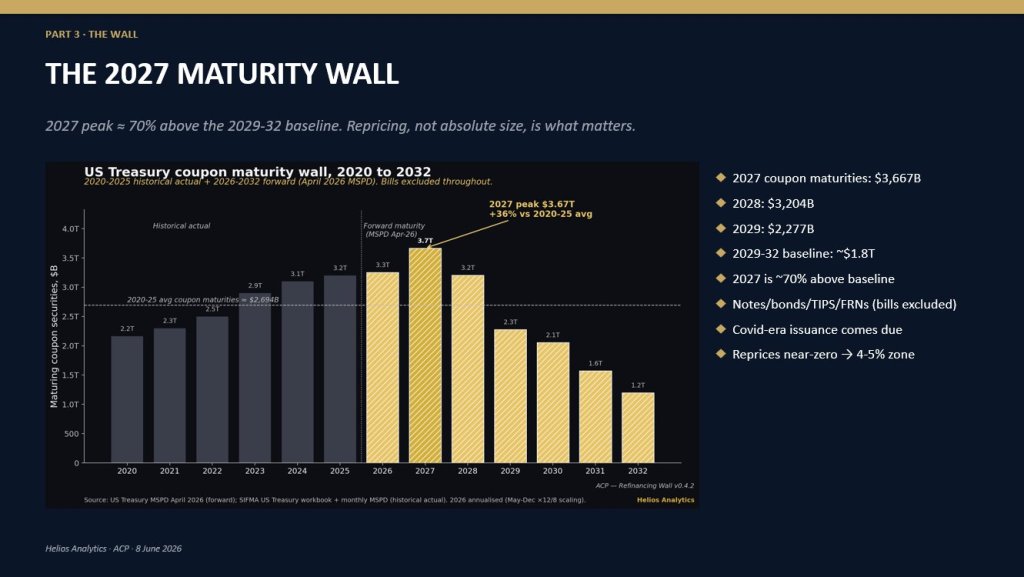
He highlighted the monumental refinancing needs slated for 2027, where the US is expected to confront $3.67 trillion in coupon maturities. This amount is markedly 36% higher than the average from 2020 to 2025, indicating a substantial refinancing burden as debt originally issued when interest rates were low now faces a market of higher rates, ranging from 4% to 5%.
This situation raises concerns for Bitcoin and other risk assets regarding whether current liquidity levels can sustain this volume of treasury issuance without causing stress in the market. Coutts pointed out that liquidity continues to be an issue, especially as investments have been shifting away from cryptocurrencies since late 2025.
“Both retail and institutional investors have been withdrawing from Bitcoin and the overall crypto market since the end of 2025,” he stated. “The influx of liquidity has been channeled toward assets focused on AI development, which is understandable as capital tends to flow where it is treated best. Presently, the focus of capital allocation lies with AI stocks and commodities. On-chain activity has also dropped to multi-year lows.”
This shift in capital allocation is significant because Bitcoin’s previous bullish periods have often depended not only on its internal market dynamics but also on overall liquidity conditions and investor risk appetite. Coutts argues that although Bitcoin may be entering a promising structural phase, the present scarcity of liquidity and the attractiveness of alternative asset classes may pose challenges to its recovery.
Additionally, Coutts has urged caution against the market’s fixation on Initial Public Offerings (IPOs), suggesting that the real challenge lies in the government’s refinancing demands and the financial system’s capacity to manage them. “While the market is preoccupied with IPOs,” he said, “my concern extends to all risk assets. Current liquidity levels are inadequate to easily accommodate this refinancing demand.”
Another layer of complexity stems from the Federal Reserve’s balance sheet. Coutts pointed out that calls for a smaller balance sheet, such as those from Kevin Warsh, could present further challenges if policymakers attempt to navigate a significant maturity wall within a tightening liquidity framework.
“It is likely they will continue to support the short end while refreshing liquidity through banks,” he commented, adding that stablecoins may increasingly become pivotal in this environment. However, he cautioned that managing $3.67 trillion in maturing debt without triggering a mishap in the bond market would represent an extraordinary feat of fiscal and monetary policy management.
The implications for Bitcoin remain layered. While Coutts does not dismiss the potential for a market bottom, he believes a macroeconomic trigger may be necessary before any significant upward movement can begin. Based on his analysis, Bitcoin could be among the first assets to respond to changes in Fed liquidity, but such a shift may only become apparent if stress is observed in Treasury assets.
“I do not see a feasible path forward without increased liquidity from the Federal Reserve,” he remarked. “Bitcoin is likely to perceive these changes before other assets do. However, it is imperative to monitor Treasury behavior closely, as this will influence policy adjustments. This is the complex aspect of the current situation.”
As of now, Bitcoin is trading at $63,196, indicating a critical moment in its price trajectory.