XRP Ledger Foundation Adopts Quantum-Resistant Account Design to Bolster Security by 2028
The XRP Ledger Foundation is taking proactive measures to safeguard its platform against the potential threats posed by quantum computing. As part of a comprehensive roadmap set for 2027, the Foundation has proposed a method that would allow account holders to implement quantum-resistant signing keys without incurring additional transaction fees. This initiative aims for full implementation by 2028.
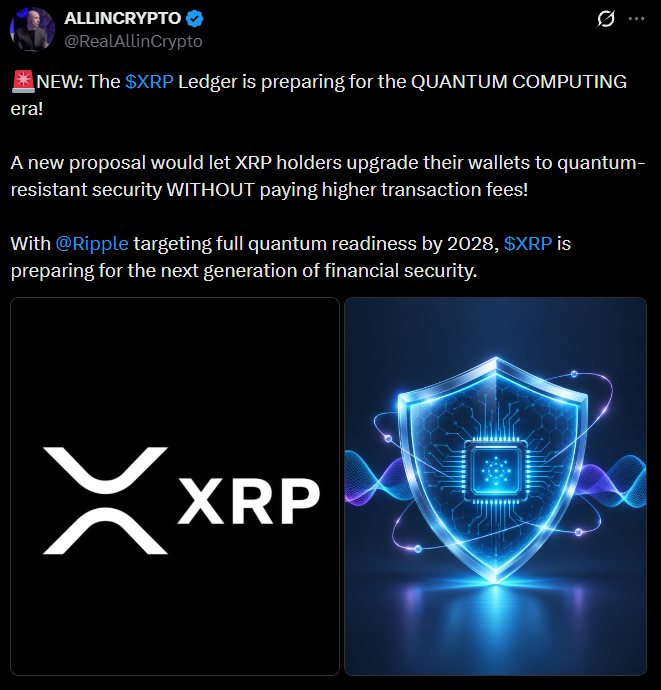
Quantum computers capable of executing Shor’s algorithm could potentially compromise current cryptographic methods, exposing users to security risks. Every time an account conducts a transaction, its public key becomes visible, leaving it vulnerable should quantum computing capabilities advance. The proposed upgrade will enable users to add a quantum-resistant key while deactivating the original, reducing the risks associated with exposure.
Details of the Quantum-Resistant Design
The new design will utilize ML-DSA-44, a lattice-based signature scheme recently approved by the U.S. National Institute of Standards and Technology (NIST) for its resistance to quantum attacks. Users can register their new signatures and subsequently disable the classical ones, ensuring that the account’s address and balance remain unchanged and that funds do not need to be relocated.
This upgrade involves generating larger keys and signatures, expanding the data footprint from 105 bytes for current transactions to an estimated 5,331 bytes. Despite this increase, the XRP Ledger plans to maintain its base transaction fee, which means that the expense associated with additional storage will primarily fall on network operators rather than individual users.
Development work on the project remains ongoing, with discrepancies noted in the generation of keys across different programming implementations. The Foundation intends to begin formal testing and migration studies in the first half of 2027, with further enhancements planned for completion by 2028.
The Importance of Zero Extra Fees
Traditionally, the adoption of post-quantum upgrades in blockchain networks has been hindered by the increased transaction costs associated with larger signature sizes. By ensuring that the base fee remains constant, the XRP Ledger’s design eliminates a significant barrier to transitioning to enhanced security measures. This user-centric approach may facilitate broader adoption of the quantum-resistant features.
This plan reflects a realistic understanding of the quantum threat landscape, as quantum computing technology capable of breaching current encryption models is not imminent. Nevertheless, the exposure of public keys is a lasting issue, and the new designs provide users with an opportunity to enhance security gradually rather than facing a sudden, mandatory upgrade.
Implications for Blockchain Security
The XRP Ledger’s initiative stands out as one of the most detailed blueprints for post-quantum security available. By combining a recognized NIST algorithm with user-directed migration and stable fee structures, the Foundation sets a model for other networks. Many alternatives have yet to establish a concrete strategy in terms of both security implementation and economic considerations.
This development serves as a reminder that preparing for quantum security is not just theoretical; it is already a practical necessity. With public keys stored on ledgers globally, any network that resolves the challenges associated with storage and transaction costs early may gain an advantage as institutional users and regulators increasingly demand enhanced quantum security measures.
While there are still steps needed before the enhancement is officially implemented—which include validator approval, code audits, and user education—the XRP Ledger Foundation has established a clear path toward achieving quantum-resistant accounts without incurring additional fees, culminating in their planned rollout by 2028.