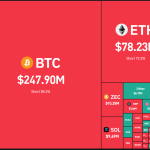
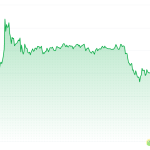
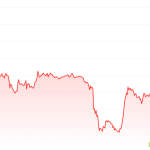
The price of Solana (SOL) has been experiencing difficulties, recently trading around $69 amid a broader market downturn that has impacted cryptocurrencies, including Bitcoin, which hit its lowest price in two years this week. However, while market sentiment may be shaky, Solana’s developers are focusing on a critical challenge: preparing for the future threat posed by quantum computers.
The Quantum Computing Challenge
Currently, Solana employs Ed25519, an elliptic-curve signature scheme, to validate account ownership and transactions. This signature method is vulnerable to quantum attacks, particularly if a sufficiently powerful quantum computer were to utilize Shor’s algorithm. Such a machine could theoretically decipher private keys from public information, allowing malicious actors to manipulate accounts. Although the technology to achieve this does not yet exist, industry experts stress the importance of proactive measures given that upgrading an established network could take years.

Progress on Quantum Solutions
Solana’s approach to mitigating quantum risks includes three primary components: a new signature system for users, an upgraded consensus protocol for validators, and a secure method to transition existing wallets to this new infrastructure. Despite no current implementations being live, significant groundwork is reportedly in progress.
Adopting the Falcon Signature Scheme
To address user authentication, Solana has selected the Falcon signature scheme. Two critical teams within the network, Anza and Jump Crypto’s Firedancer, concluded that a post-quantum signature system with compact signatures was essential. Initial implementations of Falcon are in place, and the Solana Foundation has stated that migrating to this new system will not significantly impact network performance. Falcon was chosen because, despite being bulkier than Ed25519 signatures—using 666 bytes compared to the current 64 bytes—it remains the most efficient option available from the National Institute of Standards and Technology (NIST).
Enhancing Consensus with Quantumglow
Beyond user signatures, Solana also needed to update its consensus mechanism used by validators to agree on the state of the blockchain. The existing system, Alpenglow, was launched in October, significantly reducing finality time to approximately 150 milliseconds. However, a quantum-resistant version, dubbed Quantumglow, is under research. Quantumglow aims to maintain this quick consensus while adapting to new cryptographic methods. Researchers emphasized that this system would seek innovative ways to minimize the use of large signatures in each transaction, only sending larger signatures when absolutely necessary.
Securing Existing Wallets
A crucial aspect of Solana’s quantum readiness strategy involves protecting existing wallets. Anza has developed a prototype allowing users to prove their ownership of current accounts, thereby facilitating a transition to post-quantum security without exposing seed phrases to potential attackers. This prototype is still in development but is intended to be a one-time security solution, not a recurring burden on users.
Implications for SOL Holders
Quantum risk remains one of the key threats to the cryptocurrency sector, and a network like Solana that builds a credible pathway to post-quantum security could be attractive to long-term investors, particularly institutions planning to hold assets for extended periods. As SOL’s price fluctuates amid broader economic pressures, successful advancements in quantum readiness might position Solana favorably once market conditions stabilize.
Monitoring SOL Price Movements
Currently, SOL’s trading range is between $65 and $71.60, with a key target for bulls being the recovery of the $71.60 mark, followed by the significant $75 threshold. Should prices drop below the $65 support level, market analysts are cautious about the psychological impact of breaching the $60 mark. As macroeconomic factors, including a potential Federal Reserve rate hike, exert downward pressure on tech stocks and associated cryptocurrencies, Solana’s ongoing developments in quantum risk management point to a focus on long-term viability amid short-term market uncertainties.
What are your thoughts? Could Solana’s proactive quantum initiatives become a significant draw for institutional investors, or is the quantum threat still deemed too distant to influence current market valuations?