The growing intersection of cryptocurrency and national finances has raised significant discussions about transparency and legality. Recently, blockchain analytics firm Arkham launched a publicly accessible and searchable map highlighting crypto wallets that are linked to Iran’s central bank. This initiative aims to provide investigators and the public a clearer view of Tehran’s alleged digital assets.
How Iran Engages with Cryptocurrency
The map created by Arkham focuses primarily on two specific Tron-based wallets, which were recently placed on the U.S. Treasury’s Specially Designated Nationals (SDN) list. These wallets are associated with the Bank Markazi Jomhouri Islami Iran, known as the Central Bank of Iran, and have connections to the Islamic Revolutionary Guard Corps-Qods Force and Hezbollah.
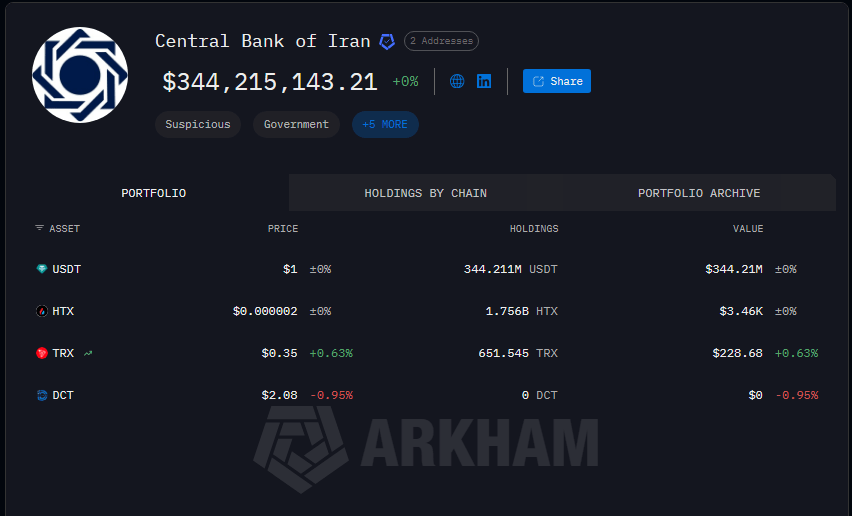
As part of this action, approximately $344 million in cryptocurrency was frozen. Treasury Secretary Scott Bessent emphasized that the aim is to restrict Tehran’s ability to raise, transfer, and utilize funds.
In response to governmental directives, stablecoin issuer Tether confirmed that it had complied, freezing the associated assets without naming Iran directly. This highlights the ongoing efforts to curb illicit financial activities.
On May 11, Arkham published extensive research linking these wallets under a central hub for the Iranian bank, which can serve as a foundation for analyzing transaction flows and identifying linked wallets.
The identified wallets primarily manage TRC-20 tokens, which are standardized tokens operating within the Tron network. Notably, this includes USDT, the predominant stablecoin globally.
A Complex Web of Financial Transactions
The movement of funds is intricately woven and involves multiple stages. According to research from Chainalysis, Iranian oil revenues typically flow through a network of brokers and intermediary wallets, utilizing cross-chain bridges and decentralized finance protocols before landing in accounts tied to the central bank and related organizations. This layer of complexity is designed to obscure the origins of these funds.
A representative from TRON stated that while the network itself cannot oversee or restrict individual transactions, the T3 Financial Crime Unit—a collaborative initiative involving TRON, Tether, and TRM Labs, established in 2024—serves as a primary resource for identifying and combating misuse of the network.
This unit engages with law enforcement to freeze significant sums associated with sanctioned entities and terrorism financing. Tether chose not to provide additional comments on this matter.
The Extent of Iran’s Crypto Involvement
The wallets disclosed by Arkham represent only a fraction of Iran’s overall cryptocurrency activity. Estimates from TRM Labs and Chainalysis suggest that Iran’s crypto transaction volume was about $11.4 billion in 2024 and reached approximately $10 billion in 2025.
Additionally, reports indicate that Iran is exploring the option of implementing crypto-denominated tolls for vessels navigating the strategic Strait of Hormuz, suggesting that cryptocurrencies might be viewed as a viable source of revenue beyond merely circumventing sanctions.
Featured image from Bitcoin Policy Institute, chart from TradingView