In an exciting move, SoFi is set to introduce a groundbreaking international money transfer service using Bitcoin within its consumer application. According to Lightspark CEO David Marcus, this initiative will mark the bank as the “first in the US to leverage Bitcoin and Universal Money Addresses (UMA) for instant, cost-effective global payments.” The service will utilize the Bitcoin Lightning Network for seamless cross-border settlements, launching first with a corridor to Mexico.
A Pioneering Step for Financial Innovation
SoFi announced on August 19 that its members will have the capability to send money internationally directly from the SoFi app, boasting lower transaction fees and expedited service in comparison to conventional remittance providers. This process involves converting US dollars into Bitcoin in real time, transferring through the Lightning Network, and then immediately converting back to the local currency, crediting the recipient’s bank account—all without the need for third-party applications. SoFi has committed to ensuring that total costs remain “below the national average,” with transparency around exchange rates and fees at the forefront. The feature will be accessible via SoFi Checking & Savings, provided by SoFi Bank, N.A., Member FDIC, and a waitlist is currently available.
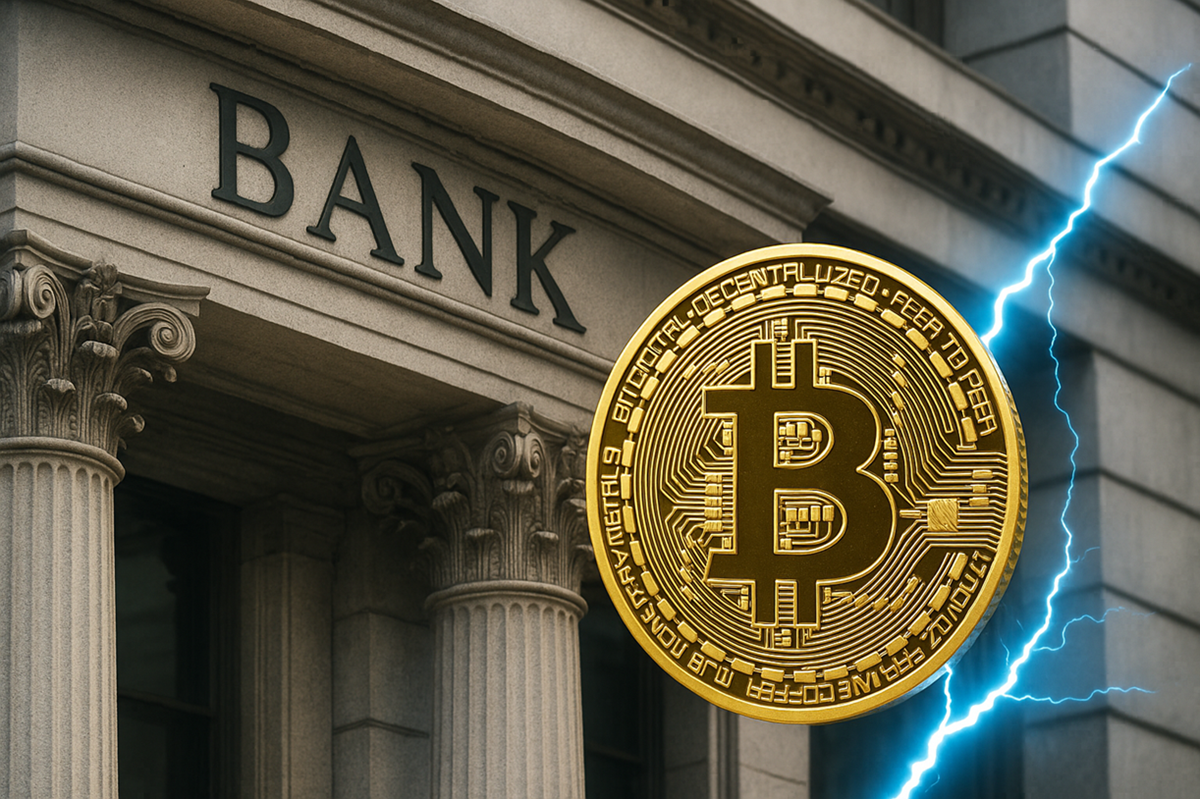
According to Lightspark’s Marcus, “SoFi embodies the innovative spirit of today’s financial platforms in the US.” He points out that digital banks are increasingly adopting UMA due to its rapid, economical, and secure nature, leveraging the sole open payments network available—Bitcoin. SoFi’s CEO, Anthony Noto, emphasized the practicality of this move: “For numerous SoFi members sending money to family abroad, the ability to transfer funds swiftly and inexpensively is not merely a convenience; it significantly enhances their daily financial experiences.”
Marcus highlighted this development on social media as a “critical milestone,” reinforcing the strategic advantages for banks opting for Bitcoin: “Its neutrality, openness, and decentralization position Bitcoin as a compelling alternative to outdated correspondent banking systems. We shouldn’t repeat the creation of another closed, corporate-controlled payment network. Open systems will prevail.” He urged observers to consider the broader implications of mainstream banks in the US, Latin America, Europe, and beyond using Bitcoin as a neutral means for financial transactions.
This announcement is part of a larger movement among major consumer platforms to integrate Lightning-based settlement solutions. Lightspark has already announced collaborations to introduce Lightning and UMA to other platforms like Revolut in the UK and Brazil’s Nubank, which ranks among the world’s largest digital banks, indicating an expansive vision for a collaborative “open Money Grid.” In this context, SoFi’s US banking charter adds an admirable element to this regulated environment.
Determining whether SoFi is indeed the first US bank to incorporate the Lightning Network could hinge on different interpretations and scopes. While Lightspark’s release refers to SoFi as “one of the initial US banks to present a blockchain-based remittance service,” Marcus’ statements clarify it as the foremost US bank integrating both Bitcoin and UMA for continuous, low-cost international payments.
What is clear is the underlying framework: UMA addressing for the initial phase, Lightning for cross-border navigation, and fiat currency in and out—SoFi aims to offer costs below average and 24/7 service within a user-friendly banking app.
At the time of writing, the price of Bitcoin was reported at $113,627.