The cryptocurrency market is currently navigating a challenging landscape, with Bitcoin grappling to maintain stability near the $70,000 mark. Given the ongoing fluctuations, many investors remain tentative, reflecting broader economic uncertainties and shifts in market sentiment. As Bitcoin hovers in the mid-$60,000 range, indicators reveal a notable imbalance, primarily driven by selling pressure from transient market participants.
Recent analyses suggest that shorter-term Bitcoin investors are facing mounting challenges. The Short-Term Holder Spent Output Profit Ratio (STH SOPR) has significantly hovered below the neutral point. This ratio serves as a gauge of market behavior, where values under 1.0 indicate that traders are selling at a loss, highlighting a trend that may concern potential long-term holders.

Notably, from early March, the STH SOPR briefly surpassed the neutrality line on March 4, only to revert back into loss territory. This pattern reinforces the idea that many investors are reacting to market volatility with caution, often at a financial loss. The current intraday average remains a stark reminder of persistent downward pressure on recently acquired assets.
Trends Among Short-Term Holders
An in-depth look at the behavior of Bitcoin’s short-term holders reveals significant trends that may reshape future market dynamics. The latest report underscores substantial shifts in the Short-Term Holder (STH) Supply, which monitors the volume of Bitcoin held by investors for less than 155 days.
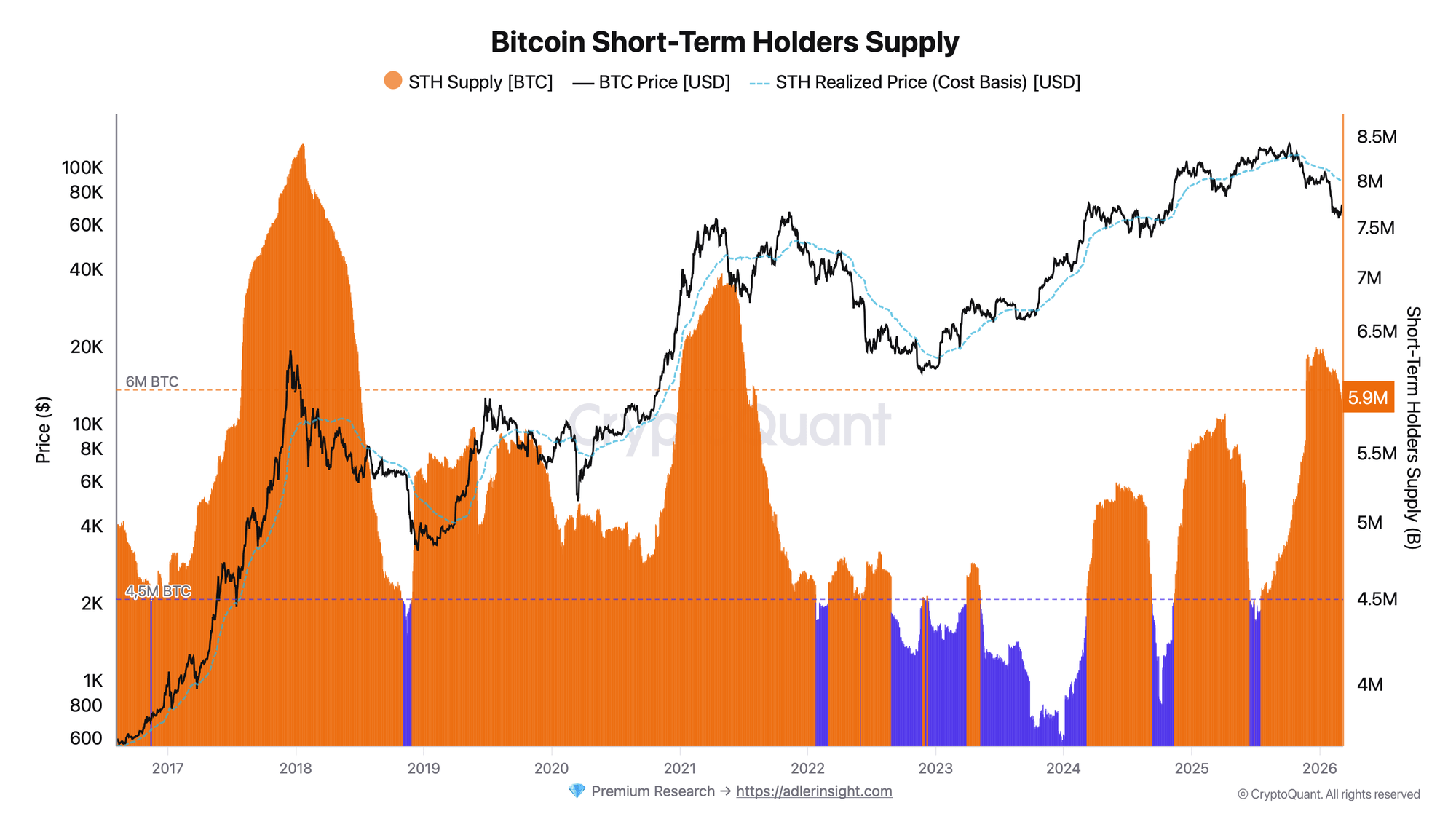
Over the last fortnight, a clear decline in STH Supply has been observed, indicating that many short-term holders have opted to sell or transition their assets to longer-term storage. Currently, the realized price for this group stands significantly higher than the market price, revealing a troubling gap. Short-term holders may find themselves under psychological stress as their investments drift into the red, fostering an environment where future selling might accelerate.
This decreasing supply could stem from two scenarios. It may reflect forced selling amid losses, indicating capitulation or a shift towards longer-term hold strategies. Importantly, the disparity between the realized and market prices suggests some holders may become motivated to liquidate positions during market rallies.
Market Recovery Efforts
Despite recent corrections, Bitcoin is seeing a struggle to stabilize around the $67,800 area after experiencing a sharp downturn from past record highs of over $120,000. Early indications of weakening trends became evident when Bitcoin lost ground near the $110,000–$115,000 zone, leading to a series of declining peaks.
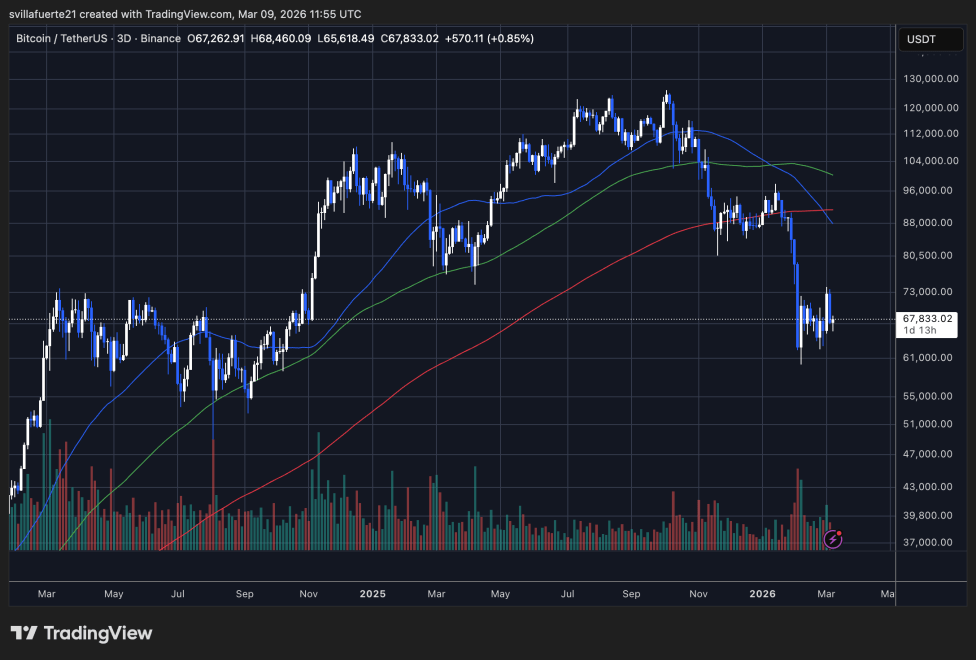
This corrective movement witnessed intensified selling, suggesting a transition toward a more cautious market atmosphere. Price points around $62,000–$65,000 demonstrated potential support, where buyers resurfaced to bolster the market.
As Bitcoin seeks to hold its ground between the $65,000 and $70,000 marks, this zone now acts as a pivotal balance area. The broader resistance marked by the 200-period moving average, which sits substantially above at around $88,000, signifies a major hurdle for bulls aiming to reclaim prior momentum.
Recent volume spikes during price declines indicate a significant distribution phase. For Bitcoin to foster a resurgence, a recovery beyond the $70,000–$75,000 region is crucial, along with regaining control over the shorter moving averages.
In summary, while the current scenario presents challenges, it also opens discussions on long-term viability and strategies for navigating Bitcoin’s evolving landscape. The crypto community continues to remain vigilant as these market dynamics unfold, affecting the future of cryptocurrency investments.