Charles Hoskinson has expressed concerns about the potential for a wider collapse within the Cardano ecosystem following the announcement from TapTools regarding its operational wind-down. The platform, known for its data and analytics services within the Cardano network, cited challenges related to leadership changes and economic sustainability as reasons for its impending closure.
In a recent livestream on June 2, Hoskinson addressed this situation, indicating that it is not merely a failure of a single project, but indicative of larger structural issues within the ecosystem, particularly concerning funding and incentives.
TapTools has provided analytics for over one million users and has supported numerous projects through its APIs. However, the departure of key team members, including the co-founders, left the platform in a vulnerable position. The remaining team emphasized that the specific technical skills required to maintain TapTools are not easily replaceable, complicating efforts to continue operations amid rising infrastructure and operational costs.
Concerns of Further Failures in the Ecosystem
During the livestream, Hoskinson highlighted the potential for additional projects within the Cardano ecosystem to experience similar challenges. He noted that the difficult market conditions could lead to numerous project failures.
“This environment poses significant risks for projects,” he stated. “Many are struggling to survive, and it appears inevitable that we will see further collapses if support mechanisms are not put in place soon.”
He identified TapTools and JPEG Store as examples of the difficulties facing projects driven by the current economic climate. As such trends continue, he anticipates that more platforms may face similar circumstances in the latter part of the year.
Proposed Solutions for Governance and Resource Allocation
In light of these challenges, Hoskinson proposed several strategies to help stabilize the Cardano ecosystem. These include establishing a Cardano sovereign wealth fund, creating an ecosystem index, and facilitating strategic acquisitions of various projects. However, he noted that such proposals have often met resistance or lack of support.
Hoskinson has also made attempts to acquire and commercialize projects like Nami and Blockfrost as a means to enhance infrastructure but suggested that these actions were sometimes interpreted negatively, raising questions about centralization.
He stressed the need for an effective governance structure to allocate treasury resources toward commercial infrastructure effectively. Although he noted that some funds had been allocated to venture-backed projects, he emphasized that getting resources to existing platforms in distress is crucial.
The Role of Governance and Leadership
During his discussion, Hoskinson clarified that he does not exert unilateral control over Cardano’s governance. He explained that he has no governance keys and cannot initiate changes in protocol or treasury management, undermining the common perception of his authority.
“I want to clarify that my role does not grant me the power to dictate Cardano’s direction,” he said. “I am unable to initiate critical changes or access governance keys.”
This statement emerged amid a broader critique of Cardano’s governance culture. Hoskinson pointed out a dichotomy within the ecosystem where there are opposing views on commercialization while simultaneously placing blame on leadership when infrastructure efforts fail. He urged delegators and DReps to critically assess whether their chosen representatives are fostering growth or hindering progress.
“It is essential to select effective leadership and establish a clear strategy,” he stated. “You have options: choose to support growth, or recognize that the current trajectory may lead to decline.”
As a final note, he discussed more radical options for governance reform, such as altering treasury policies or even considering a new launch through a specific mechanistic alteration. He described these options as necessary considerations if existing structures fail to support innovation within the ecosystem.
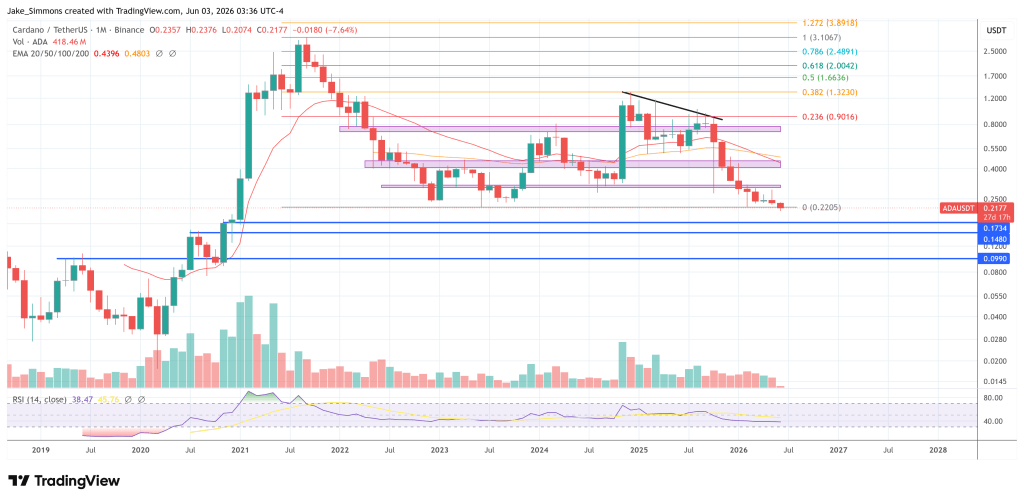
At the time of reporting, ADA was valued at $0.2177.