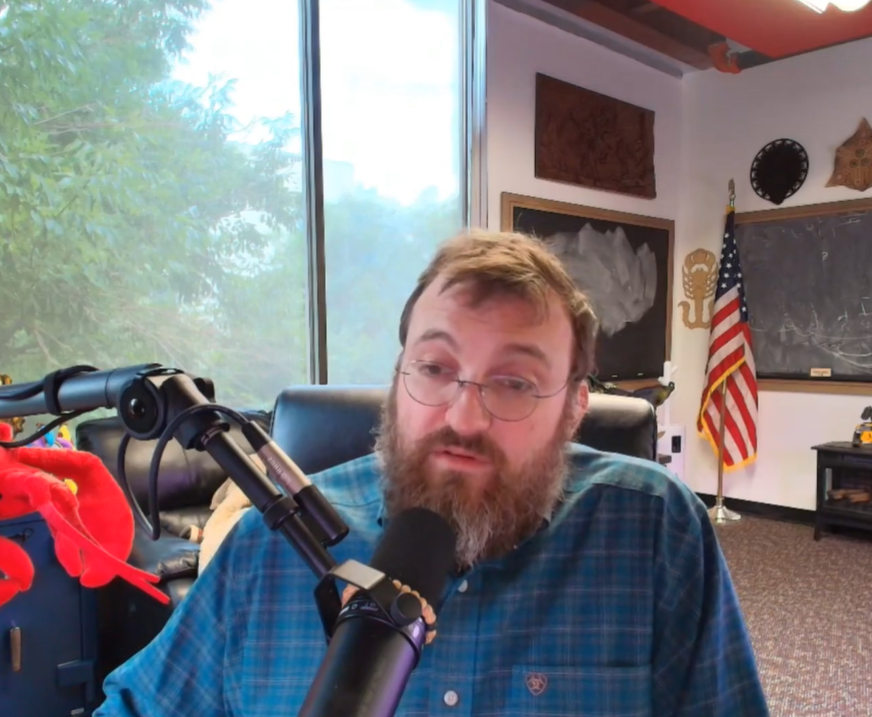
Recently, the founder of Cardano, Charles Hoskinson, made headlines with a video addressing concerns over client diversity within the platform. He emphasized that the goal of fostering client diversity has always been integral to Cardano’s vision, countering claims suggesting otherwise. “Our commitment to a diverse client architecture remains unwavering,” he stated, urging the community to focus on technical advancements over social-media disputes. “The facts speak for themselves,” he asserted, calling for a unified approach to progress.
Defining the Importance of Client Diversity
During his video remarks, Hoskinson characterized client diversity as essential for true decentralization in blockchain environments. “Diversity isn’t merely a feature; it is the backbone of our decentralization efforts,” he highlighted. He pointed out that established networks like Ethereum and Solana recognize this principle, arguing that developers must have the flexibility to tailor nodes for maximum efficiency. His comments came in response to a series of misunderstandings propagated by alternative client groups on social media.
Central to his argument is Cardano’s use of formal specifications, which serve as an “implementation-independent” framework. “Lack of formal specifications means relying solely on code,” he explained. He reiterated IOHK’s investments in developing these specifications to facilitate various interoperable clients. It’s crucial that these specifications maintain a level of rigor to minimize confusion, he noted, illustrating that proper formalism can take many shapes, but must consistently uphold clarity.
In advocating for a strategic approach to client diversity, Hoskinson laid out a dual-path plan he originally envisioned. This comprises maintaining the existing Haskell-based Cardano node while simultaneously developing a new implementation, dubbed “Cardano 2.x,” in Rust. The intent is to run these projects concurrently until they reach feature equivalence. “This method acts as a trial for our specifications,” he said, emphasizing the significance of interoperability.
Unfortunately, the community appears to have diverged from this consolidated plan, with many developers opting to create their own nodes without contributing to the existing specifications, he noted. This trend, he warned, elevates the risk of potential network fragmentation and complicates coordination among teams. “Interoperability becomes a daunting challenge when specifications aren’t uniformly followed,” he stressed. IOHK has actively sought collaboration through workshops, demonstrating its commitment to integrating diverse components within the ecosystem.
Challenges Facing the Leios Architecture
A primary concern on the horizon is Leios, Cardano’s upcoming scaling framework, which Hoskinson regarded as one of their top priorities. He reported that IOHK has restructured its teams to operate continuously, ensuring progress in developing the necessary Haskell code for Leios. “The urgency is real; our focus is unwavering,” he emphasized.
However, he voiced skepticism about the alternative client teams’ capabilities, questioning if they possess the resources to support Leios effectively in the coming years. “Without adequate funding, these teams may not be prepared to meet our timeline,” he cautioned. He suggested that enhancing financial support for these teams or adjusting timelines for Leios could be viable solutions.
To circumvent potential delays and divisions, Hoskinson proposed a “certified client” framework rooted in formal specifications. “Imagine having certified clients that validate compliance with our specifications,” he articulated. This strategy allows better management of resources, ensuring that funding aligns with core functionalities and security standards. Additionally, he clarified the absence of an “official client,” advocating instead for the establishment of certified ones to enhance credibility.
Emphasizing Lessons and Unity
Hoskinson’s overarching message was a call to reduce social-media tension and redirect attention toward collaborative achievements and shared goals within the Cardano community. “We must prioritize our technical aspirations over interpersonal disputes,” he declared. He identified unacceptable behaviors such as unfounded accusations and misappropriated funds as detrimental to the ecosystem. However, he welcomed constructive criticism directed at his decision-making and leadership style.
Furthermore, he rebuked narratives suggesting that Cardano has underperformed significantly, detailing robust historical performance metrics while acknowledging recent challenges. He reflected on the extensive advancements made over the previous two years, from the transition to Shelley to the formation of governance structures, positioning the ecosystem for future growth as they transition into the Basho scaling phase.
Concluding on a spirited note, Hoskinson expressed optimism that Leios could serve as the “great unifier” in aligning client development efforts, provided all stakeholders recommit to collaboration and mutual respect. “My goal is clear: Leios must launch as planned, and we aspire to have multiple clients competing effectively within the next 12 to 24 months,” he asserted.
Finally, he reiterated IOHK’s dedication to empowering users by offering diverse client options. “Once we achieve the necessary level of security, we will ensure Lace users can choose their backend interfaces, enhancing their overall experience,” he concluded.
As the market stands, ADA is currently trading at $0.82.