In a recent initiative, the visionary behind Cardano, Charles Hoskinson, has introduced an ambitious strategy aimed at transforming the newly established “Pentad” into a vital engine for growth within the ecosystem by 2026. This vision includes fostering critical infrastructure agreements, expanding decentralized finance (DeFi), enhancing real-world financial applications, and implementing a more aggressive outreach strategy targeting developers and institutions.
Cardano’s Vision for 2026: The Role of Pentad
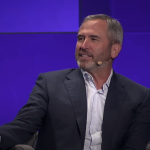
During a recent livestream, titled “Growth Vision for Cardano in 2026 (Pentad Series),” Hoskinson articulated that Pentad represents the essential executive layer missing from Cardano’s governance framework during the Voltaire era. He asserted that the Cardano Improvement Proposal 1694 (CIP-1694) and the Cardano Constitution have successfully established robust legislative and judicial branches, while stressing the lack of an active executive entity to drive initiatives forward.

“Our understanding of governance includes judicial, legislative, and executive branches,” he stated. “However, the executive part remains somewhat blurred.”
The Pentad is composed of significant players such as the Cardano Foundation, Emurgo, Input Output, the Midnight Foundation, and Intersect. Its primary goal is the launch of the “Cardano Critical Infrastructure” initiative, which aims to negotiate essential integrations, including bridges, stablecoins, oracles, and analytics solutions. Hoskinson called this approach a “test phase” to see if these entities can collaborate effectively.
“These organizations bring exceptional resources and expertise to the table,” he noted regarding potential integration partners. “If we work separately, we risk fragmentation, leading us to complications and increased costs. Instead, let’s unify under Pentad and negotiate collectively, akin to a labor union.”
The criteria for success are clearly defined: either integrations are operational, or they are not. Hoskinson labeled this effort as a “testing framework for defining an emerging executive authority.”
Should this initial phase prove successful, Hoskinson envisions targeting explicit growth in 2026. He is currently focusing on three main indicators—monthly active users, daily transactions, and total value locked (TVL)—while collaborating with community members to develop a comprehensive set of KPIs. “Once we finalize these KPIs, they will be formalized for the ecosystem,” he added, indicating that future budgets must align with these growth metrics.
A key element of the 2026 strategy is a curated exhibition of approximately 10 to 15 DApps built on Cardano, demonstrating the network’s wide-ranging capabilities. Hoskinson emphasized that many of these projects are often “underfunded,” “understaffed,” and suffer from limited user engagement, which impacts their viability on major exchanges. He noted that Midnight’s own listing initiatives have already paved the way for Cardano-related assets, providing a unique opportunity for these protocols to scale up.
To foster growth, the plan emphasizes “aggregators of talent and capital.” Hoskinson pointed out that Bitcoin’s DeFi landscape could serve as a critical pathway for attracting external liquidity and users into the Cardano ecosystem. He also highlighted the appeal of XRP and other UTXO-based assets that lack native smart contracts, which are essential for generating yield-seeking interest. Unique DApps that combine Cardano with Midnight’s privacy-centric features aim to leverage distinct selling points compared with Ethereum-based projects.
Key Focus Areas for Cardano
The strategy for developers and community engagement is set to become increasingly proactive. Hoskinson has proposed bi-weekly hackathons inspired by the impressive results from Midnight’s activities and existing hackathons, such as those held in Berlin. He believes that regular events will demonstrate Cardano’s capabilities while refining its development experience.
At the same time, he criticized X as an ineffective platform for community discussions, highlighting issues like bots and information overload. Instead, he advocated for more controlled environments such as Discord for community engagement regarding both Cardano and Midnight. Additionally, he discussed the establishment of dedicated communication channels for analytics firms, institutions, and venture capitalists to present seminars on both Cardano and Midnight, addressing misconceptions about Cardano as a “ghost chain” due to incomplete data from external sources.
On the Input Output side, Hoskinson noted that the company is creating a dedicated Cardano business unit specifically designed to work with the Pentad, streamlining efforts across ecosystem, engineering, and governance teams under leaders equipped with a growth-oriented mindset. He emphasized the importance of “horizontal” technology advancements, such as AI-enhanced “Vibe engineering,” to accelerate the conversion of research into production, cutting the typical timelines from five or 10 years down to one or two years. This strategy has already been tested in projects like Lace and Acropolis.
He spotlighted two flagship initiatives for the 2026 timeline: the RealFi DApp, which has emerged from over a million loans conducted in Kenya and Uganda, designed as the “ultimate bear market DApp” offering off-chain, uncorrelated returns—and Hydra, which he asserted “can achieve up to a million transactions per second” per DApp. The aim is for the featured protocols to utilize Hydra technology, allowing them to reach performance levels comparable to Solana with minimal on-chain impact.
In conclusion, Hoskinson presented the Pentad as a flexible, delegated executive layer, encouraging DReps to prioritize action over stagnation. “Are you striving for perfection or simply seeking progress?” he queried. “You’ve called for unity, growth, and leadership. This initiative is the first step toward fulfilling those demands.”
As of the latest data, ADA was trading at $0.38.