The discourse surrounding Ethereum’s Layer-2 (L2) networks has gained fresh momentum, particularly with recent comments from blockchain researchers and industry professionals. Questions of value retention and decentralization have emerged, leading to concerns that the advantages of Ethereum’s architecture might not be adequately serving its community. A new thread on social media spotlighted these issues, raising alarms about the current economic model of Ethereum’s ecosystem.
Understanding Ethereum’s Layer-2 Innovation: Value vs. Extraction
A recent analysis highlighted the vibrant but complicated economics of Ethereum’s roll-up solutions. It’s noted that L2 platforms are now generating impressive daily revenues, yet much of this financial success doesn’t seem to be translating back to the Layer-1 (L1) blockchain. Centralized control may be stifling the ecosystem, leaving ETH holders with minimal rewards while profiting a select few companies.
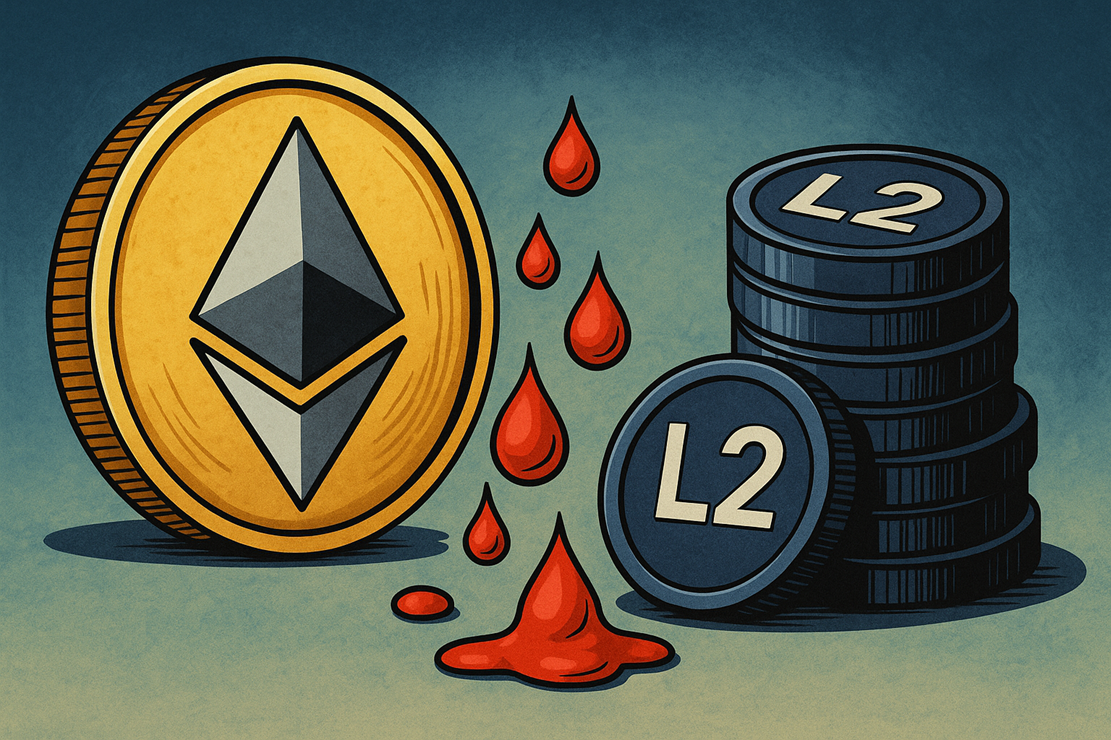
For instance, one prominent L2 has disclosed earning significant transaction fees but only minimal payments to Ethereum for the purpose of data availability—raising questions about who truly benefits from these networks. Reports show that major players in the space might be diverting funds meant for Ethereum’s infrastructure toward other initiatives, potentially undermining the community’s interests.
The Financial Dynamics: Who Profits the Most?
The fiscal disparity within these Layer-2 systems has left ETH holders questioning the sustainability of their investments. Recent figures indicate that numerous L2 platforms might be proving lucrative for operators while returning little value to Ethereum itself. An examination of their financial statements reveals a startling truth—while they rake in substantial fees, their outlays for data costs on Ethereum are embarrassingly low.
- Large fee revenues: Daily earnings reported in the range of hundreds of thousands.
- Minimal payouts: Aggregated expenses directed towards Ethereum remain a fraction of their earnings.
- Shift in value allocation: Questions arise about whether proceeds are being diverted to buy other assets, such as Bitcoin.
As this tension escalates, industry experts and enthusiasts are left contemplating the future of Ethereum. Could the current flow of value towards alternative assets, such as cryptocurrencies like Bitcoin, pose a risk to the integrity of Ethereum itself?
A Technological Perspective: The Future of User Experience
In light of these economic critiques, Ethereum co-founder Vitalik Buterin has articulated a vision that emphasizes improving the user experience of L2s. His focus is clear: the next imperative should be speeding up the withdrawal process from these layers to avoid lengthy waiting periods. This speed is crucial to compelling users to remain engaged with Ethereum, while innovative technologies like zero-knowledge proofs could redefine what’s possible.
Buterin argues for innovative frameworks that merge various proof systems, which could propel Ethereum into a more competitive space, moving away from outdated trust assumptions and delivering benefits to users.
Bridging the Gap: Engineering vs. Economics
The contrasting viewpoints of experts like Thorn and Buterin represent a significant chasm in the Ethereum discourse. Thorn’s analysis paints a picture of an ecosystem increasingly dominated by centralized interests, while Buterin envisions a technically advanced framework that aligns the governance and economic incentives inherent in Ethereum. The outcome of this debate will likely determine the future trajectory of Ethereum’s roll-up economy.
As Ether continues to trade actively in the market, the community watches closely. ETH’s price movement reflects the ongoing tensions brewing around Layer-2 networks and their implications for the broader cryptocurrency landscape.