In the world of cryptocurrency, Ethereum is currently facing intense volatility driven by various global factors, particularly the geopolitical climate. With events in regions such as the Middle East causing ripples across multiple asset classes, the digital currency market is feeling the pressure. Consequently, Ethereum’s price movements have become highly sensitive to external risk metrics, illustrating how investor sentiment can shift quickly in uncertain times.
Recent insights from a CryptoQuant report reveal that the Ethereum reserves on Binance have dropped to around 3.46 million ETH, marking the lowest level since 2020. This notable reduction in available supply is indicative of significant long-term changes within the market that could shape the future of investor strategies and liquidity levels.
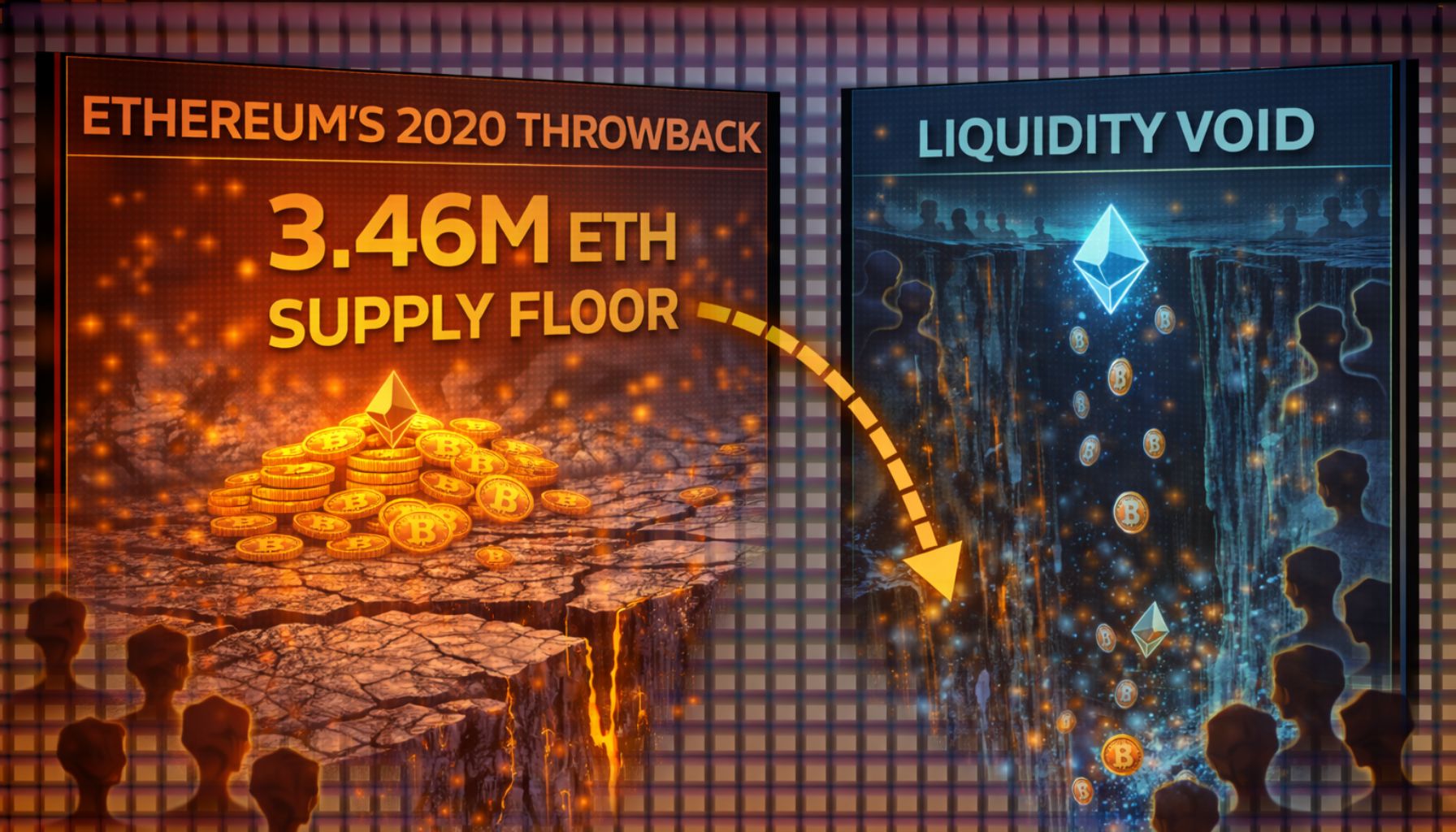
Historically, when exchange reserves fall, it suggests that investors are moving their assets into cold storage or opting for long-term holding strategies. This trend may signify a shift towards a more cautious approach among investors, indicating a preference for security over active trading. With fewer coins accessible on exchanges, the chances of sudden sell-offs decrease, which can bring about more stability in the market.
Ethereum’s Supply Dynamics: Analyzing the Decline in Exchange Reserves
The broader trend regarding Ethereum reserves illustrates a substantial structural shift. Previously, the reserves peaked at over 5 million ETH, but they have exhibited a steady decline, characterized by lower highs. Currently positioned at approximately 3.46 million ETH, these reserves reflect a significant contraction, symbolizing a cautious market outlook.
This ongoing decline in reserves correlates with significant behavioral transformations within the Ethereum community. The adoption of self-custody strategies and the rise of staking have notably reduced the amount of ETH circulating on centralized exchanges. As holdings move to off-exchange custody, they are likely earmarked for longer-term strategies, diminishing the pool of ETH available for immediate trade.
The current market dynamics are worthy of attention. Ethereum is trading near $2,027, a critical threshold that could influence market movements. If reserves continue to drop while demand increases, the evolving supply-demand imbalance may lead to upward price pressures.
Navigating Resistance: Ethereum’s Battle Below $2,000
As we examine the 4-hour price chart, it is apparent that Ethereum is experiencing structural weakness, with attempts to stabilize around the $1,950 to $2,000 range showing limited success. The asset remains below key moving averages, including the 50, 100, and 200-period averages, all signaling a bearish trend.
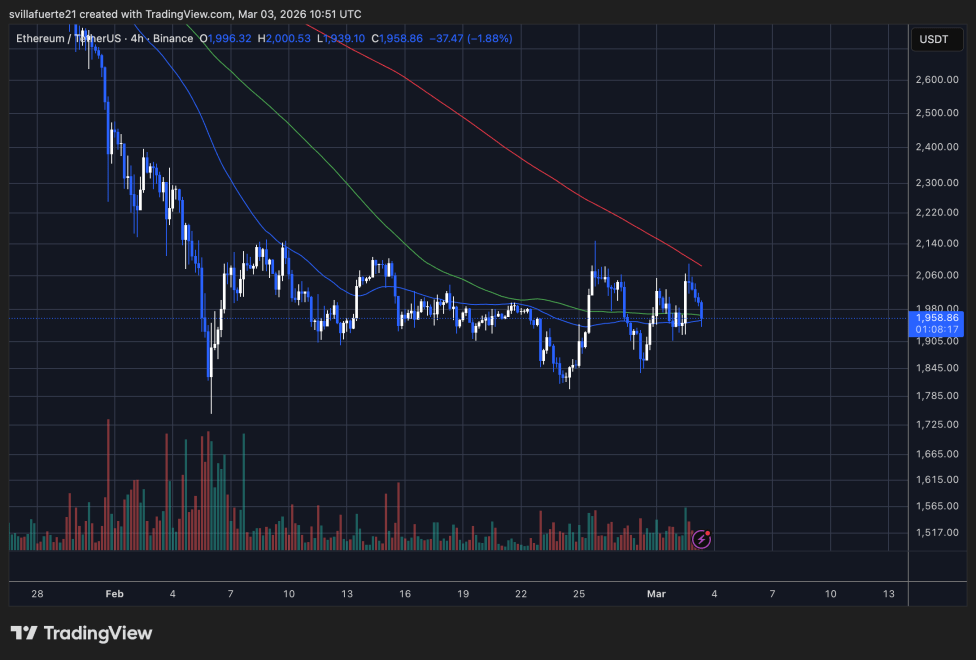
The market witnessed a sell-off earlier in February, establishing a pattern of lower highs. Rebounds have struggled to surpass critical resistance at the 200-period moving average, currently situated above $2,100. This particular price point has emerged as a strong resistance barrier, while the 100-period moving average has been a consistent cap on intraday price recoveries.
Support levels have formed near $1,900, where buyers previously intervened amid sudden sell-offs. However, each subsequent bounce has evidenced diminishing momentum, suggesting that buyer demand may not be strong enough to foster significant upward movement.
Trading volume rose during the downtrends but has since tapered off, which indicates a temporary balance rather than a decisive accumulation phase. The narrow range between $1,900 and $2,000 reflects market uncertainty amid prevailing bearish sentiments.
For Ethereum to shift into a more bullish phase, it would require a sustained move above the $2,050 to $2,100 range to test the declining moving averages. Conversely, if the price falls below $1,900, it could reopen the gates toward a liquidity zone around $1,800.
As the situation evolves, monitoring both market trends and investor sentiment will be crucial to understanding future price movements. Charts, analyses, and market indicators will remain pivotal in navigating this dynamic landscape.