In recent developments, Engie is exploring innovative solutions to enhance the sustainability and profitability of its massive solar project in Brazil, Assu Sol. This initiative may involve integrating battery storage or linking bitcoin mining data centers with the solar facility, positioning these strategies as tools for grid stability and increased revenue, beyond just existing industrial operations. Such a move from a major European utility highlights the growing convergence between energy production and digital currency.
According to a report by Reuters published recently, Engie’s Brazilian division is conducting feasibility studies on incorporating storage solutions or data centers focused on bitcoin mining at the Assu Sol site. This facility is billed as Engie’s most significant solar development globally, aiming to adapt to local energy demands while facing potential output limitations.
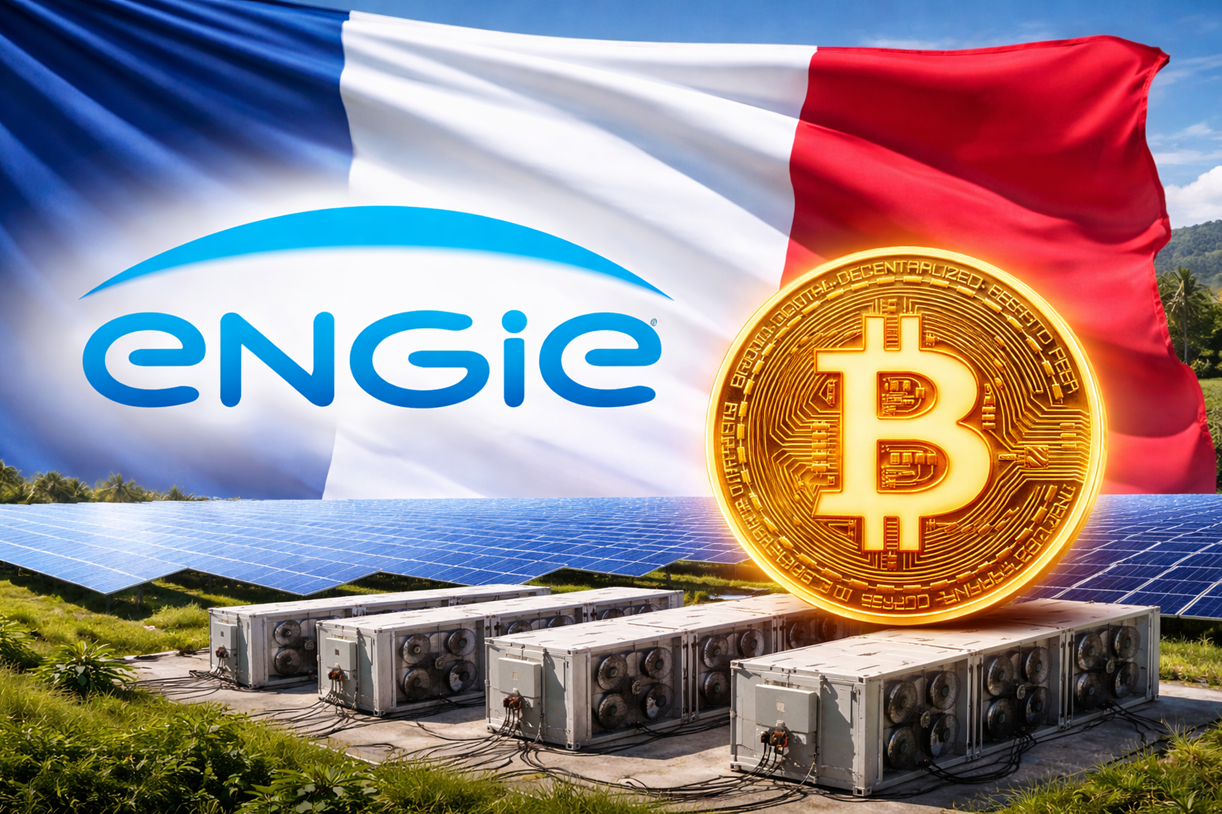
The Rationale Behind Engie’s Bitcoin Mining Interest
Located in the northeastern area of Brazil, Assu Sol boasts an impressive 895 MWp of installed capacity and has recently commenced full commercial operations. However, consistent with numerous renewable initiatives in Brazil, it is subject to grid curtailments, which are essential for balancing energy supply and demand. Eduardo Sattamini, the managing director for Engie in Brazil, pointed out that exact figures on reduced output were not disclosed.
The foundational idea is quite clear: to address instances when the grid cannot fully utilize renewable energy, Engie can create localized demand through innovative offtake strategies. Reports suggest the company is seriously considering the implementation of “data centers for bitcoin mining or storage” to tackle the ongoing challenges at Assu Sol and alleviate the adverse economic effects caused by curtailed generation.
Furthermore, Sattamini emphasized that this is part of a broader infrastructure planning initiative rather than immediate operational changes. “We are currently identifying potential offtakers,” he noted. “This process is not something that will materialize in a few weeks; it requires careful implementation over the next couple of years.”
This timeline is crucial for stakeholders in the bitcoin market, particularly as it signals a strategic feasibility process focused on power monetization rather than a rush to expand mining activities. It appears that bitcoin mining is being evaluated as just one potential load among several possibilities.
As reported, curtailment issues have increasingly plagued the Brazilian renewable sector since 2023, leading to substantial financial losses estimated in billions of reais. Key factors driving these challenges include rapid growth in renewable installations, limited demand expansion, infrastructure constraints, and an increase in decentralized energy generation methods, particularly rooftop solar.
For bitcoin proponents, the Engie scenario exemplifies a notable trend in mining strategies—where mining demand dynamics are increasingly viewed through a power-market lens. Should Engie proceed with its plans, it might not only indicate a change in hash rate metrics but also reflect a growing recognition among major utilities of bitcoin mining as a valuable industrial load adjacent to the power grid.
As of the latest update, bitcoin is trading at approximately $63,123.