Bitcoin and other major cryptocurrencies are showing signs of potential long-term value after enduring an extended downturn, according to insights from Grayscale Investments. However, uncertainties surrounding the artificial intelligence (AI) sector might continue to impact prices in the short term.
Zach Pandl, Grayscale’s head of research, characterized the current cryptocurrency market as oversold in a research note released on November 23. His comments followed a weekend where Bitcoin dipped below $56,000 before reclaiming a position closer to $62,000.
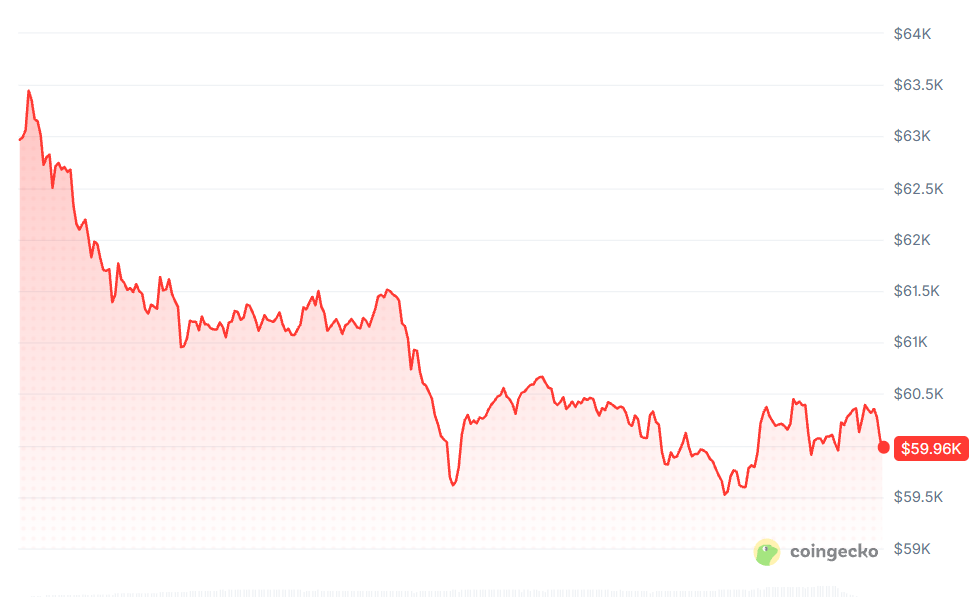
Despite this partial recovery, various indicators hint that investor sentiment remains cautious. Last week, more than $2 billion exited global crypto exchange-traded products, stablecoin redemptions surged, and derivatives traders paid higher premiums for protection against further price declines.
While Grayscale maintains that the foundational elements of blockchain technology remain robust, they caution that upcoming developments in the AI field may have a more substantial effect on cryptocurrency prices over the next few weeks.
Bitcoin’s Extended Bear Market
Bitcoin’s price, which fell to around $55,254 on November 21, marked a significant low, reflecting a 56% drop from its October 2025 high of $124,824. Grayscale’s analysis reveals that this bear market has now persisted for at least 411 days, marking it as the longest downturn in their historical review, despite the current percentage decline being less severe than previous major bear markets.
The selling trend has also been observed in investment products and derivatives markets. Over $2 billion in crypto exchange-traded products was withdrawn last week, alongside noticeable redemptions of stablecoins, indicating that many investors are seeking to reduce their exposure to cryptocurrencies.
Additionally, the open interest in Bitcoin and Ethereum futures has decreased, approaching levels not seen since the preceding summer. Options markets are reflecting a heightened demand for downside protection, with traders willing to pay a premium for put options that gain value when prices fall. Collectively, these signs suggest a defensive stance among investors, despite Bitcoin’s recent recovery.
The Impact of AI Sector Uncertainties
Pandl noted that the immediate performance of cryptocurrencies might hinge more on advancements in artificial intelligence than on activities within public blockchain networks. Several developments since early november have fueled uncertainty in the AI space, including the outcomes of the U.S. midterm elections and the potential implications of future policy decisions affecting data centers.
Grayscale also pointed to recent leadership changes at Nvidia, where co-founder Jensen Huang experienced a brief removal before being reinstated as CEO, adding to the unpredictability surrounding one of the most significant players in the tech industry.
Additional factors, such as outages at major institutions including the FAA and Microsoft, as well as disruptions impacting the National Security Agency, have further clouded the outlook for technology investments. Grayscale emphasized that developments, including Anthropic’s planned initial public offering and advancements in its Claude AI model, heighten market uncertainty.
Given that cryptocurrencies often correlate with other risk-sensitive assets, sentiment shifts regarding AI companies can significantly influence demand for digital currencies.
Long-Term Views on Blockchain
Despite a cautious near-term perspective, Grayscale expresses optimism about the long-term potential of public blockchain networks. Pandl asserts that their research indicates solid fundamentals within blockchain technology, suggesting that current valuations might present an attractive opportunity for investors looking at medium- and long-term gains.
Moreover, the asset management firm sees potential productivity benefits linked to AI and recognizes the evolving role of public blockchains in a future driven by artificial intelligence. However, it remains crucial to distinguish between immediate uncertainties and longer-term prospects, as oversold conditions don’t guarantee that the market has reached its bottom, particularly given ongoing outflows and cautious positioning in derivatives markets.
Looking ahead, Bitcoin’s recovery may be contingent on factors extending beyond improvements in blockchain activity or lower token valuations. A stabilization of technology markets and renewed trust among institutional investors could be vital for future price movements.
What are your thoughts on Bitcoin’s current valuation? Does it present a long-term buying opportunity as suggested by Grayscale, or will continued uncertainties in the AI and tech sectors impose further pressures on the cryptocurrency market?