The recent developments in Kazakhstan highlight a significant regulatory challenge within the realm of cryptocurrency, particularly focusing on illegal mining operations that have arisen alongside a burgeoning digital economy.
Kazakhstan’s Efforts to Combat Illegal Crypto Mining
In a striking revelation, Kazakhstan’s Financial Monitoring Agency (AFM) and National Security Committee (KNB) exposed a massive illegal crypto mining scheme that siphoned off over $16 million worth of electricity. An official announcement confirmed that these mining operations were concentrated in East Kazakhstan Oblast and posed significant risks to the local energy infrastructure.

Reports indicated that utility employees manipulated systems to divert electricity originally allocated for residents and essential services to benefit these underground mining operations. This situation underscores a troubling trend in which energy resources are exploited at the expense of local communities.
Notably, the power consumed by these illegal mining activities—exceeding 50 megawatt-hours—could have supported the needs of a city housing between 50,000 and 70,000 people. This type of power usage raises concerns about sustainability and the potential strain on local resources.
Under the current legal framework in Kazakhstan, mining operations are restricted to purchasing electricity solely from a government-managed platform operated by the Ministry of Energy, with caps on their consumption.
Estimates suggest that around nine billion Kazakhstani tenge (roughly $16.5 million) were involved in this illicit power supply scheme. According to the AFM:
Funds gained from these illegal activities were notably used to acquire properties and luxury vehicles; actions are underway to confiscate these assets through legal channels.
Kazakhstan’s stance on crypto mining shifted dramatically post-China’s comprehensive ban on digital asset mining, which saw the country become a primary hub for miners seeking more flexible regulations. However, this surge in activity led to energy crises, ultimately prompting stricter government oversight.
The Broader Implications of Illegal Crypto Mining
This crackdown on illegal mining activities in Kazakhstan is part of a wider trend seen across multiple nations grappling with the challenges posed by unregulated crypto mining. Governments are increasingly turning their focus on ensuring compliance and protecting essential services.
For example, in Russia, the authorities have signaled their intent to robustly enforce regulations against unauthorized mining operations. New legislation has been introduced to facilitate a national registry aimed at tracking cryptocurrency mining hardware.
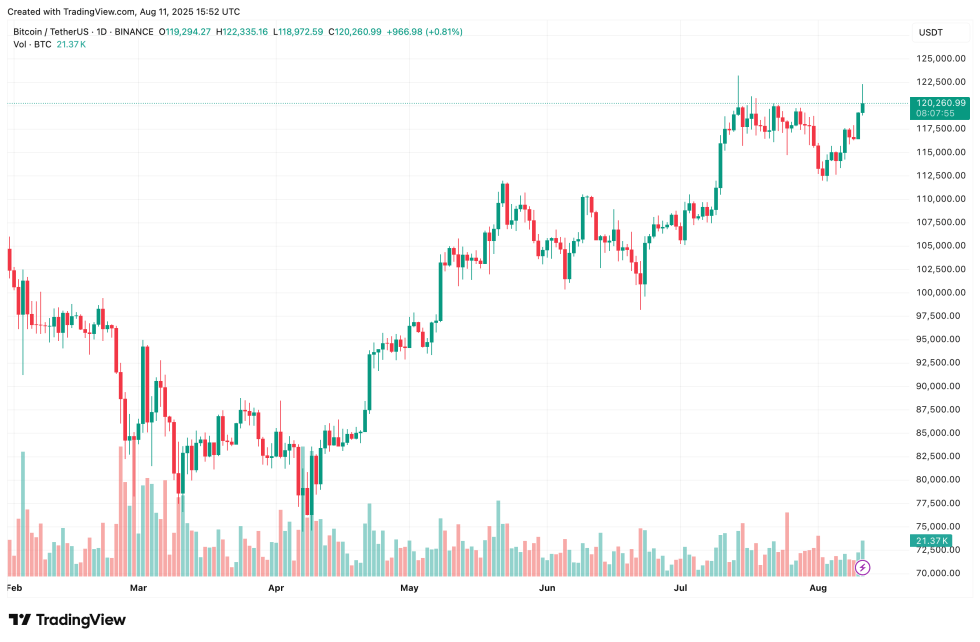
In contrast, some jurisdictions are exploring innovative solutions. In France, the far-right Rassemblement National party has proposed harnessing untapped nuclear power specifically for Bitcoin mining. This reflects a nuanced approach toward balancing energy use with the growing demands of the crypto sector. Meanwhile, Bitcoin is trading at $120,260, showing a 1.3% increase in just 24 hours.