The Bank of Korea is embarking on an innovative journey to integrate digital tokens with the broader cryptocurrency ecosystem. This initiative aims to connect a centralized digital currency with established public blockchain platforms, marking a significant evolution in the financial landscape of South Korea and potentially beyond.
Connecting to Public Blockchain Networks
Deputy Governor Lee Jong-ryeol stated that the Bank of Korea is actively exploring a strategy to align its digital deposit tokens with public blockchain technologies. These tokens are anticipated to function as a form of stablecoin, anchored by the central bank’s digital currency framework.
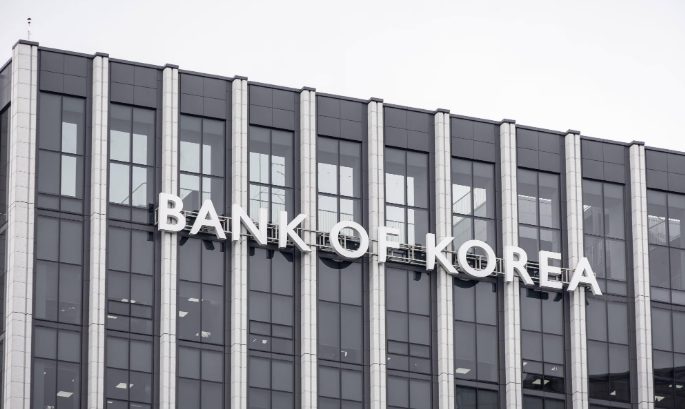
Speaking at the Blockchain Leaders Club event, Lee highlighted the potential for various sectors—including banks, businesses, and individual users—to leverage a government-backed token on platforms like Ethereum.
The Bank of Korea is advancing its initiative to incorporate deposit tokens into public #blockchain networks.
Deputy Governor Lee Jong-ryeol unveiled this vision during the Blockchain Leaders Club event. pic.twitter.com/z2fnkSeGMx
— Sachi (@sachi_gkp) May 27, 2025
Concerns Over Stablecoin Withdrawals
Recent statistics reveal that stablecoins represented around 47% of South Korea’s crypto withdrawals in the first quarter, equating to approximately 27 trillion won (USD $19.1 billion).
In Seoul, USDT and USDC are frequently favored by traders as they maintain a stable valuation. Lee cautioned that excessive reliance on foreign stablecoins could undermine the won’s critical position in international markets.
This dependence may jeopardize monetary sovereignty, invoke financial instabilities, and potentially facilitate illicit activities.
Rapid Growth in the Global Stablecoin Sector
The global stablecoin market has seen impressive growth, surpassing $230 billion in value by March 2025. Currently, the overall market holds a valuation slightly above $247 billion, reflecting a weekly increase of $3.537 billion.
This rapid progress among private issuers underscores the importance of proactive measures by South Korea before foreign currencies dominate the local trading sphere.
Engagement with the Crypto Industry and Political Landscape
Prominent exchanges such as Bithumb, Coinone, and Korbit participated in the recent event, demonstrating the desire of the crypto community to influence regulatory frameworks.
Additionally, opposition figure Lee Jae-myung has pledged to introduce a won-backed stablecoin should he be elected president, emphasizing its potential to curb the 56.8 trillion won ($40.8 billion) capital outflow and streamline local trading activities.
Other lawmakers, including Min Byoung-dug from the Democratic Party, argue for South Korea to take an initiative in effectively institutionalizing stablecoins to prevent U.S.-tied tokens from overshadowing them.
Future Directions for the Digital Won
Further testing phases are scheduled for the Bank of Korea this year, focusing on strategies to secure digital tokens, protect user privacy, and adhere to anti-money laundering laws.
Should these trials be successful, a comprehensive pilot program could be launched by 2026, heralding a transformative shift in the financial infrastructure of South Korea and potentially inspiring similar moves by other nations.
Featured image from Bloomberg, chart from TradingView