As the world observes a shift towards digital asset management, the convergence of traditional finance with blockchain technology is rapidly evolving. Companies spearheading innovation in this landscape, such as BlackRock and their counterparts, are laying the groundwork for a transformative future in trading and investment.
Revolutionizing Financial Markets: Nasdaq’s Strategic Initiative
Nasdaq’s leadership, especially President Tal Cohen, recently shared insights on the organization’s vision for integrating tokenization within the financial ecosystem. His statements highlighted the significant potential of blending blockchain with existing market infrastructures.
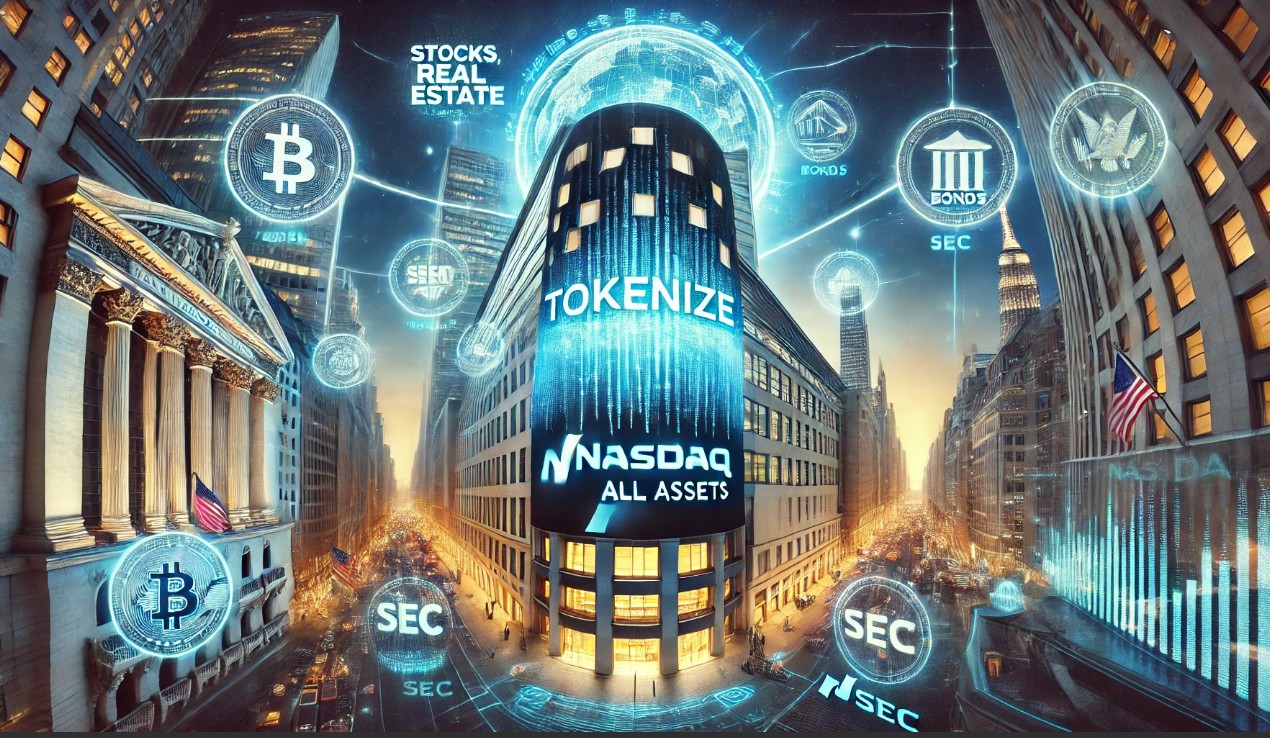
This integration aims to create a more seamless experience for investors and issuers alike. By minimizing transaction friction and enhancing efficiency in settlement processes, Nasdaq plans to redefine capital management strategies and improve collateral performance.
In pursuit of this vision, Nasdaq has proactively reached out to the US Securities and Exchange Commission (SEC) to sponsor trading of tokenized assets on its platform. This endeavor marks a crucial step towards modernizing equity trading in the United States.
Cohen emphasized that blockchain’s capabilities could pave the way for fresh post-trade methodologies, revolutionize corporate governance through proxy voting, and leverage programmable frameworks for corporate actions.
The ascent of decentralized finance (DeFi) is presenting compelling demonstrations of how essential financial services can function in innovative ways, ultimately delivering enhanced value to all participants.
However, Cohen also raised caution regarding the challenges that accompany rapid technological advancements. He underscored the critical need for strong governance and investor safeguards, essential to maximizing the benefits of these innovations.
Tokenized Trading: A Milestone on the Horizon
Nasdaq’s recent application is a strategic leap towards responsibly weaving digital asset technology into US equities markets. This proposal is designed to introduce advanced functionalities within the existing financial architecture, amplifying both trust and efficiency in these markets.
Should the SEC greenlight Nasdaq’s initiative, it would represent a groundbreaking moment in American financial markets, positioning the exchange at the forefront of integrating blockchain settlement systems.
In the same vein, Coinbase—the foremost US cryptocurrency exchange—has signaled its interest to the SEC for a similar offering related to “tokenized equities.” Additionally, major financial institutions like Bank of America and Citigroup are exploring their opportunities within the realm of tokenized financial assets.
Once Nasdaq’s framework is operational alongside the requisite infrastructure established by the central clearing agency, investors may find themselves able to purchase shares on the exchange that settle in a tokenized format, while maintaining the integrity of existing order routing, pricing, and reporting mechanisms.
Looking to the future, Nasdaq predicts that token-settled trades could become a reality for US investors as early as the third quarter of 2026, contingent on the readiness of the infrastructure overseen by the Depository Trust Company.
Featured image sourced from DALL-E, chart credit: TradingView.com