The landscape of cryptocurrency regulation is evolving, as the U.S. Securities and Exchange Commission has taken a surprising step by dismissing several lawsuits against major crypto entities, including some industry giants.
Shifting Paradigms in Cryptocurrency Regulation
Recent developments in the crypto world have sparked interest and confusion. In addition to buzz around new theories about the elusive Satoshi Nakamoto, the SEC’s recently released 2025 Enforcement Report reveals a candid recognition of past mistakes: an overemphasis on sensationalism instead of protective measures for investors.
Effective regulation hinges on carefully selecting which cases to prosecute. Unfortunately, resources at the Commission have been misallocated in prior years, leading to numerous cases that provided little to no genuine investor safeguards.
The report indicates that, since 2022, the SEC engaged in 95 enforcement actions involving “off-channel communications,” resulting in penalties amounting to $2.3 billion, alongside several cryptocurrency registration actions. The current leadership admits that these initiatives led to negligible investor benefits and were often misaligned with federal securities law interpretations.
The SEC now categorizes these 95 enforcement actions, alongside 13 crypto-related matters, as misallocations driven by an inclination towards sheer volume rather than genuine investor protection efforts.
Furthermore, the SEC has chosen to withdraw seven high-profile cases targeting entities such as Coinbase, Binance, and Kraken since early 2025, signaling a potential shift away from aggressive enforcement.
Reimagining Regulatory Strategy: The Atkins Influence
Under the leadership of SEC Chair Paul Atkins, who took office in April 2025, there is a clear effort to realign the enforcement strategy toward addressing traditional threats such as fraud, market manipulation, and fiduciary breaches. The SEC has begun to express a more cautious approach towards past interpretations of securities law, suggesting that prior cases might not withstand judicial scrutiny.
The latest interpretative guidelines on crypto assets, along with collaborative efforts between the SEC and CFTC, are part of a broader strategy to define clearer distinctions between what constitutes a security and other asset classes.
Results from the SEC in FY 2025 depict a reduction in crypto enforcement actions, marking the lowest level since 2017.
The Impact on the Market Landscape
This recognition of past regulatory shortcomings may alleviate some legal burdens, which could, in turn, inspire more cryptocurrency ventures to establish operations within the U.S. Nevertheless, the SEC remains vigilant against deceptive practices and market manipulation.
As the commission resets its approach, the mood in the market could gradually improve, particularly for high-quality assets available in American venues, even as the unwinding of past cases creates potential periods of uncertainty.
Such developments mark a transition towards clearer definitions concerning cryptocurrencies and traditional securities. It will be crucial for investors and traders to monitor how swiftly these policy changes lead to dismissed cases, settlements, and new asset listings.
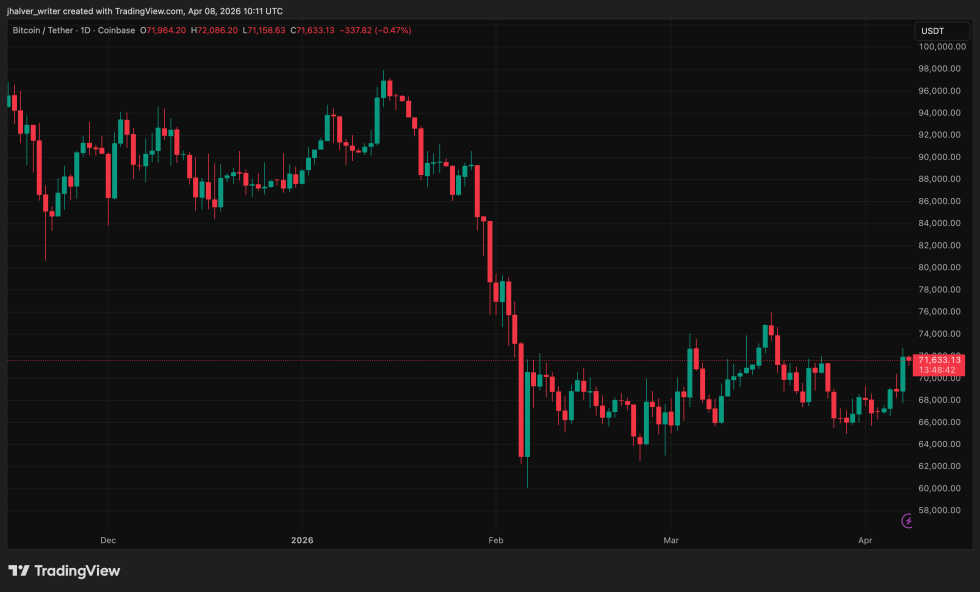
Image credit to Perplexity. BTCUSD chart sourced from Tradingview.