In recent events, Solana has emerged as a resilient player in blockchain technology, successfully withstanding one of the largest DDoS (Distributed Denial of Service) attacks in the history of the internet. Despite widespread jokes about its vulnerabilities, the network has shown impressive stability under pressure.
Pipe Network reported on the attack stating, “This DDoS campaign on Solana is unprecedented, reaching up to 6 Tbps in volumetric output, translating into billions of packets per second.” Under such extraordinary strain, other networks typically struggle with increased latency, missed validations, or delays in transaction confirmations.
Remarkably, data indicates that Solana has been performing well. “The median transaction confirmation time is around 450ms,” they noted, pointing out that the 90th percentile remains under 700ms, with slot latency staying between 0 to 1 slots. This essentially means that casual users and traders are unlikely to experience any noticeable disruptions.
Insights from the Solana Community
Raj Gokal, co-founder and COO of Solana Labs, addressed the situation succinctly, stating in a comment on a broader discussion of DDoS attacks, “This ongoing attack has resulted in zero performance degradation for Solana.”
Context is crucial as Justin Bons previously highlighted an attack on another blockchain, Sui, claiming it led to “mass delays” and warning that “127 validators is insufficient.”
Mert Mumtaz, CEO of Helius, responded to this view, asserting that while increasing the number of validators can be beneficial, it is not a simple fix. He clarified that “a network is more resilient to DDoS attacks if it has 100 professional validators than 10,000 operated by novices.” He concluded by noting the prolonged nature of Solana’s current DDoS assault.
“For the record, Solana has faced this massive DDoS attack for weeks now,” Mert emphasized, reinforcing that the lack of user impact speaks volumes about the network’s engineering prowess.
Co-founder Anatoly Yakovenko provided a more technical perspective, explaining the importance of validator count during leadership transitions. “If a previous leader can finalize their block while the new leader faces an attack, the effectiveness of the DDoS is significantly reduced.”
This suggests that to reliably disrupt block production, an attacker is obliged to apply pressure across a larger portion of the network, which can be costly.
SolanaFloor summarized the situation via social media, noting that “for the past week, Solana has endured a significant DDoS attack, hitting peaks around 6 Tbps, marking it as the fourth largest assault against any distributed network.” They highlighted that despite these challenges, transaction confirmations remained below one second, and slot latency was stable. Notably, the Sui network had also faced a similar attack recently, experiencing production delays.
A pivotal observation is the realization that blockchains have become attractive targets for DDoS attacks. David Rhodus, founder of Permissionless Labs, stated, “This positions Solana among the most attacked networks in internet history, underlining that blockchains are now front-line DDoS targets. The scale of this attack is beyond the capabilities of amateur hackers.”
For validators, Mumtaz offered sage advice: establish backups across various hosting services and geographical locations. Even if the overall network remains intact, individual infrastructures could be at risk.
The broader implication is clear: these networks are undergoing trials similar to mainstream internet platforms. Solana claims to have successfully navigated this onslaught, maintaining functionality without user disruption—a quiet yet significant achievement that may not be reflected in standard metrics. It simply demonstrates that the system is robust and operational.
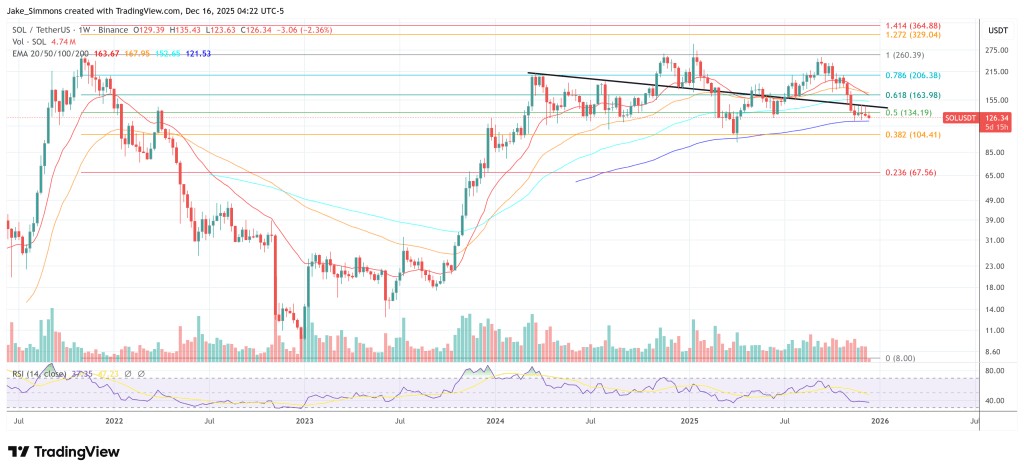
As of the latest update, Solana continues to hold a trading price of $126.