Strategy CEO Phong Le recently clarified the company’s decision to sell 32 Bitcoin (BTC), stating this action was not prompted by liquidity concerns. Instead, it was part of a strategic initiative to demonstrate their capability to sell BTC when needed and to evaluate their internal processes. This sale was the first instance of disposal since 2022, and occurred shortly before Strategy acquired over 1,500 BTC.
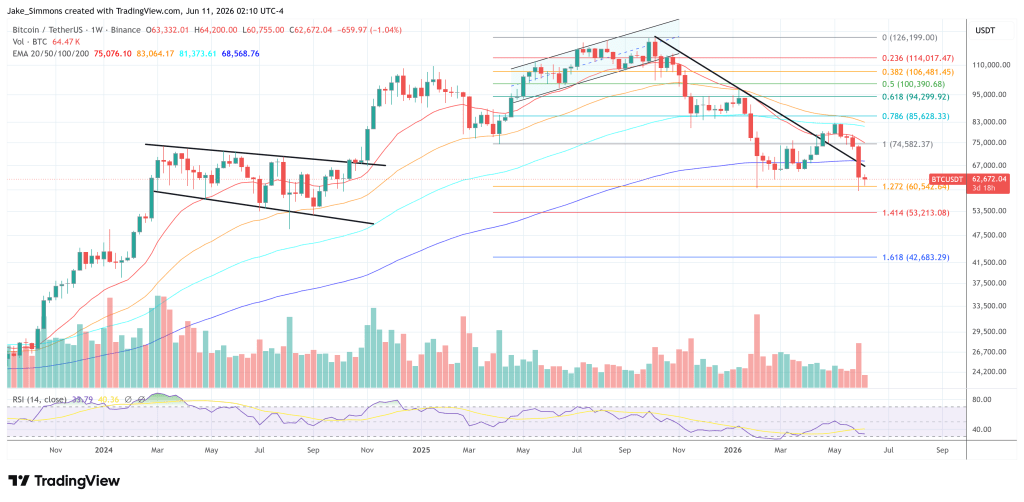
In an interview on CNBC’s Power Lunch, Le addressed the misconception that this sale indicates a departure from Strategy’s long-standing approach of accumulating Bitcoin. At the time of the interview, BTC was trading approximately at $61,000, remaining stable for the day but reflecting a decrease of over 20% in the past month after dipping below $60,000.
“We are still net purchasers of Bitcoin,” Le stated, referencing the recent purchase of about 1,500 BTC. He elaborated on the reasons for the sale: “We wanted to show the market that we are willing to sell Bitcoin if necessary. Although we have not needed to, it is a vital action.”
Le further explained that for Strategy, acquiring BTC is more straightforward than liquidating it, making the 32 BTC sale a practical test of the firm’s execution capabilities. He also mentioned the potential for the company to utilize tax-loss harvesting strategies based on the varying prices at which they purchased Bitcoin, spanning from $10,000 to $125,000.
Importantly, Le stressed that this transaction was not conducted to fund any dividends. “We did not need to sell our Bitcoin for dividend payments,” he clarified. “Our capital-raising activities allow us to meet those obligations.”
Strategy’s Position as a Consistent Bitcoin Purchaser
This sale caught the eye of many in the market due to Strategy’s established identity centered on aggressive Bitcoin accumulation. Acknowledging the mixed reactions from investors and holders, Le emphasized that the company has a wider array of stakeholders to consider beyond just Bitcoin enthusiasts.
“We have multiple groups to be accountable to,” Le elaborated, “including our common stockholders, preferred stockholders, debt holders, and Bitcoin holders. These elements are not necessarily prioritized in a single order.”
He added, “When it benefits our stockholders, we will consider selling our Bitcoin. We have done this before, and we remain committed to this approach. We are the largest holder and purchaser of Bitcoin globally, and that will continue.”
When pressed further about the reasons behind the sale, Le highlighted two key outcomes: “We aimed to inoculate the market and to evaluate our processes.” Upon inquiry about the findings from this transaction, he concluded, “We learned that everything functions as intended.”
Le noted that the response to the sale seemed to be more significant within retail investors than institutional shareholders. “Why does the sale of 32 BTC attract so much attention?” he questioned. “Our discussions with institutional investors suggest they are not particularly concerned about it. It appears more unsettling for the retail audience, who may hold strong beliefs about never selling Bitcoin, though we have broader obligations to consider.”
As of the latest updates, Bitcoin was trading at $62,672.