As the cryptocurrency landscape evolves, the focus often shifts to immediate price fluctuations and speculative trends. However, Ethereum is steadily redefining its significance within this space. Despite a recent decline from its historical price peaks, ETH continues to be recognized as a leading entity in the crypto world.
Ethereum’s Growing Influence and the CLARITY Act
Ethereum’s role in the cryptocurrency market is becoming increasingly prominent. It is taking the lead in areas such as stablecoin transactions, Decentralized Finance (DeFi), tokenization, and institutional engagement. As Ethereum gains traction, it positions itself as a formidable competitor in the blockchain arena.
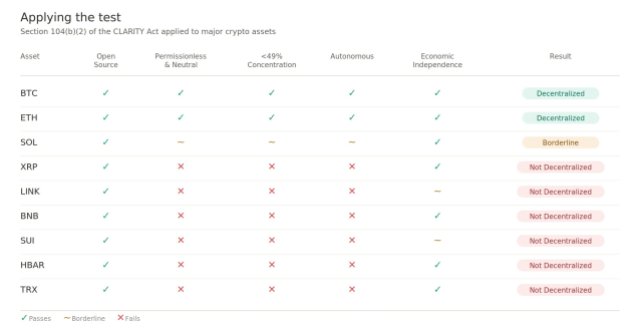
Insights from Ethereum Daily highlight that ETH could be positioning itself as one of the major beneficiaries of the forthcoming Digital Asset Market CLARITY Act. This proposed legislation is fostering a sense of optimism regarding Ethereum’s sustainable future.
The CLARITY Act proposes a set of clear criteria for determining the decentralization of digital assets, encompassing five foundational rules. According to Ethereum Daily, the Ethereum network meets these criteria effectively, showcasing key features such as:
- Open-source development
- Permissionless access
- No single entity controlling over 49% of tokens
- User censorship resistance
- Operational independence
In contrast, other blockchain networks, including Solana, struggle to meet these standards and may be considered less decentralized.
Many alternative chains, such as Sui, Avalanche, and Hedera, exhibit issues related to centralized control or concentrated token ownership. The CLARITY Act would classify these networks into a lower-tier status, limiting their ability to generate substantial revenue and, consequently, their long-term valuation potential.
Ethereum, on the other hand, remains in the upper echelon, parallel to Bitcoin, the largest cryptocurrency. This classification eliminates arbitrary valuation limits and clarifies Ethereum’s regulatory standing. With these conditions in place, concerns regarding regulatory scrutiny and competition from faster networks diminish significantly.
While speculation continues around potential failings of various tokens, Ethereum has solidified a structural advantage that is unique among smart contract platforms. “CLARITY not only regulates, it recognizes Ethereum as a leading Tier 1 blockchain,” remarked an industry expert.
Ethereum: The Leader in Decentralization
The ongoing comparison between Ethereum and Solana continues to spark debate within the crypto community. Nevertheless, Ethereum retains its status as the most decentralized network, particularly within the blockchain ecosystem.
The level of decentralization on the Ethereum network has reached impressive heights. Recent data revealed that Ethereum boasts over 897,300 validators, a testament to its robust DeFi environment. In stark contrast, Solana trails with just 752 validators, highlighting Ethereum’s substantial lead in this critical area.
This growing disparity in validator numbers signifies not only Ethereum’s dominance in decentralization but also its continuous appeal as the go-to platform for decentralized applications and innovations within the cryptocurrency space.