Zcash has experienced a remarkable resurgence, attributing its growth to significant changes in governance, product strategy, and community engagement. Josh Swihart points out that this approximately 1,500% increase in ZEC’s value is the result of a systematic overhaul that began in 2023 and is showing effects across the ecosystem.
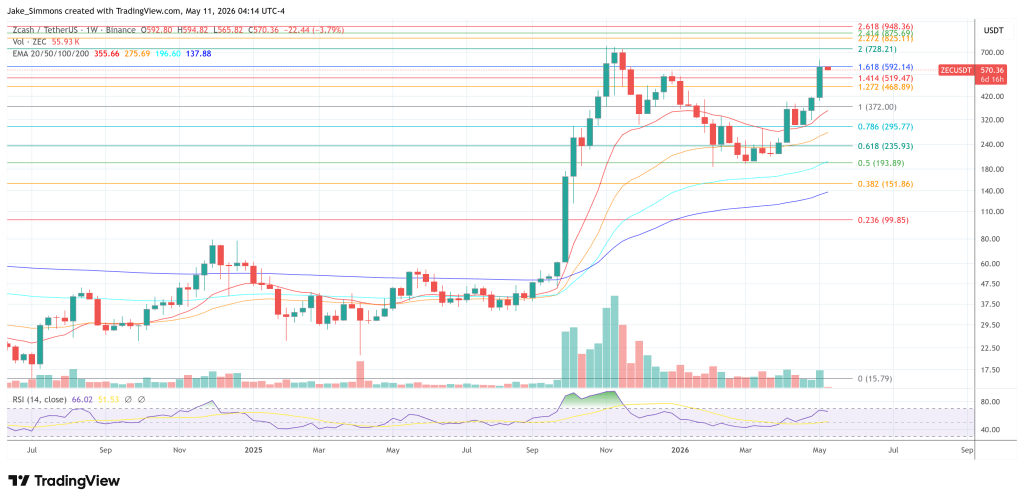
In the past, Zcash had solid cryptography but struggled with community momentum. Back in early discussions, ZEC was trading around $30, with only a small fraction of its supply shielded from transactions. Fast forward to today, ZEC is valued at approximately $600, with a much larger portion of the supply shielded and substantial amounts held in private wallets.
“Every change was intentional and strategic,” Swihart stated, detailing the steps that led to Zcash’s recent success.
Reformed Governance: A Key to Zcash’s Success
Central to Zcash’s resurgence is a fundamental shift in governance. Historically, 20% of every block reward was allocated to established institutions, creating a situation where a select group had both funding and considerable influence over protocol decisions. This model was challenged in 2024 when the Electric Coin Company (ECC) chose to discontinue direct funding, marking a turning point in governance.
The implementation of Network Upgrade 6 transformed funding structures by redirecting resources away from core organizations. It allocated funds to Zcash Community Grants and created a new fund controlled by the community, aimed at supporting contributors who provide measurable benefits. Additionally, the funding mechanisms will undergo review at the end of the third halving cycle in 2028.
The decision to terminate a trademark agreement further helped decentralize governance. By removing the veto power previously held by the ECC and Zcash Foundation (ZF), Zcash governance became more inclusive, allowing a broader range of community voices to be heard.
Product Strategy: Focusing on User Engagement
A second significant shift has been in Zcash’s product strategy. Swihart noted that in early 2024, the ECC shifted its focus towards enhancing user adoption, moving beyond technical innovations to foster a stronger user base. Community sentiment had faced challenges, with a notably negative response from ZEC holders.
The launch of the Zodl wallet epitomizes this shift. Introduced in March 2024, Zodl offers shielded transactions by default, hardware wallet support, and seamless token swaps. This change increased shielded supply significantly by the end of 2025, showing a 400% increase in real user engagement.
Swihart emphasizes that the numbers reflect genuine interest in privacy-focused financial solutions, illustrating a clear shift in user preferences toward maintaining control over their digital assets.
The rebranding from a “privacy coin” to “unstoppable private money” has also improved ZEC’s appeal to a broader audience, reducing associations with regulatory challenges while highlighting its positioning as a secure and private transaction method. This change has made ZEC more attractive to institutions, indicating a positive shift in perception and market engagement.
Zodl’s Growth and Future Prospects
In a significant organizational move, the ECC team transitioned to form the Zcash Open Development Lab (ZODL) in January 2026, aimed at ramping up development and product offerings. With a recent funding round of $25 million from notable investors such as Paradigm and Coinbase Ventures, ZODL aims to fast-track Zcash’s user experience, scalability, and readiness for future technological advancements.
Key priorities for ZODL include enhancing user experience, increasing transaction speeds, and preparing for a post-quantum future. The goal is to achieve 25-second block times and implement innovative features like stateless wallets using advanced cryptographic techniques.
“Zcash is on a trajectory to becoming faster, more user-friendly, and secure against future challenges,” Swihart remarked.
As of the latest update, ZEC is trading at approximately $570.36, showcasing the positive market response to these strategic initiatives.