The European Central Bank (ECB) is on the brink of transforming the Eurozone’s monetary landscape with the integration of distributed ledger technology (DLT). This ambition signifies a bold step towards enhancing the efficiency of financial transactions across Europe.
How does this transformation unfold? The ECB employs a ‘dual-track strategy’, which assesses both immediate and long-term implementation of DLT. As this technology begins to bridge the gap in conventional finance, the discussion around Central Bank Digital Currencies (CBDCs) gains momentum.

This leads to critical inquiries, particularly concerning issues of financial sovereignty and personal privacy, especially when compared to more user-empowered solutions like Best Wallet.
ECB’s Strategy and the Proliferation of CBDCs
The ECB’s dual-track approach consists of two key components: ‘Pontes’ and ‘Appia’.
1. Short-Term Implementation (Pontes)
This leg focuses on connecting DLT platforms with existing TARGET Services for the seamless settlement of wholesale transactions using central bank money.
By embracing DLT, this initiative aims to bolster operational efficiency and enhance security within the current financial system.
2. Long-Term Vision (Appia)
Envisioning an advanced, coherent financial ecosystem, this track anticipates more innovative infrastructure for Europe and beyond.
Appia heralds the potential introduction of tokenized assets, fostering an environment ripe for sophisticated DLT applications.
This bifocal approach exemplifies a progressive stance towards digital assets.
Concurrent with this strategy, central banks—including the ECB—are delving into the development of CBDCs, with hopes to finalize the digital euro by October 2025.
Proponents of CBDCs highlight advantages such as enhanced security and efficiency, postulating that these digital currencies could supplant cash in an increasingly cashless economy. The primary objectives include expedited interbank settlements, optimized cross-border transactions, and robust monetary sovereignty.
Yet, a crucial dilemma arises.
The advocacy for CBDCs introduces significant concerns regarding individual privacy. Centralized management by banks could allow for comprehensive visibility into personal transactions, potentially imposing restrictions on accounts.
These worries stand in stark contrast to the privacy and autonomy that self-custody solutions like Best Wallet offer.
Best Wallet: Empowering Users with Financial Independence
The centralized nature of CBDCs raises alarms about surveillance and control over financial behavior—issues that are circumvented by the use of cash or decentralized crypto transactions. Here, Best Wallet’s self-custody paradigm stands out, offering genuine financial autonomy.
Best Wallet is designed to return control to its users. No longer do you have to rely on third parties that could hinder or freeze your transactions—everything is directly managed by you.
This self-custody mechanism diminishes the risks associated with third-party failures, eliminating worries about hacks or insolvency that could affect custodial exchanges. Recognized as one of the leading anonymous crypto wallets, Best Wallet emphasizes security with its Fireblocks MPC technology, which fragments your private key into separate shards distributed among multiple parties.
Exploring Exclusive Perks with Best Wallet Token ($BEST)
Consider Best Wallet as the vehicle to achieve complete financial agency. The Best Wallet Token ($BEST) unlocks a plethora of unique advantages.
By holding $BEST, users benefit from significantly lower transaction fees and enhanced staking rewards, which optimize returns on staked assets, alongside early access to lucrative crypto presales in the ‘Upcoming Tokens’ segment.
This positions you to be among the first to capitalize on promising new ventures, potentially outpacing the market.
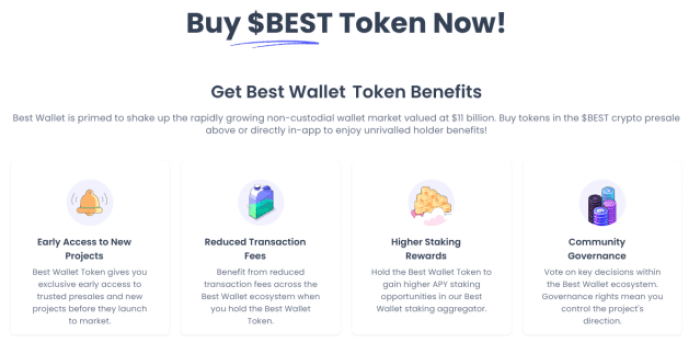
Additionally, you’ll receive priority status for new features like the Best Card, facilitating effortless cryptocurrency spending at any Mastercard location. Moving forward, you will also gain governance rights, allowing you to shape the future trajectory of the Best Wallet platform as the ecosystem matures.
Current pricing for $BEST is $0.025265, but an impending price surge is forecasted, with predictions estimating it could reach $0.072 by the end of 2025, representing a substantial potential return on investment.
Envisioning the Future of Finance: Centralization vs. Self-Custody
The ECB’s strides in DLT and CBDC aim to innovate the financial space, yet they highlight critical privacy dilemmas. In contrast, Best Wallet emerges as a beacon of self-custody, enabling individuals to maintain full control over their digital assets.
Possessing $BEST amplifies these advantages further, incentivizing greater engagement and participation. As financial landscapes evolve, comprehending the ramifications of centralized versus self-managed solutions becomes indispensable.
This overview serves educational aims and does not constitute financial advice.