Cryptocurrency enthusiasts have recently noted a significant dip in Bitcoin transaction fees. As the market faces yet another bear phase, these fees have plummeted to historical lows. This downward trend reflects a broader decline in market activity, highlighting a lack of engagement reminiscent of earlier years in the Bitcoin ecosystem.
Bitcoin Transaction Fees See Unprecedented Declines
As observed by crypto analyst Crypto Tice, Bitcoin transaction fees have fallen to their lowest levels in over 15 years. Analysis from various data sources illustrates that these transaction costs are now comparable to those during 2011, a period marked by foundational developments in the Bitcoin network.
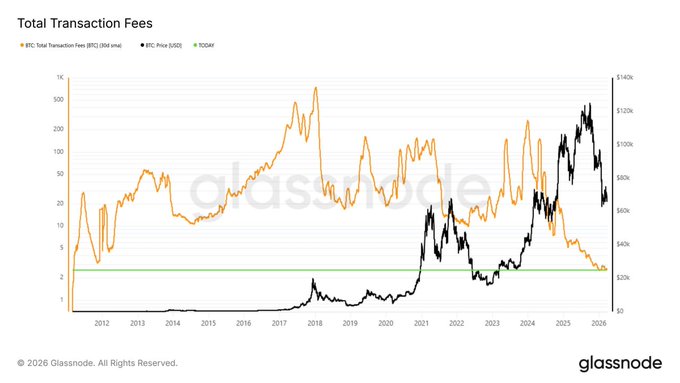
Data from Bitinfocharts reinforces this observation, revealing that the average transaction fee has dwindled to an astonishing $0.22. This marks a substantial decrease, positioning the cryptocurrency at a new low not witnessed in recent history. The downward trajectory warrants attention, as it suggests that external factors are significantly impacting the Bitcoin market.
The notable drop in transaction fees indicates how severely the crypto landscape has been affected by the ongoing market downturn. Though participation is dwindling and liquidity is low, the resulting environment can also create opportunities for future growth and recovery.
Potential for BTC Price Recovery
Historical patterns suggest that Bitcoin often experiences a resurgence when pessimism saturates market sentiment. A decline in network participation and transaction fees often signals a potential turning point. These indicators hint at the possibility of a forthcoming bullish phase.
This downturn could set the stage for a remarkable rebound. With liquidity at such a low ebb, any new investment influx may catalyze an unprecedented price surge. Additionally, with minimal resistance in the current market, there is substantial room for upward movement as more investors consider re-entering the crypto space.
That said, the road to recovery may not be immediate, as bear markets typically take time to navigate. Nonetheless, there is a glimmer of optimism: the Fear & Greed Index indicates a shift from extreme fear to a state of simple caution. This suggests that investor sentiment is gradually shifting, potentially paving the way for renewed enthusiasm in the market.