As the Digital Asset Market Clarity Act progresses through Congress, current predictions estimate a 59% likelihood of it becoming law this year. This marks a decrease from a high of 68% after a recent Senate committee vote, indicating an increase in uncertainty for the cryptocurrency sector, which had initially hoped for passage before year-end.
Challenges in the Senate
The Senate banking committee advanced the CLARITY Act in May, but support was minimal. Only two Democratic members joined their Republican colleagues in endorsing the bill, raising concerns about its chances of passing the full Senate without significant amendments.
Committee Chairman Tim Scott referred to the vote as bipartisan, but critics argue that the slim margin does not reflect strong backing.
For the bill to become law, it must be approved by both congressional chambers and signed by the President. The timeline now appears more extended than initially projected by the crypto industry.
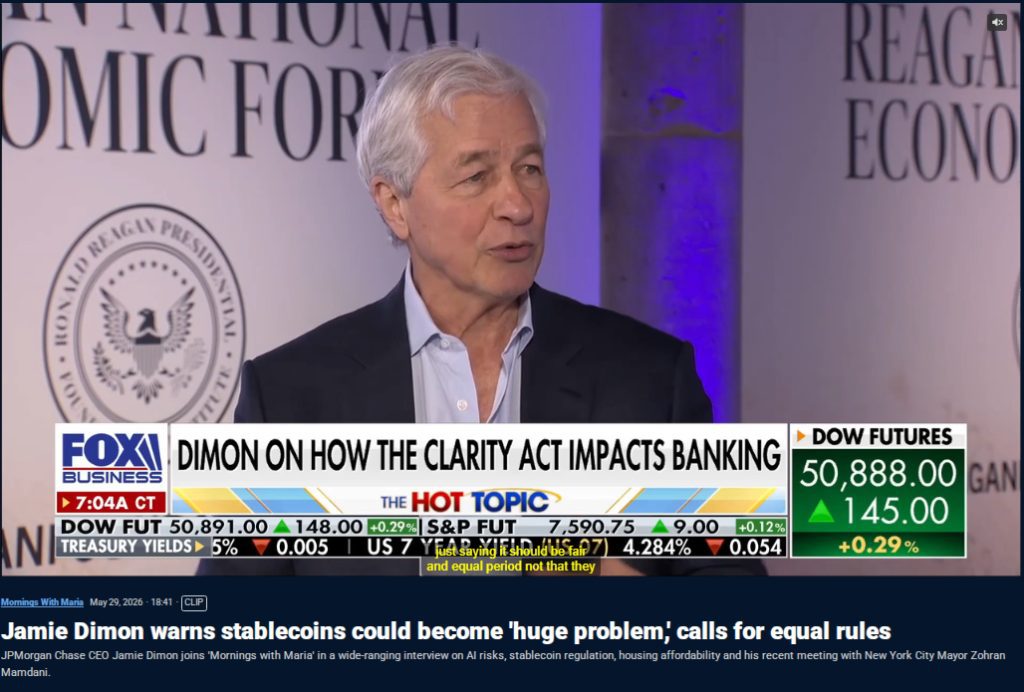
Recently, JPMorgan CEO Jamie Dimon reiterated the banking industry’s stance on the bill during an appearance on Fox Business. He firmly stated that banks have no intention of acquiescing to the current provisions.
The Central Issues
The core of the dispute surrounds two main concerns raised by Dimon. He asserted that the bill permits crypto companies to pay interest on customer deposits and stablecoin holdings, which he views as direct competition against traditional banks.
Additionally, Dimon claimed that the bill does not impose the same Anti-Money Laundering (AML) regulations, Bank Secrecy Act compliance, and capital reserve requirements on crypto firms as it does on banks.
Dimon’s straightforward proposal is that if crypto entities wish to provide interest-bearing accounts, they should obtain a banking charter and adhere to the same regulations as traditional banks. He emphasized that the banking sector will not accept the bill as it stands.
Focus on Industry Leaders
Dimon also directed comments toward Coinbase and its CEO, Brian Armstrong, who has been instrumental in advocating for the bill’s passage through Congress. Dimon acknowledged that while the banks could potentially lose this battle, they remain committed to opposing the bill.
Armstrong’s pivotal role in these discussions has attracted attention from both sides of the conversation. Reports suggest that Coinbase has committed significant financial resources to lobbying efforts in Washington, aiming to shape the bill’s direction.
The fate of the CLARITY Act hinges on whether enough senators can be swayed before the upcoming year’s end.
Image from Unsplash; chart from TradingView.