Mastercard is enhancing its commitment to stablecoin infrastructure by integrating Ripple’s RLUSD into its payment settlement system. This move aims to allow issuers and acquirers to conduct card transactions using regulated digital assets alongside traditional currencies.
Recently, Mastercard announced plans to broaden its settlement capabilities by offering options for intraday, weekend, and holiday settlements, along with on-chain card settlements utilizing stablecoins. This initiative is designed to provide Mastercard partners with greater flexibility regarding the timing and methods of transaction settlement across its extensive global payments network. It holds particular significance for cross-border payments, treasury operations, and various payout scenarios.
Ripple’s Integration into Mastercard’s Settlement Network
A significant aspect of this development for Ripple is the acceptance of RLUSD as a part of the stablecoins planned for support by Mastercard. The payment network will facilitate settlements using diverse stablecoins including Circle’s USDC, several Paxos-issued coins such as PYUSD, USDG, and USDP, Ripple’s RLUSD, and SoFi’s SoFiUSD. These stablecoins will be operable across multiple blockchain networks, such as Arbitrum, Base, Canton, Ethereum, Polygon, Solana, Tempo, and the XRP Ledger.
This initiative positions RLUSD at the forefront of a crucial application for stablecoins: settlement activities. By categorizing stablecoins as essential elements in backend financial infrastructure, Mastercard emphasizes their role beyond mere trading instruments or liquidity facilitators. This aligns well with Mastercard’s aim of enabling quicker monetary transactions amongst issuers, acquirers, and merchants.
Raj Dhamodharan, Mastercard’s executive vice president for Blockchain and Digital Assets, commented, “The next phase of stablecoin adoption emphasizes practical applications, especially in settlement, where timing and liquidity are critical.” He added that by introducing these new settlement options, Mastercard is assisting its partners in managing liquidity more effectively in our increasingly digital economy while upholding the trusted standards associated with the brand.
The stablecoin settlement feature is seen as a complement rather than a replacement for existing settlement processes. Mastercard describes this improvement as a “network-level enhancement” that safeguards current security measures, fraud prevention protocols, and dispute resolution techniques, while also introducing the option for digital asset settlements.
Initial support for this service is expected from companies such as ARQ, CBW Bank, Cross River, Lead Bank, and Nuvei, with an initial focus on markets in the United States and Latin America. Looking forward, Mastercard indicates plans for broader expansion until 2026, pending regulatory conditions, including more geographic regions, partnerships, and additional regulated stablecoins.
Ripple has framed RLUSD’s role in this project as evidence of the increasing acceptance of regulated stablecoins explicitly designed for institutional payment systems. Jack McDonald, Ripple’s senior vice president of stablecoins, remarked that Mastercard’s move signifies a substantial endorsement of the readiness of blockchain technology for crucial payment infrastructure.
McDonald further noted, “The inclusion of RLUSD in Mastercard’s global settlement network illustrates the rising need for trustworthy, regulated stablecoins tailored for real-world financial applications.”
Other issuers and banking partners have expressed similar sentiments, stressing the growing importance of liquidity management and the limitations posed by traditional settlement schedules. Circle’s chief commercial officer, Kash Razzaghi, highlighted the increasing demand for infrastructure that can function beyond conventional banking hours, while luca cosentino from Cross River described stablecoins as “a powerful tool” for enhancing settlement speed and transparency.
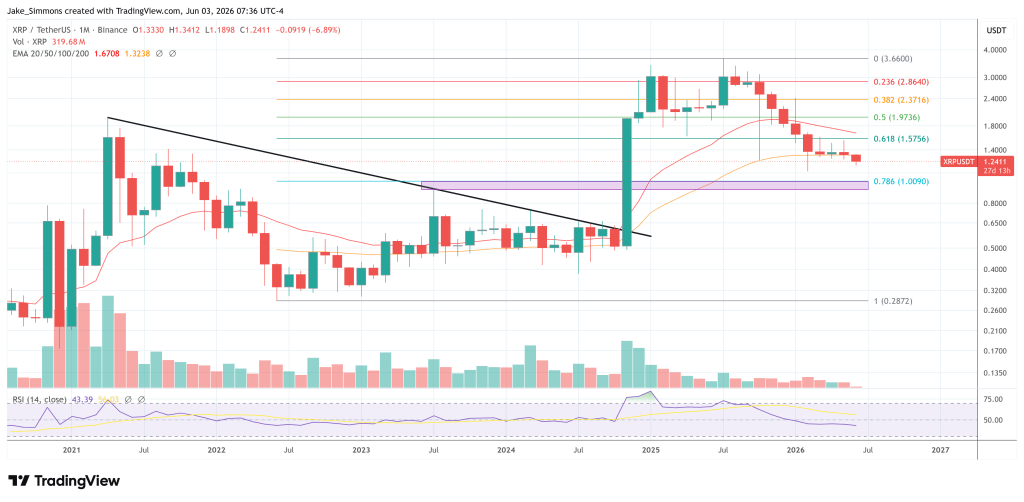
At the time of writing, XRP is trading at $1.24.