As Bitcoin begins to regain momentum after a prolonged period of sideways movement, the market appears to be at a critical juncture. Recent analyses indicate that while confidence is returning, it is vital to view this resurgence within the larger financial context. Recognizing these dynamics can offer significant insights for both traders and investors alike.
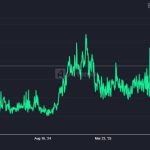
Recent trends reflect a notable disconnect in how different asset classes are performing. For example, major stock indices like the S&P 500 and the Nasdaq have easily surpassed their previous records. However, cryptocurrencies like Bitcoin lag significantly behind—currently sitting around 40% below its peak value. This divergence suggests that capital is being selectively allocated rather than flowing back into the market on a broader scale.

This selective recovery highlights an essential truth: the resurgence of traditional equities does not necessarily signal a universal return to risk-on appetite. In fact, Bitcoin and other cryptocurrencies find themselves in a wait-and-see position, observing how these shifts play out among mainstream assets.
Bitcoin’s Place in the Current Market Landscape
The latest insights from XWIN Research Japan emphasize a critical aspect of the situation. The gains seen in traditional markets are often associated with easing geopolitical tensions and shifts in investor sentiment, not so much due to macroeconomic improvements like lower inflation rates or significant interest rate reductions.
This distinction is important for understanding the current liquidity environment. As market conditions remain tight, it presents obstacles for a widespread rally that would benefit risk assets like Bitcoin.
Capital typically flows through markets in a predictable order, with commodities, like oil, taking the lead, followed subsequently by currencies, equities, and finally cryptocurrencies. Presently, Bitcoin is among the later-cycle assets waiting for its chance to participate in this newfound capital flow.
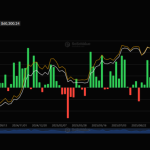
While Bitcoin is preparing for its moment, various internal factors are showing promise. For example, the drop in exchange reserves signals that accumulation is still occurring, hinting at a potentially bullish scenario even if the price is currently below significant resistance markers. Such conditions may serve as a prelude to a potential breakout.
In observing Bitcoin’s current lag behind traditional equities, it may very well be a matter of timing rather than an indication of weakness. As the structural foundation strengthens, the eventual catalyst that propels Bitcoin into a decisive upward movement remains a pivotal unknown.
Bitcoin’s Recent Performance and Potential Resistance Levels
Bitcoin’s current trajectory reveals a shift from significant downtrends towards a more orchestrated recovery. Currently testing a vital resistance zone around $75,000, the asset has shown considerable resilience following a sharp decline. Identifying this range is crucial, as it has historically demonstrated strong support.
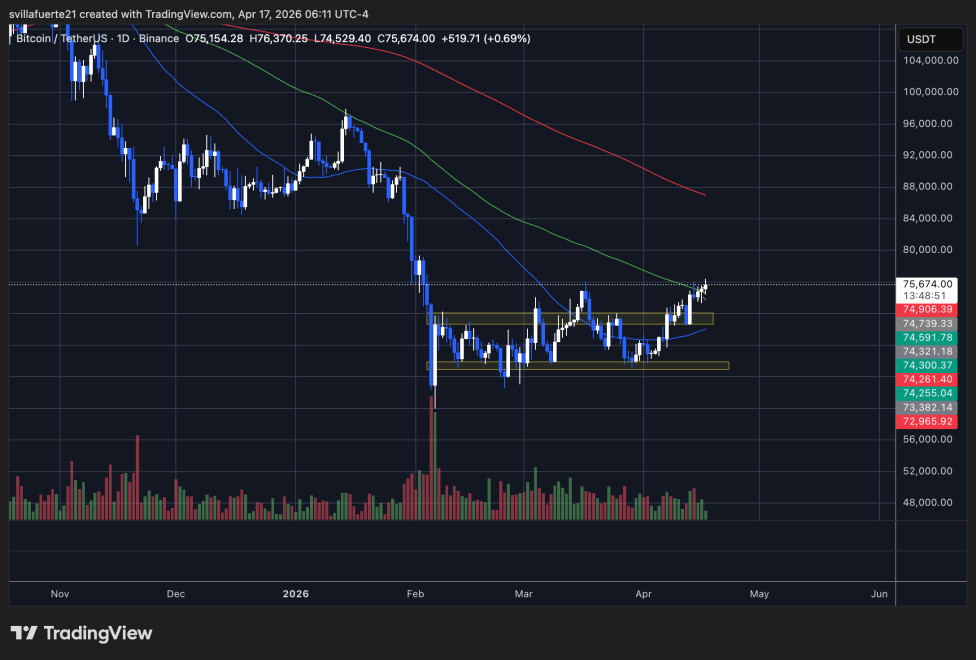
This recent breakout beyond prior resistance offers a sense of renewed confidence among buyers. As the price approaches the declining 100-day moving average, previously a barrier, the shifting momentum seems to signal a possible strengthening phase. Meanwhile, the 50-day moving average’s upward trajectory could indicate improved short-term prospects, even as the longer-term outlook remains uncertain.
The normalizing trading volume since a spike earlier in the year suggests that current movements are sustained by strategic accumulation rather than emotional responses. As such, the upcoming period will be telling: will Bitcoin establish a foothold above the $75,000 threshold, or will it revert back to a consolidation state?
Visual aids and charts can further clarify these movements, providing a better understanding of market dynamics. Indeed, Bitcoin’s path forward remains precarious, but with every swing, it gathers both data and momentum on its journey towards potential new heights.