Bitcoin (BTC) has recently been navigating a challenging market environment, with significant influences that could determine its upcoming price movements. Following a period of decline, key factors are contributing to a notable shift in the dynamics of BTC’s market.
Current Bitcoin Profitability Trends
Currently, Bitcoin is trading around the $77,000 mark, following a recent retreat that has affected the broader market. One significant observation is the decreasing percentage of BTC held at a profit, which has fallen below levels typically seen during previous bullish trends.
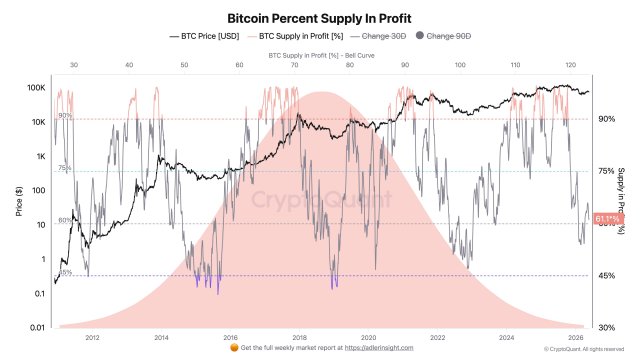
Analyst Darkfost, known for his insights on cryptocurrency market behavior, has noted that the percentage of Bitcoin’s supply in profit has decreased to approximately 61%. This development suggests a shift in investor sentiment amidst ongoing market volatility. An increasing number of holders are now facing unrealized losses, while many are nearing their original investment cost following price declines.
While 61% may seem substantial at first glance, it reflects a concerning trend when compared to historical norms. During prior bull runs, the share of Bitcoin in profit often exceeded 75%, indicating stronger market confidence. The recent drop in profitable supply suggests a move into a more uncertain market phase.
In bear market conditions, it is common for losses to dominate the landscape, often with around 45% of Bitcoin’s supply held at a loss. When prices dipped below the $60,000 level, the market neared a balance, with only 51.1% of the supply remaining in profit.
For investors to feel more secure in holding their Bitcoin, a significant amount of unrealized profits is necessary. When investor profits become overly concentrated, the market can become volatile and susceptible to short-term fluctuations.
The Significance of the $80,000 Resistance Level
Considerations of Bitcoin’s current price trends reveal that the $80,000 mark stands out as a critical resistance level. Darkfost suggests that this price level, representing the cost basis for short-term holders, has proven to be a formidable barrier since October of the previous year. This persistent resistance implies that many short-term investors continue to feel pressured, likely contributing to increased selling activity as market sentiment remains cautious.
As evidenced by recent price movements, Bitcoin has struggled to break through this resistance, facing rejection once again around the $82,000 threshold. For the time being, it appears that many short-term holders may choose to sell their positions to minimize losses rather than hold onto their investments.
In summary, the current dynamics surrounding Bitcoin suggest a market under pressure. Understanding these trends and the underlying factors influencing profit distribution can help investors navigate this complex landscape.