Despite a minor dip in the price of Ethereum, the overall health and fundamentals of the network remain strong. The Ethereum network is experiencing consistent performance, characterized by an increase in transaction activity and overall engagement across its blockchain.
Stabilizing Factors Highlight Ethereum’s Resilience
The recent fluctuations in Ethereum’s price are accompanied by a surge in network performance, fostering renewed market interest. This revitalization reflects positively on various sectors within the eth ecosystem, strengthening investor confidence in its long-term prospects.
Key indicators of this resurgence include:
- Increased Transaction Activity: Growing numbers of transactions on the network demonstrate heightened user engagement.
- Enhanced On-chain Engagement: More users are actively participating in the ecosystem.
- Sector Growth: Critical industries within Ethereum, such as DeFi, are expanding significantly.
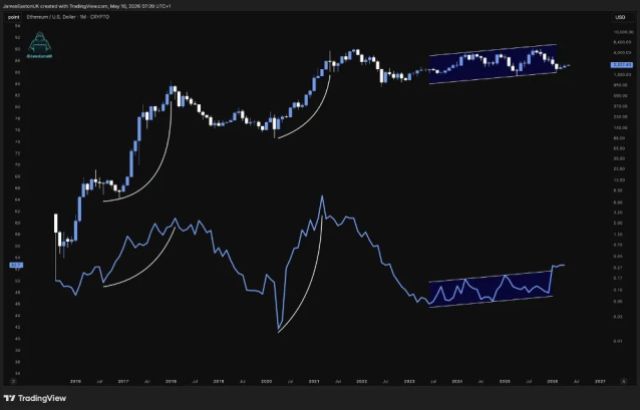
An analysis of the Ethereum price chart over the last month indicates a phase of consolidation, where the asset has stabilized after showing signs of upward momentum. This trend could suggest that a significant price movement might be on the horizon.
Periods of consolidation can be promising for future price increases. Analysts note that the longer this consolidation persists, the more substantial the potential breakout could be. At the same time, the network’s performance is witnessing an uptick, adding to the reasons for cautious optimism.
Currently, over 7.33 million ETH, approximately 6% of its total supply, is locked on various corporate balances, which points to a growing institutional interest. Furthermore, following the implementation of the Merge update, inflation across the ethereum ecosystem has decreased compared to Bitcoin. Significant milestones include record-high transactions on both Ethereum’s mainnet and Layer 2 solutions.
Ethereum’s Dominance in DeFi and Lending Markets
A report from Galaxy Research on Ethereum’s market dynamics reveals that its Total Value Locked (TVL) has remained remarkably stable, maintaining a market share between 55% to 60% since mid-2022. This highlights Ethereum’s ongoing dominance in both the lending and DeFi sectors.
Several factors contribute to this dominance:
- Robust Collateral Markets: These markets provide depth and reliability, attracting larger investors.
- Reliable Infrastructure: The oracle systems established within Ethereum enhance its usability and trustworthiness in market fluctuations.
- Resilience Through Market Challenges: Ethereum has demonstrated its ability to withstand economic downturns, creating reliability that newer chains find difficult to replicate.
The issuance of stablecoins on Ethereum has skyrocketed, accounting for 50% of the total stablecoin market capitalization. Furthermore, over 60% of all tokenized real-world assets are now issued on the Ethereum network. This trend underscores the concept that institutional investors favor stability, as the selection process for a blockchain often involves extensive legal review and compliance oversight.
In conclusion, while Ethereum experiences price fluctuations, the underlying fundamentals and network developments indicate a robust ecosystem with promising growth potential in the future.