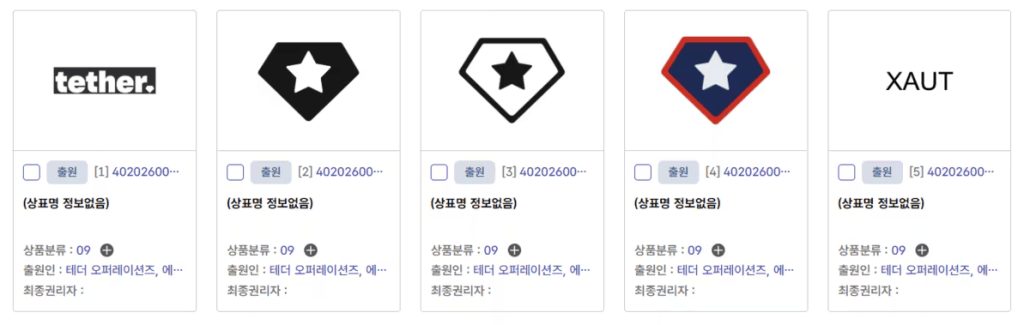
Tether has recently expanded its trademark strategy in South Korea, taking significant steps that indicate a strategic shift. On May 19, the company behind the world’s largest stablecoin submitted seven trademark applications to the Korea Intellectual Property Rights Information Service. These filings not only cover Tether’s tokens but also include its corporate name, official logo, and the gold-backed asset known as Tether Gold (XAUT).
Strategic Realignment in South Korea
This marks a deviation from Tether’s previous approach in South Korea, where trademark applications were primarily limited to stablecoin product names. Broadening their scope suggests a potential effort to establish a more concrete business presence in the region rather than merely protecting its brand.
Moreover, the timing of these filings is notable, as South Korea is currently formulating new regulations under the second phase of its Digital Asset Basic Act.
Tether is reinforcing its trademarks in South Korea ahead of regulatory changes. The filings cover its name, logo, and Tether Gold, indicating a strategic pivot.@tether May 19, 2026
A key proposal currently under discussion would mandate that foreign stablecoin companies establish local branches prior to legally offering their tokens to users in South Korea.
Some analysts suggest that Tether’s recent trademark initiatives seem to be early preparations for such regulatory requirements. Given South Korea’s status as a leading market with a highly engaged retail crypto trading population, establishing a local presence could be essential for any major stablecoin issuer.
Circle’s Competitive Edge
Tether is not the only player focused on South Korea. Circle, which issues USDC, took proactive measures by filing 11 local trademarks last year and has already expanded its market share in South Korea by 10%.
Tether currently holds seven active trademarks in South Korea, indicating an escalating competition between these two leading stablecoin entities.
This year, Jeremy Allaire, CEO of Circle, made a visit to South Korea, engaging with major banks and cryptocurrency exchanges to discuss potential collaborations. These types of strategic partnerships could benefit Circle, giving it a stronger local foothold while Tether navigates its own pathway.

Broader Financial Aspirations
The shift in trademark filings also aligns with Tether’s larger ambitions in South Korea, particularly regarding the country’s robust export economy. South Korean businesses frequently manage cross-border transactions.
Tether identifies this as a significant opportunity, suggesting that blockchain-enabled payments could outperform traditional banking methods like swift, resulting in quicker and less expensive transactions for exporters in the region.
This outlook emphasizes Tether’s vision of utilizing stablecoins as effective payment tools rather than mere trading instruments. The competition between Tether and Circle may eventually shift from cryptocurrency exchanges to include more mainstream financial realms.
Featured image from Unsplash, chart from TradingView