Once a wallet is blacklisted by Tether, it is extremely unlikely to be removed from the list. In 2025, only 3.6% of the addresses that were blacklisted were subsequently released, according to BlockSec data.
A significant percentage of funds linked to these blacklisted wallets were permanently destroyed through Tether’s “destroyBlackFunds” feature. This highlights the finality and seriousness of Tether’s enforcement actions.
Increase in Freezes Across Tron and Ethereum
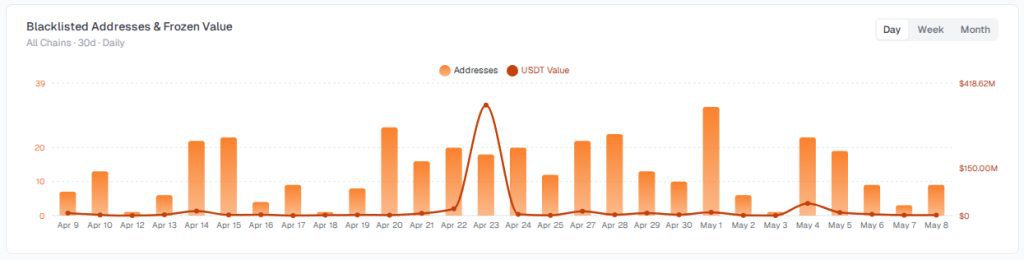
Over the past month, Tether has frozen more than $514 million in USDT tied to 370 wallets on the Ethereum and Tron networks.
According to BlockSec’s USDT Freeze Tracker, 328 of these addresses were on the Tron network, which accounted for approximately $506 million. In contrast, the Ethereum network saw 42 addresses frozen, totaling around $8.73 million. This discrepancy emphasizes Tron as the primary focus of Tether’s enforcement efforts.
The trend is accelerating. Throughout 2025, Tether blacklisted 4,163 addresses and froze a total of $1.26 billion in USDT. If the current pace continues, this annual figure may be surpassed well before the year’s end.
A broader analysis covering 2023 to 2025 indicates that Tether has frozen approximately $3.3 billion across 7,268 addresses, far exceeding the amounts managed by competing stablecoin issuer Circle within the same timeframe.
The recent action by Tether to freeze over $500 million in USDT across Tron and Ethereum illustrates the significant influence of regulatory compliance in the crypto space.
It emphasizes the importance of using platforms like BingX while remaining aware of factors such as custody, liquidity, and the flow of funds on the blockchain.… pic.twitter.com/K0cNTrcmWX
— Crypto Axtrol (@CryptoAxtrol) May 8, 2026
The Role of Law Enforcement in Freezes
Many of the significant recent freezes have been closely associated with investigations by governmental authorities. For instance, in April, Tether collaborated with the US Treasury’s Office of Foreign Assets Control to freeze over $344 million in USDT across two Tron addresses.
These wallets were reportedly linked to suspected sanctions violations involving Iran. Earlier, in February, Tether assisted in freezing over $61 million connected to “pig butchering” scams, in which victims are deceived into investing large amounts of money under false pretenses.
Tether has publicly stated that it has frozen around $4.2 billion in tokens over the past three years due to connections with illegal activities. A significant portion of this—approximately $3.5 billion—has been frozen since 2023, as law enforcement agencies have intensified their scrutiny of cryptocurrency-related activities.
Wider Implications of Freeze Powers
The rise in wallet blacklisting has ignited broader discussions beyond just stablecoins. Certain decentralized finance (DeFi) projects have employed upgradeable contracts and administrative controls to halt or recover funds after major exploits, raising questions about the extent of these powers and their appropriate use.
In the case of stablecoins like USDT, issuers maintain direct control over processes such as minting or burning coins. Current data indicates that these freeze mechanisms have become a standard element in tackling fraud, sanctions, and scams—not just sporadically, but consistently and at scale.
Featured image from Halo, chart from TradingView