RippleX Developers have announced a significant transition in their approach to the XRP Ledger (XRPL), focusing on formal verification to enhance the reliability of its core functionalities. This development moves from conventional methods associated with the Payment Engine to more advanced native DeFi protocols, such as the Single Asset Vault and the forthcoming Lending Protocol. This strategy aims to ensure that the protocols are validated for correctness before launching high-stakes features.
In a June 8 update, Vito Tumas of RippleX highlighted this shift following an initial exploratory phase that included collaboration with Common Prefix. This phase was crucial in setting the technical direction for the formal methods being implemented in XRPL’s new financial functionalities. Tumas emphasized that instead of relying on formal verification solely as a fallback option, it will now be integrated from the inception of feature development. This approach aims to make provable protocol correctness an intrinsic design element.
Importance of This Initiative for the XRP Ledger
This development holds particular significance as the XRPL’s strategy towards decentralized finance (DeFi) diverges from that of other blockchain networks, where complex financial operations typically occur in standalone smart contracts. RippleX articulates that the XRP Ledger integrates its DeFi foundations directly into its core architecture, which is coded in C++. While this setup can deliver performance and integration advantages, it also amplifies the repercussions of any faults within the system.
- A bug in a separate smart contract can be isolated and rectified.
- A flaw in the foundational C++ code can disrupt the entire ledger.
The recent initiatives around formal verification are particularly pertinent for the Single Asset Vault and the Lending Protocol, as they are set to introduce intricate economic principles into the XRPL framework. According to RippleX, the challenge largely lies not in the quantity of code but in maintaining numerical precision during sequential operations. It is critical that rounding errors do not accumulate over time, as this can lead to substantial discrepancies in financial calculations. Such precision is essential in lending markets and vault systems.
Tumas described formal verification as an effective tool to mathematically validate the correctness of these advanced mechanisms, thereby establishing a benchmark for future native DeFi functionalities. The process contrasts sharply with conventional testing methodologies.
Understanding Formal Verification vs. Traditional Testing
Conventional testing methodologies, including unit tests and integration tests, can verify how a system behaves within expected scenarios. However, their limitation lies in the fact that engineers cannot predict every possible situation that might arise.
Tumas pointed out that for a DeFi protocol with vast potential scenarios, relying solely on tests can yield an unacceptably narrow view of system reliability. Testing confirms functionality only for defined instances, but cannot guarantee performance across the entire potential state space.
How Formal Verification Changes the Game
Formal verification takes a different approach. It focuses on constructing an abstract model that encapsulates the desired behavior of the protocol in a precise, analyzable language. The central query transforms from simply whether a certain input yields the correct output to whether the model can fail under any conceivable condition.
RippleX elaborated on how this modeling connects back to the actual implementation in production systems. An “oracle” generated from this proven model serves as a reference point against which the XRPL implementation is continuously evaluated. Both the oracle and the C++ implementation are fed identical inputs, with any discrepancies in their outputs being flagged for review.
In partnership with Common Prefix, RippleX is employing this methodology for the Single Asset Vault and the Lending Protocol. This collaboration has already revealed edge cases that traditional testing missed, underscoring the efficacy of formal verification. The preliminary outcomes reflect a robust methodology, supported by decades of research, which is now accessible for mainstream engineering use.
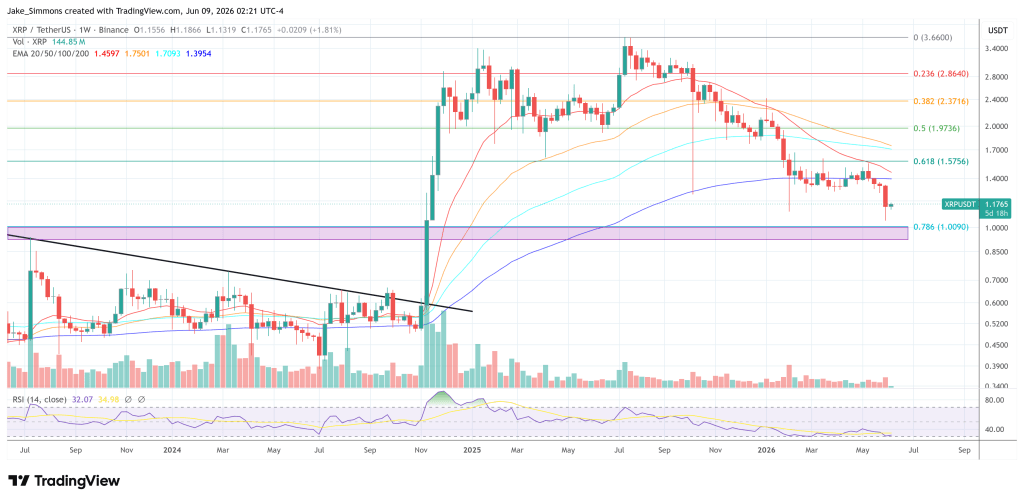
As of the latest update, XRP is valued at $1.17.