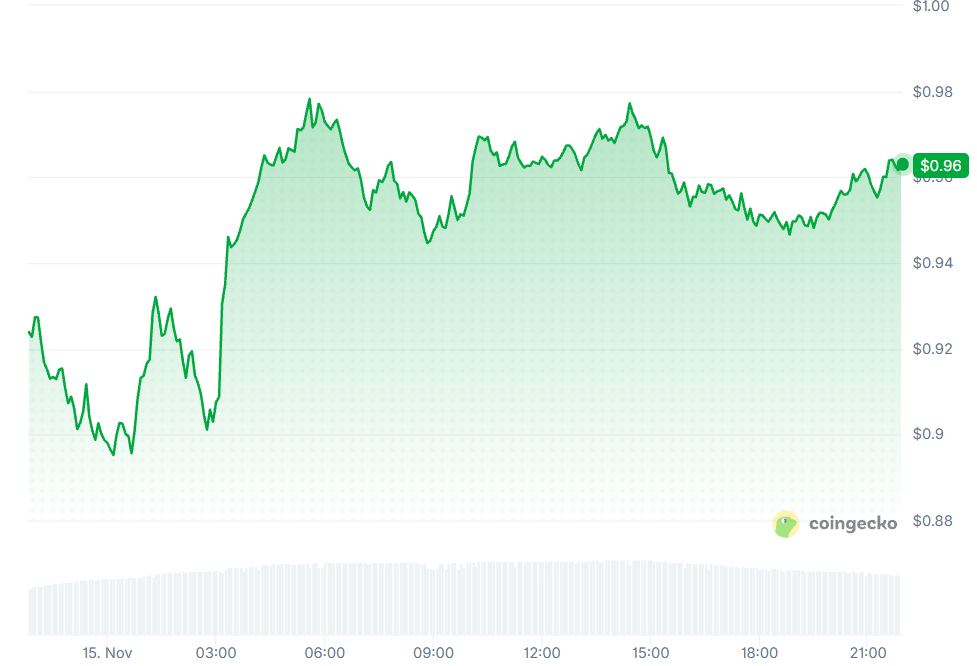
The value of XRP has plummeted, dropping to around $0.89, its lowest point since November 2024, as investors withdraw capital from the cryptocurrency market. This decline is exacerbated by significant withdrawals from XRP exchange-traded funds (ETFs) and a marked decrease in major dollar-pegged stablecoins.
Over the current quarter, XRP has lost approximately 36% of its value and has failed to bounce back since peaking at over $3.60 in July 2025. The downturn reflects broader weakness across the cryptocurrency landscape, with both Bitcoin and Ethereum experiencing similar losses and returning to their lowest prices since August.
Investor sentiment appears to be cautious, as diminishing investment flows and reduced stablecoin liquidity contribute to a lack of demand across the crypto market.
XRP Hits Lowest Price Since November 2024
XRP’s decline to $0.89 marks a continuing downward trend that began after its steep rise above $3.60 in July 2025. The cryptocurrency’s value has diminished by about 36% this quarter, mirroring a general downturn in investor sentiment toward digital assets. This trend implies that XRP’s struggles are part of a wider market correction affecting other cryptocurrencies like Bitcoin and Ethereum.
The recent performance of XRP underscores the difficulties altcoins face when market confidence wanes. As investors become more selective, cryptocurrencies that rely on active buying interest endure additional pressure on their prices.
Increased Withdrawals from XRP ETFs
Withdrawals from XRP investment products have intensified selling pressure on the cryptocurrency. Recent data reveals that US-listed spot XRP ETFs experienced about $19.13 million in net outflows during the week ending November 13, the highest level of withdrawals since March 2026.
Despite these recent outflows, XRP ETFs have seen a cumulative intake of approximately $1.5 billion since their launch in November 2025, indicating earlier strong demand, though it lags behind Bitcoin and Ethereum in terms of institutional investment.
Fluctuations in ETF flows serve as a critical barometer of investor confidence. Persistent withdrawals could signal growing skepticism about XRP and lead to diminished buying support for the cryptocurrency.
Declining Stablecoin Supply Affects Market Liquidity
The pressure on cryptocurrency prices is compounded by a decline in the overall market capitalization of major stablecoins. The combined market cap of Tether’s USDT and Circle’s USDC has dropped to around $244 billion, down from approximately $260 billion over the past seven weeks.
Blockchain analytics firm Glassnode reported a $17 billion reduction in stablecoin supply over the last month, marking the steepest monthly decline since 2022. This fall in stablecoin supply raises concerns, as these assets are crucial for trading and investing in other cryptocurrencies.
A dwindling supply of stablecoins typically indicates that capital is exiting the cryptocurrency marketplace rather than remaining in circulation for future investments. Converting stablecoins back to fiat currencies can precipitate liquidity shortages that further suppress cryptocurrency prices.
Future Prospects for XRP
XRP’s current trajectory below $0.90 illustrates the compounded effects of weak investor demand, ETF withdrawals, and diminishing liquidity. The future of XRP will largely depend on whether capital begins to flow back into the cryptocurrency market. A turnaround in ETF dynamics and a rebound in stablecoin supply may signal a revival of investor confidence.
However, as it stands, the data points to a challenging environment for digital currencies. XRP’s values reflect a situation not seen since late 2024, while diminishing stablecoin capital indicates ongoing liquidity issues. A genuine recovery will likely necessitate more than a fleeting uptick in XRP’s price, as prevailing liquidity conditions and renewed institutional interest will play critical roles in determining the cryptocurrency’s ability to stabilize.
Is the contraction in stablecoin supply indicative of a temporary liquidity shift, or does it point to a deeper capital exit from the cryptocurrency ecosystem?