In recent developments, Iran has introduced a new maritime insurance platform targeting cargo navigating through the Strait of Hormuz. This initiative has garnered attention as it facilitates payments using Bitcoin, according to reports from local news sources, including Iran’s Fars News Agency. The project aims to address the complexities of maritime shipping in a region often marked by political tension and economic sanctions.
The Launch of Hormuz Safe
Fars reported that the platform, named “Hormuz Safe,” has started extending insurance coverage to vessels traversing the Strait of Hormuz. Internal documents revealed that the Iranian Ministry of Economic Affairs and Finance had been formulating this plan since early Ordibehesht, the second month in the Iranian calendar. The initiative is poised to offer maritime insurance policies and financial responsibility certificates, with the potential to generate significant revenue—estimated to exceed $10 billion for Iran.
The platform’s most intriguing feature is its payment mechanism. It is designed to provide “fast, cryptographically verifiable” insurance for cargo within the Persian Gulf and the surrounding waterways. Notably, payments are conducted using Bitcoin, covering cargo “from the moment of confirmation” and providing owners with a signed receipt as proof of coverage.
This initiative reflects a more nuanced use of cryptocurrency, not merely as a general payment method but as part of a structured maritime insurance framework. Unlike typical consumer-focused platforms, this project serves as essential infrastructure for managing maritime compliance and insurance.
Significance of the Strait of Hormuz
The introduction of this platform coincides with growing scrutiny over the Strait of Hormuz, a strategically vital shipping route connecting the Persian Gulf to the Gulf of Oman and the Arabian Sea. According to the US Energy Information Administration, Hormuz is the world’s most significant oil chokepoint, facilitating an average of 21 million barrels of oil per day in 2022, which comprised about 21% of global petroleum liquids consumption.
Geopolitical Context
The geopolitical climate surrounding the strait has intensified in recent months. iran has permitted certain Chinese vessels to navigate through the strait after establishing protocols for management. Previous restrictions on transit were imposed following increased military actions by the US and Israel, along with a blockade of Iranian ports, which escalated tensions in this crucial corridor where a considerable portion of global oil and natural gas is transported.
Technical Aspects and Future Insights
While the Fars report highlighted the use of Bitcoin, it did not detail the technical implementation of these payments. Critical questions remain regarding whether the platform employs on-chain settlement, third-party custody, or currency conversion mechanisms. Furthermore, no information on counterparties, underwriters, or wallet infrastructure associated with the Hormuz Safe platform was disclosed.
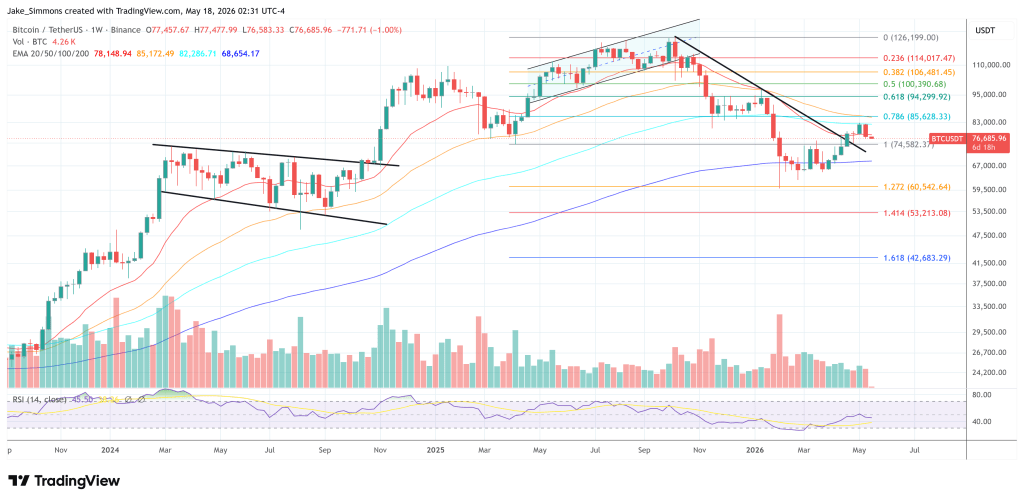
As of the latest updates, Bitcoin is trading at approximately $76,685.