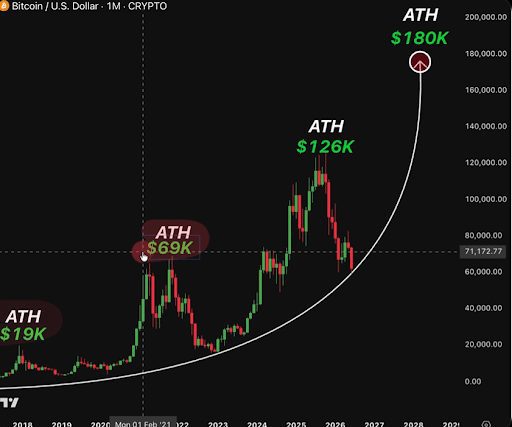
The current state of Bitcoin suggests a pivot from previous enthusiasm to a more cautious atmosphere characterized by price fluctuations. As sentiments shift, Bitcoin now finds itself in a Dollar-Cost Averaging (DCA) zone. This area has historically emerged when market sentiment is at a low ebb, hinting at potential long-term investment opportunities.
Understanding the DCA Zone in Bitcoin Trading
analysts observe that the DCA zone is synonymous with moments of significant market despair. In these conditions, Bitcoin often becomes an appealing option for accumulation, particularly before potential price rebounds.
Historical Context of Bitcoin’s DCA Zone
Crypto enthusiasts have noted that Bitcoin often reaches its DCA zone at pivotal points in its market trajectory. After major downturns, this area frequently serves as a foundation for future rallies.
- In 2019, post the peak of approximately $19,000, Bitcoin fell by over 83%, leading to a long-term DCA accumulation phase.
- This accumulation phase was ultimately followed by the meteoric rise to Bitcoin’s all-time high of around $69,000 in 2021.
- More recently, the collapse of the FTX exchange in November 2022 resulted in another significant decline, pushing Bitcoin to around $15,500.
Historically, significant gains have followed these dips, with Bitcoin experiencing rallies close to 600% in previous cycles, demonstrating the potential value of investing during these low periods.
Current Bitcoin Market Analysis
As we examine the state of Bitcoin today, the pressing question is whether it can sustain its position within the DCA zone. Currently, the cryptocurrency is trading around $62,800, resting close to its curved support level. Maintaining this structure is crucial for comparison with previous cycles from 2019 and 2022.
Challenges Facing Bitcoin
Despite its position, Bitcoin is not without challenges. Recent ETF flows and on-chain metrics exhibit pressures that could complicate bullish accumulation patterns. For example:
- Bitcoin’s Realized Cap has decreased by approximately $12 billion since its peak in mid-May.
- Analysis of Bitcoin’s Profit and Loss Index indicates that it is not near its bottom yet, though it is transitioning towards this phase.
Even with these negative signals, the argument for the DCA zone remains compelling. Past cycles reveal that accumulation zones emerged during tumultuous times, marked by low liquidity and market skepticism.
In conclusion, as Bitcoin navigates through its current DCA zone, investors should monitor both market sentiments and structural integrity. The lessons from previous cycles suggest that patience during periods of uncertainty could yield significant long-term rewards.