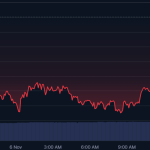
Prominent cryptocurrency analyst Benjamin Cowen has issued a cautionary warning to investors regarding the potential for Bitcoin (BTC) to experience a notable downturn. As Bitcoin was trading close to $76,000, Cowen highlighted that breaching the $74,900 threshold could lead to a rapid decline of approximately 10 to 11 percent.
Critical Support Levels for Bitcoin
Cowen’s analysis, shared on his YouTube channel, draws parallels between Bitcoin’s recent price movements and historic bear markets. He pointed out that despite some recoveries earlier in the week, Bitcoin is not demonstrating sustained upward momentum. Following a recent high of $81,000, the price falling back below $76,000 reinforces his concerns.

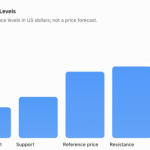
He emphasizes that the $74,900 level is crucial in the short term. Although there may be opportunities for recovery after minor dips, a persistent drop below this level could trigger increased selling pressure and push Bitcoin toward lower price ranges, particularly around the $72,000-$73,000 area, where the 200-day moving average resides.
Market Trends and Historical Context
In discussing 2026’s market dynamics, Cowen recalled significant past cycles from 2014, 2018, and 2022, noting that Bitcoin typically finds major lows early in the year, during summer, and towards year-end. While he believes that lows were already observed in 2026, he suggests another dip could occur in the last quarter, although the exact timing remains uncertain.
Cowen criticized overly optimistic projections that Bitcoin has already hit its bottom, citing the lack of a definitive capitulation phase in trading volumes similar to those seen in prior bear markets.
Comparing Recent Price Movements with Past Performance
He also contrasted Bitcoin’s current price trajectory with previous market behavior. Notably, after surpassing the 50-week moving average, Bitcoin historically experienced substantial gains of 35 to 50 percent. In stark contrast, the current movement has produced only modest increases of around 10 percent. Additionally, previous recoveries took longer, while Bitcoin seems to be retracing to the 50-week average much more rapidly, which raises concerns.
External Economic Factors Influencing Bitcoin
Furthermore, Cowen believes that Bitcoin’s performance is not solely dictated by technical indicators. He cited the impact of the Federal Reserve’s monetary policy and the correlations between current market movements and previous interest rate hikes in 2018 and 2022. Anticipating another potential rate hike in December, he views inflationary pressures and recent declines in the Nasdaq index as negative signals for Bitcoin’s prospects.
Despite these challenges, Cowen does not believe the U.S. economy is currently in recession, suggesting that a prolonged decline akin to the one seen in 2022 is not likely at this point.
Observations on Stablecoin Market Dynamics
Across his analysis, Cowen is also closely monitoring the stablecoin market, noting that its capitalization has dipped below levels reached earlier this year. He indicated that this is another indicator of weakness in the cryptocurrency sector, especially when comparing Bitcoin’s price movements to the dominance of USDT in the market.
While Cowen acknowledges the possibility of Bitcoin finding support at critical levels and resuming its upward trend, he maintains that signals point toward the potential for new lows as the year draws to a close.
Disclaimer: This analysis is not intended as investment advice.