South Korea is making strides towards formalizing its cryptocurrency framework, recently unveiling a comprehensive legislative proposal that aims to integrate digital assets into its financial system. This follows the government’s move to delay crypto taxes until 2029, signaling a more accommodating approach to the evolving market.
The South Korea crypto bill, introduced on November 24, lays out a regulatory framework encompassing stablecoins, cryptocurrency exchanges, and measures to safeguard investors. While it awaits parliamentary approval, this bill marks a significant step in Asia’s rapidly changing cryptocurrency landscape.
Key Proposals of the South Korean Crypto Bill
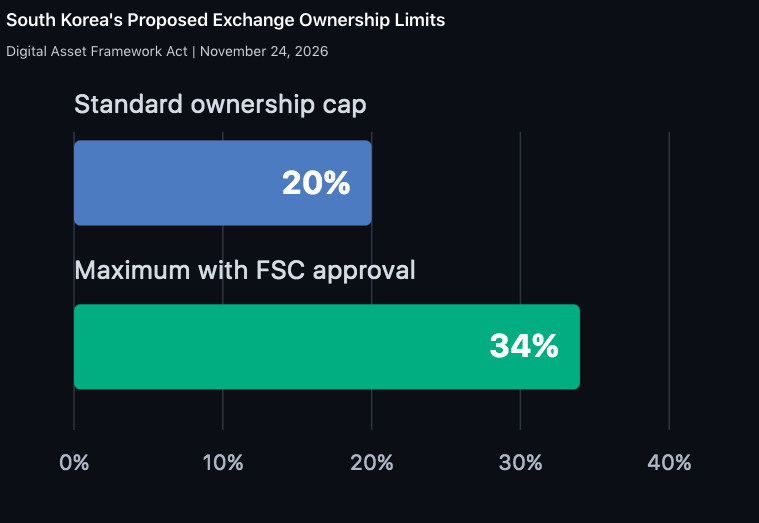
The Financial Services Commission of South Korea has developed a structure aimed at enhancing market transparency and fostering innovation in the digital asset sector. A notable aspect of the bill is its focus on cryptocurrency exchange ownership, proposing a general cap of 20% for major shareholders. Under certain conditions, ownership stakes could rise to 34% with regulatory consent. This could lead to a diverse ownership model among domestic trading platforms.
However, these ownership restrictions could pose challenges for established players in the market, depending on how regulators manage competition alongside financial innovation.
Introducing Regulated Stablecoins
One of the most intriguing elements of the bill is the potential for launching regulated stablecoins backed by the Korean won. The legislation allows banking consortiums to issue these stablecoins, provided they collectively hold a majority stake. Further, issuers would be required to maintain reserves equivalent to the total value of issued tokens.
KB Financial’s completion of a stablecoin pilot earlier this year indicates a growing interest in blockchain-based financial solutions in the region. The establishment of a regulated digital payment framework could make blockchain transactions more familiar to conventional financial institutions, indirectly benefitting Bitcoin’s adoption.
South Korea’s Legislative Progress in Context
Commentators have noted that South Korea’s approach contrasts with the current pace of regulation in the United States, with some emphasizing that various Asian countries are moving ahead to establish clear guidelines for digital assets. As South Korea advances its legislative framework, there is hope that financial institutions will feel more secure in creating cryptocurrency-related offerings.
Moreover, the bill proposes that initial coin offerings could occur under transparency requirements, possibly opening new avenues for blockchain entrepreneurs in the region.
Implications for Bitcoin and Digital Assets
This year has also seen South Korea promote its tokenized securities framework, reflecting a broader initiative to weave blockchain technology into traditional finance. The introduction of a more robust regulatory environment could pave the way for Bitcoin’s long-term acceptance.
Historically, regulatory uncertainty has hindered financial institutions from exploring cryptocurrency. Clearer guidelines may alleviate some of these concerns. Enhanced custody obligations and improved investor protection measures could also boost confidence among hesitant investors.
Looking Ahead: Is South Korea Set to Lead in Cryptocurrency?
South Korea’s latest legislative efforts suggest a shift towards constructing a cohesive financial infrastructure that integrates digital assets with established financial systems. While the new measures do not guarantee increased demand for Bitcoin, they may create favorable conditions for greater market acceptance.
The next crucial phase will be the parliamentary review of the proposed legislation. If successful in balancing innovation with the protection of investors, South Korea could position itself as a leader in Asia’s competitive digital asset economy.